Quick answer: the biggest natural ways to lower insulin are the boring ones: build meals around protein, pick carbs that still have their fiber, cut the sugary drinks, stop grazing between meals, lift weights, walk after you eat, and sleep. On top of those, a few small helpers can soften the spike from a carb-heavy meal: apple cider vinegar in water before the meal, lemon juice with starchy food, and cinnamon. The helpers are nice. The big levers are what move the needle.
Okay, so first, a quick reality check, because the internet gets this wrong. Insulin isn’t evil. Your body needs it. It moves sugar out of your blood and into your cells, and it helps you build and repair muscle. The problem isn’t insulin. The problem is when it’s high all the time, day after day, because then your body has a harder time getting at the fat it has stored.
So the goal isn’t zero insulin. It’s getting your insulin to come down between meals, and getting your cells to listen to it again. So here’s what we’ll cover. First, the big levers that do most of the work. Second, the small helpers from my book, and what they can and can’t do. And third, the stuff that isn’t food at all.
(If you want the full story on what insulin does to body fat, start with how to lower insulin to lose weight.)
The big levers
These are the ones that matter most. If you only do these, you’re most of the way there.
- Protein first. Protein barely moves insulin compared to refined carbs, and it keeps you full.
- Carbs with their fiber still attached. Fiber acts like a speed bump, not a brick wall. It doesn’t stop the carbs, it slows them down, so the sugar trickles into your blood instead of flooding it.
- Cut the sugary drinks. Sodas, juices, sweet coffees. That’s sugar with nothing to slow it down.
- Stop grazing. Every snack is another insulin bump. Real breaks between meals let it come back down.
- Eat your carbs last. In my book this is the Plate Sequencing cheat code: vegetables first, then protein, then carbs. Same meal, smaller spike.
The small helpers
My book has three cheat codes here. They’re real, but they’re helpers, not magic. Think of them as the seasoning, not the meal.
Apple cider vinegar before a carb-heavy meal
In my book this is the Apple Cider Vinegar cheat code: one to two tablespoons of raw apple cider vinegar, diluted in a big glass of water, shortly before a meal with carbs in it. The idea is that the acid slows down how fast food leaves your stomach, so the sugar enters your blood more gradually. There’s a study in Diabetes Care that found vinegar improved how people with insulin resistance handled a high-carb meal.
Dilute it, though. It’s acidic, and straight shots aren’t doing your teeth or your throat any favors.
Lemon water with starchy food
This is the Lemon Water cheat code. Squeeze real lemon juice into a glass of water and drink it with a meal that has bread, rice or potatoes. The acid may slow down the enzyme in your saliva that starts breaking starch into sugar. The research cited in my book includes a trial in the European Journal of Nutrition where healthy adults ate the same bread with water, black tea or lemon juice. With the lemon juice, their blood sugar peak was about 30 percent lower, and it came more than half an hour later. The tea did nothing.
Cinnamon
And the Cinnamon cheat code: Ceylon cinnamon. Compounds in cinnamon may help your muscle cells pull sugar out of your blood. A review in the Annals of Family Medicine pooled ten trials, 543 people with type 2 diabetes, and cinnamon lowered their fasting blood sugar. Now, the fair version: it didn’t change A1c, the longer-term blood sugar number, and the results varied a lot from study to study. So it’s a helper, not a fix, but it’s easy to add to yogurt, coffee or a shake.
The stuff that isn’t food
This part gets skipped, and it shouldn’t. My book puts it plainly: insulin sensitivity responds to how you live, not just what you eat.
- Build muscle. Muscle is where a lot of the sugar in your blood goes. More muscle means more places to put it. Resistance training is one of the best tools there is.
- Walk after meals. Even a short walk helps your muscles pull sugar out of your blood.
- Sleep. Poor sleep makes your body worse at handling insulin, and it makes you hungrier.
- Manage stress. Chronic stress is on my book’s list of things that feed the cycle too.
The one thing to do this week
Pick one big lever and one small helper. For most people, that’s cutting out the sugary drinks, plus a walk after dinner. Do both every day for a week and notice how your energy and your afternoon cravings change.
If you want more cheat codes like this sent straight to your inbox, sign up here. It’s completely free, and just for signing up, I’ll also send you my guide, the 10 Fat Loss Commandments.
Send me the commandments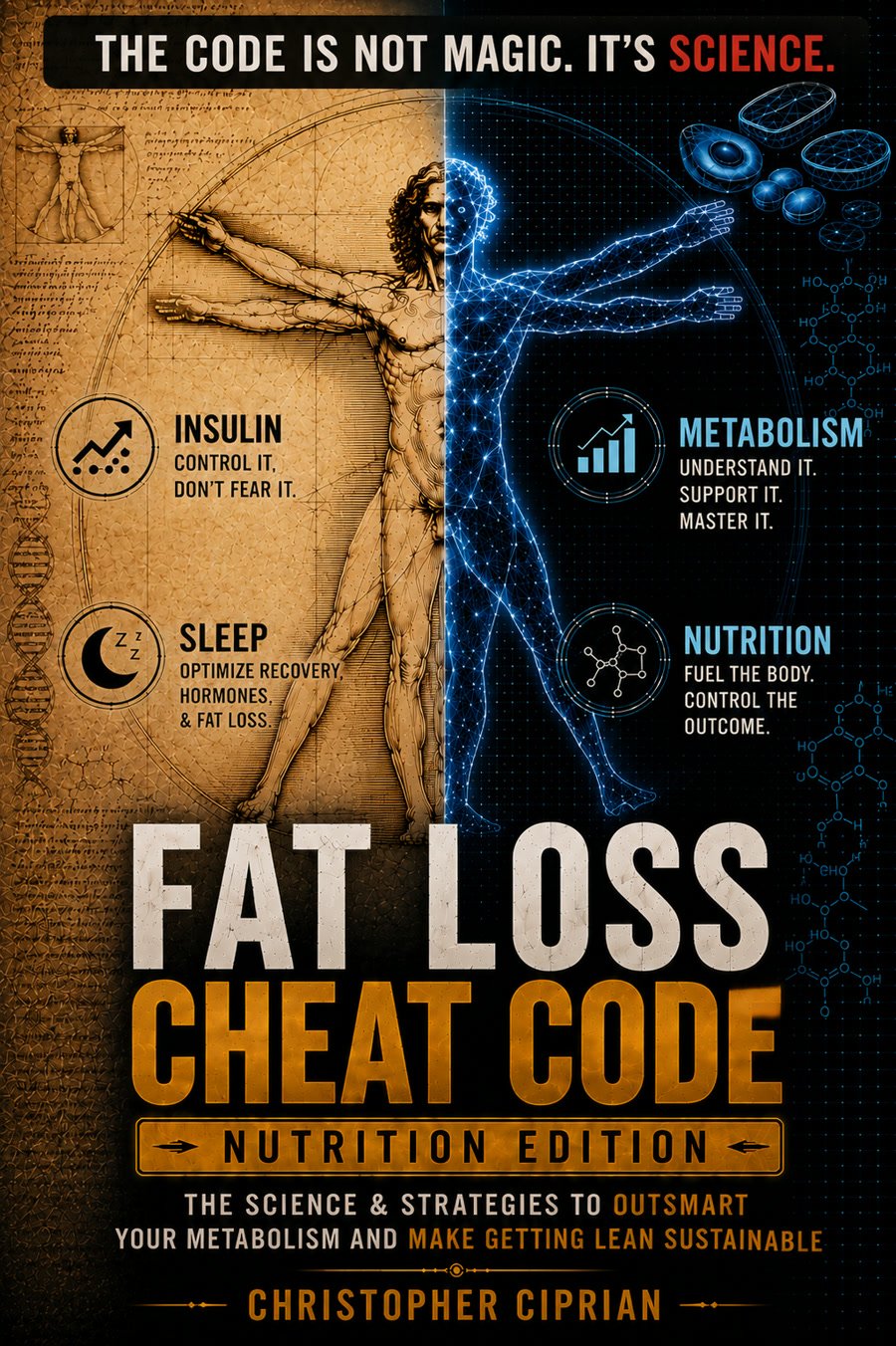
The whole system is in my book, Fat Loss Cheat Code: Nutrition Edition. It’s how you outsmart your metabolism, with every cheat code and the science behind it. Insulin is chapter four.
Buy on AmazonAnd if you’d rather have someone build a lower-insulin plan around your life, that’s what coaching is for.
Sources: Johnston et al., Diabetes Care, 2004 (vinegar and a high-carbohydrate meal in insulin resistance); Freitas et al., European Journal of Nutrition, 2021 (lemon juice, tea or water with bread, healthy adults); Allen et al., Annals of Family Medicine, 2013 (10 trials, 543 people with type 2 diabetes); Shukla et al., Diabetes Care, 2015 (11 adults with type 2 diabetes, carbs first vs carbs last).