Quick answer: a reverse diet means adding calories back slowly after a long diet, so your body can get used to eating more without the rebound. Start from what you’re eating now, add about 50 to 150 calories a day from whole foods, keep your protein the same, and hold each step for a week or two before the next one. Stop when your weight holds steady. That’s your new maintenance. The scale will likely go up a little at first, and that’s mostly water and stored carbs, not fat.
So here’s the situation. You’ve been dieting for a long time. Maybe months, maybe years of on-and-off. You’re eating way less than you used to, you’re tired, your workouts feel flat, you’re hungry all the time, and the scale has stopped moving anyway. And the idea of eating more sounds terrifying, because the last time you “stopped dieting,” you gained it all back.
That’s exactly what a reverse diet is built to prevent. So here’s what we’ll cover. First, what a reverse diet actually is and why it works. Second, how to do one, step by step. And third, the mistakes that wreck it.
What is reverse dieting?
After a long diet, your body adapts. It gets more efficient with the energy you give it. Your resting burn drops a bit, you move less without realizing it, your training suffers, and your hunger gets loud. That’s metabolic adaptation, and I break down how it works in can metabolic damage be reversed?
Now here’s the trap. If you finish a diet and go straight back to how you used to eat, you’re suddenly eating a lot more than your adapted body is burning. That gap is where the rapid regain comes from.
A reverse diet closes that gap slowly. Think of it like a dimmer switch instead of a light switch. You don’t flip from diet to “normal” all at once. You turn the calories up a little at a time and let your body catch up.
How to reverse diet, step by step
Here’s how I lay it out in my book.
Step one: know where you’re starting
Before you add anything, track for a week or so. Your average daily calories, your protein, your weekly weight average, your energy and how your workouts feel. That’s your baseline. You can’t steer if you don’t know where you are.
Step two: add a little
Add about 50 to 150 calories a day. That’s small: an extra piece of fruit, a bit more rice, a slightly bigger portion at dinner. Make those calories come mostly from real, whole foods, and keep your protein where it is.
Step three: wait and watch
Hold that new level for a week or two. Watch your weekly average weight, not the daily number. Watch your energy, your workouts, your hunger.
Step four: repeat until it holds
If things look steady, add another small step. Keep going until you find the amount of food where your weight holds relatively stable. That’s your new maintenance, and it’s usually higher than you expected.
Why the scale goes up when you eat more
This is the part that makes people quit, so I want you ready for it. When you add food, the scale usually goes up a little in the first week or so. That’s normal, and it’s mostly not fat.
Here’s what it is. More food means more food in your digestive system at any given time. More carbs means your muscles refill their stored carbs, called glycogen, and glycogen holds on to water. So you get a quick bump that looks scary and is mostly water and fuel your muscles actually needed.
Look at the trend over a few weeks, not the first few days. And look at the good signs: more energy, better workouts, less hunger, better sleep. Those tell you it’s working.
Does reverse dieting help a weight loss plateau?
It can. If you’ve been in a deficit for so long that your “deficit” is now basically your maintenance, cutting more just digs the hole deeper. Reverse dieting back up to a higher maintenance means that when you do go back into a deficit, you’re cutting from a bigger number, and your body isn’t on high alert anymore. I go through that whole sequence in why your weight loss stopped.
What it doesn’t do is burn fat by itself. It rebuilds the engine so the next fat-loss phase works better.
The mistakes that wreck a reverse diet
My book lists three, and I see all three all the time:
- Believing your metabolism is permanently broken. It’s not broken. It’s adapted. And an adaptable system can adapt back.
- Panicking at every pound. If fear of any scale increase stops you, you stay stuck in an overly strict diet forever.
- Turning it into a free-for-all. A reverse diet isn’t “I’m done dieting, pass the pizza.” It’s still structured, still tracked, still protein first. Just more food, added on purpose.
The one thing to do this week
Don’t add anything yet. Track your current intake for seven days and work out your average. That number is your starting line. Next week, add your first 50 to 150 calories.
If you want more cheat codes like this sent straight to your inbox, sign up here. It’s completely free, and just for signing up, I’ll also send you my guide, the 10 Fat Loss Commandments.
Send me the commandments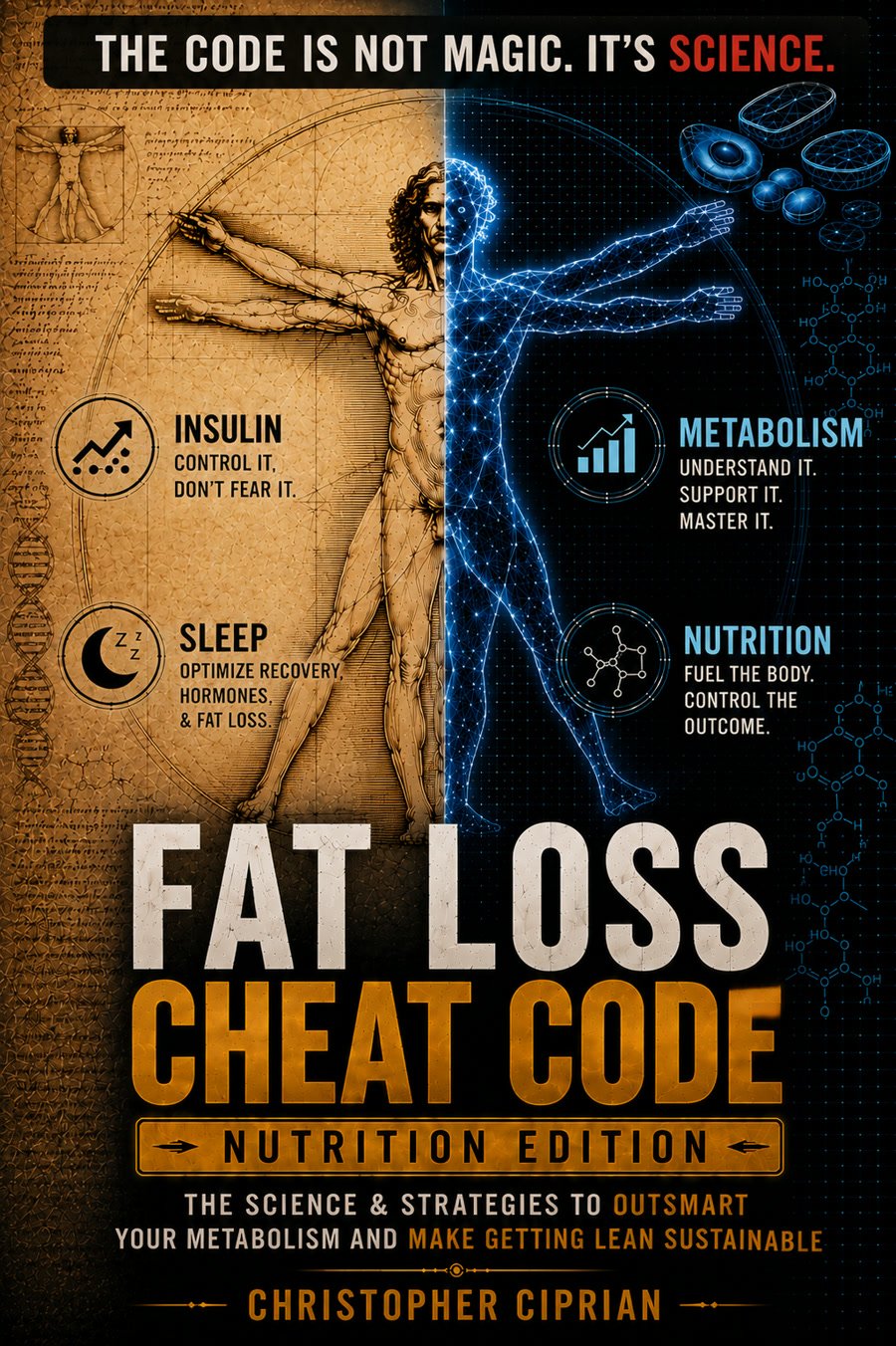
The whole system is in my book, Fat Loss Cheat Code: Nutrition Edition. It’s how you outsmart your metabolism, with every cheat code and the science behind it, including reverse dieting and planned diet breaks.
Buy on AmazonAnd if you’d rather have someone run your reverse diet with you, week by week, that’s what coaching is for.