
Stuck in a fat loss plateau? Same food that was working two months ago. Same workouts. And the scale is just sitting there every morning like you owe it money.
Okay. I’ve been there. So I’m going to walk you through what your body is actually doing right now, because it’s probably not what you think, and it may just change what you do next.
The mistake most people make at a plateau
Here’s what most people do when the scale stops. They cut harder. They drop another three hundred or so calories and add an hour of cardio. Because they figure if eating less worked before, eating even less should work now. Right?
I get it. I’ve done the same thing. But that reaction, not the plateau itself, is the thing that ends most diets. Eight out of ten people who lose weight end up gaining it back within two years. And a lot of them start that slide right here, at the plateau, while feeling like they’re doing everything right.
So there is a right way to break a plateau, and it’s almost the exact opposite of what you’re probably about to do. The fix has an order to it, and honestly, the order is the whole trick.
Here’s how we’ll go. First, how to tell if you’re actually stuck. Second, what your body has been doing while you weren’t looking. And third, the fix, including a study with maybe the greatest name in nutrition science.
Is your plateau even real?
Your weight is a drama queen. It can swing a couple of pounds up or down in a single day. Salt, carbs, a hard workout, a bad night’s sleep, stress at work, where you are in your cycle. All of those move the scale, and none of that is fat.
Two pounds of fat is about seven thousand calories. Unless you ate seven thousand extra calories yesterday, that jump is water and whatever’s still sitting in your gut, and it’ll probably be gone by Thursday.
So one bad weigh-in means nothing. A bad week? Probably still nothing yet.
A real plateau is when three things have all sat still for about three or four weeks while you’ve been doing the work: your weekly average, your measurements, and your photos.
And I mean the weekly average, okay? Not Tuesday. Weigh in each morning, add up the seven mornings, divide by seven, and compare that number to the week before. That average is your weight. The daily number is mostly just noise.
So if you’re not there yet, you’re not actually stuck. Keep going. But if you are there, here’s what’s happening under the hood. Honestly, this is the part I love.
What really happens when you hit a plateau
Your body has no idea you’re dieting. It doesn’t know about that vacation coming up in June. All it knows is that for months now, less energy has been coming in than going out. And to a body that spent a couple hundred thousand years surviving famines, that only means one thing. Scarcity.
So it goes into budget mode. The fancy term for this is metabolic adaptation. What does that actually mean? Think of your body as a household that just lost a paycheck. It starts cutting spending, and it cuts in three places at once.
One, you’re lighter now. A smaller body just costs less to run. That one’s just math.
Two, you move less without realizing it. You fidget less. You take the elevator and never even notice. That background movement can be worth a few hundred calories a day, and it quietly disappears. Think of that over a month.
Three, your hormones shift. Leptin is basically the text message your fat cells send your brain to say, “We’re good, you can stop eating.” After months of dieting, leptin loses your number and ghosts you. Your hunger hormones get louder, and your thyroid eases off the gas a little.
Put those together and the deficit that got you results in month one is not the same deficit you have in month four. You’re still eating the same amount of food, but your body burns less energy. The gap closed. That’s your plateau.
Is metabolic adaptation real?
Here’s the wild part. This doesn’t wear off in a couple of weeks.
A study in the New England Journal of Medicine followed fifty people for a full year after they lost the weight. A year later, their hunger hormones were still up.
Then you’ve got fourteen of the Biggest Loser contestants, who got tested six years after the show. They were still burning around five hundred calories a day less than you’d expect for their size. Five hundred calories is a whole meal. Every day. Six years later. That is just crazy to me.
So if you’ve been white-knuckling it for months, wondering why you’re hungrier now than when you started, that’s not weakness. It’s biology.
Did you slip, or did your body change?
Now, here’s the part most people get wrong. They’ll tell you the plateau means you slipped. That your portions crept up, that you got lazy with the tracking.
And look, sometimes that happens. But in a lot of cases, and I see this with the people I coach all the time, they’re sticking to the exact same diet. Nothing changed on the plate. What changed is the body. It got more efficient at running on what you’re giving it.
So here’s my whole philosophy on this, in one line. You cannot hold the same deficit continuously and expect your body not to adjust to it. It will. It’s built to.
Which means the job isn’t to out-discipline your body. In the long run, that won’t work. The job is to outsmart it, by making the adjustment before your body makes it for you. That’s why diet breaks and reverse dieting exist.
A plateau isn’t a sign that you failed. It’s a sign your body caught up to you.
What not to do at a plateau
Don’t cut harder.
Go back to that household. Cutting harder is like telling a family that already lost one paycheck, “Hey, another one just got cut too.” Your body’s survival instinct kicks in, and your hunger hormones start shouting. Muscle starts coming off, because muscle is expensive to keep around and your body is cutting expenses. Your energy tanks. And you’ve just built the exact crash that ends most diets.
That’s why the plateau isn’t where diets get hard. It’s where most diets just die.
How to break a weight loss plateau, in order
Step one: take diet breaks (the MATADOR study)
I cover this in chapter two of my book, and it’s built on something called the MATADOR study. No bull. It stands for Minimizing Adaptive Thermogenesis And Deactivating Obesity Rebound. What does that mean in plain English? If you stop the slowdown, you stop the rebound.
The researchers took fifty-one men with obesity and split them into two groups. One group dieted for sixteen weeks straight. The other group dieted for two weeks, then ate at maintenance (just enough food to hold their weight) for two weeks, and kept alternating like that. Both groups spent the same sixteen weeks in a deficit.
The group that took the breaks lost about fifty percent more fat. They held on to more of their resting metabolism, which is the energy your body burns just keeping you alive. And six months after the study ended, they were still about eighteen pounds ahead of the guys who pushed straight through.
Eighteen pounds. That’s a big Thanksgiving turkey. They ate more food half the time, and they still came out ahead. I love this study.
So the cheat code here is to cycle your deficit instead of treating restriction like something permanent. Two weeks at a moderate deficit, then two weeks at maintenance, and repeat.
Now, keep in mind that maintenance does not mean free-for-all, okay? It’s the same protein and the same real, whole foods, just a little more of them, so your body stops sounding the alarm. Breaks aren’t cheating. Breaks are the actual strategy.
Step two: a reverse diet, if you’ve been dieting for months
If you’ve already been dieting for months straight, there’s a good chance your calories are too low and your body is deep in budget mode. That’s when it’s time for a reverse diet.
A reverse diet is like giving the household a small raise. You add fifty to a hundred and fifty calories a day, from real food, and you keep your protein steady. If you cut carbs to lose the weight, this is where some of them come back in: rice, potatoes, oats, fruit. You hold that for a week or two. Then slowly add a little more.
It’s easing off the brake, not stomping on the gas.
You keep going until your weight holds steady while you’re eating noticeably more than before. That’s your new maintenance.
Why the scale goes up when you eat more
The scale might tick up a pound or two here, and this is where people panic.
That’s not fat. It’s water, it’s fuel going back into your muscles (carbs bring some water in with them), and it’s literally more food sitting in your stomach. Remember the drama queen? Same deal. Watch the trend, not any single day.
Does reverse dieting burn fat?
Here’s what most people get wrong about this one. The reverse diet doesn’t necessarily burn the fat. What it does is rebuild your maintenance, the number of calories you can eat without gaining or losing weight.
So when you do go back into a deficit, you’re cutting from a higher number, and your body is no longer on high alert. That’s when the plateau finally breaks. You didn’t force it. You outsmarted it.
Don’t cut. Adjust.
Your metabolism isn’t broken. It adapted to what you gave it, and it will adapt right back when you change what you give it.
So, to pull all of this together, here’s the one thing to do today. Don’t cut your calories. Hold them exactly where they are right now, and for the next seven days, track honestly. Weigh the food.
I know, people roll their eyes when they hear “tracking calories.” But it’s way harder to fix a drift you can’t see. A lot of plateaus break right there, with seven days of honest numbers.
How to avoid a plateau next time
The next time you’ve been restricting for a long stretch, remember the part almost everyone gets wrong. Back off the deficit for a little while, before your metabolism decides your diet is the new normal. Do that, and you may never hit the plateau in the first place.
Keep reading
- How do I know if I’ve hit a weight loss plateau?
- Not losing weight in a calorie deficit? Here’s why
- How to reverse diet properly (and why the scale goes up at first)
If you want some of the cheat codes I use every day to get and stay lean, grab the 10 Fat Loss Commandments. It’s free, it’s ten rules, and each one comes with the reason behind it.
Send me the commandments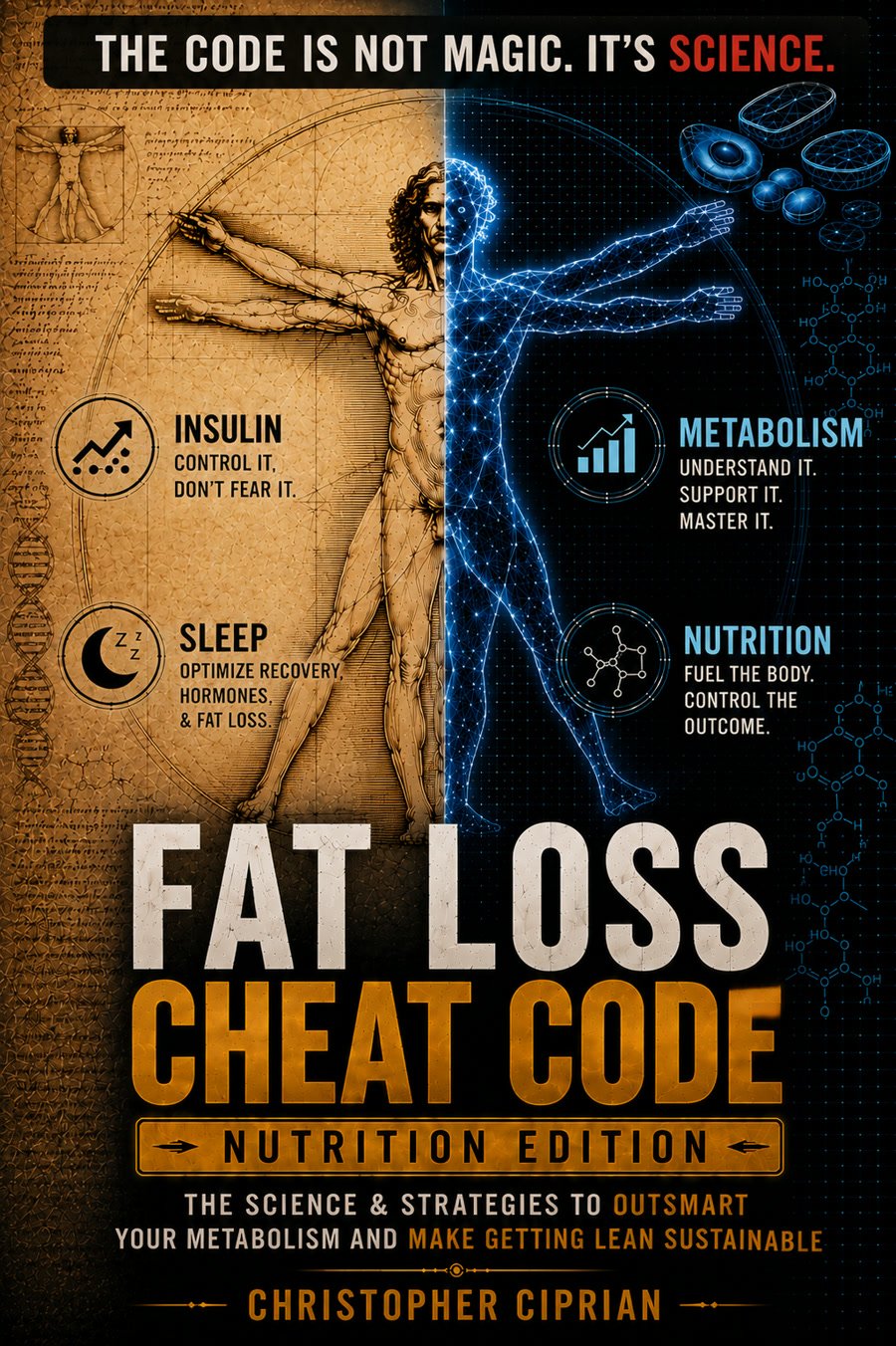
If you like how that reads, the whole system is in my book, Fat Loss Cheat Code. Fifteen chapters, every rule with the science behind it, how it works, and the mistakes most people make, in the order you should actually do them.
Buy on AmazonAnd if you’d rather have someone walk you through it, that’s what coaching is for.
Sources: Byrne et al., International Journal of Obesity, 2018 (the MATADOR study); Sumithran et al., New England Journal of Medicine, 2011 (hunger hormones a year after weight loss); Fothergill et al., Obesity, 2016 (the Biggest Loser follow-up).