Quick answer: if you’re truly in a calorie deficit, you’re losing fat. When the scale says otherwise, it’s almost always one of three things. Your deficit is smaller than you think, because calories hide in oils, drinks and portions. Water is covering up fat loss on the scale. Or your body has adapted, so the deficit you started with isn’t a deficit anymore. Here’s how to tell which one it is.
Okay, so let’s get something out of the way first. You’re not broken. The laws of energy still apply to you. If you’re really eating less than your body burns, it has to make up the difference from stored energy, and that includes body fat. That’s not an opinion. That’s how it works.
So if the scale isn’t moving, something in that equation isn’t what you think it is. And the good news is, every one of those somethings can be found and fixed. So here’s how we’ll go. First, the deficit that isn’t really there. Second, the fat loss the scale can’t see. And third, the body that moved the goalposts.
Reason one: your deficit is smaller than you think
This is the most common one by a mile, and it’s nobody’s fault. It’s just really easy to underestimate how much you eat.
Think about peanut butter. A real serving is two level tablespoons. Most people’s “tablespoon” is a big heaping spoonful, and some days it’s three of them. Same with cooking oil poured straight from the bottle, the cream in your coffee, the drinks, the handful of chips while you’re making dinner, the restaurant meal that’s cooked in way more butter than you’d ever use at home. None of it feels like eating. All of it counts.
And here’s one most people don’t know. Food labels can legally be off by as much as 20 percent. So your tracking can be honest and still come up short.
In my book, the fix is the Measurement cheat code: before you cut anything, track what you’re actually eating for two weeks, without trying to change it. Think of it like a budget. You don’t make a budget because money is bad. You make one because you can’t fix what you can’t see. Two weeks of honest tracking shows you where the calories are really going.
Reason two: you’re losing fat, but the scale can’t see it
Your weight moves around every day, and most of it is water. Salt, a hard workout, stress, poor sleep, a bigger meal, even more food in your system. All of that can hide a week of real fat loss.
This is especially true if you just started working out. A new or harder training routine can cause some temporary water retention while your muscles recover. So you’re burning more and eating less, and the scale goes up. That’s maddening, but it’s not fat.
The fix: weigh in every morning under the same conditions, and look at your seven-day average instead of any single day. Add a weekly waist measurement and a photo. If the average and the tape measure are moving, it’s working. I go through exactly how to do that in how to tell if you’ve hit a weight loss plateau.
Reason three: your body moved the goalposts
If you’ve been dieting for a while, the deficit you started with may not be a deficit anymore. Your body doesn’t know you’re trying to look good for vacation. It just sees less energy coming in, month after month, and it goes into budget mode.
That’s called metabolic adaptation. You’re a smaller body now, so you burn less. You also tend to move less without noticing: fewer steps, less fidgeting, more sitting. And your hunger turns up. Put that together, and the calorie number that worked three months ago might now be right around your maintenance.
This is where people make the big mistake. They cut again, and again, and dig the hole deeper. I explain what’s actually happening, and the better fix, in why your weight loss stopped.
So what do you do?
Work through it in order:
- Track honestly for two weeks. Weigh the oils and the peanut butter. Count the drinks.
- Judge by averages, not days. Weekly average weight, waist, photos.
- Keep the deficit moderate. My book suggests starting about 10 to 20 percent below your maintenance. Bigger isn’t better; it just burns you out faster.
- Protect your muscle. Enough protein and some resistance training. (Here’s how much protein you actually need.)
- If you’ve been dieting for months, take a planned break, instead of cutting again.
The one thing to do this week
Don’t cut anything. Just track everything you eat and drink for seven days, as honestly as you can, and weigh the foods you usually eyeball. Most people find their missing calories in the first three days.
If you want more cheat codes like this sent straight to your inbox, sign up here. It’s completely free, and just for signing up, I’ll also send you my guide, the 10 Fat Loss Commandments.
Send me the commandments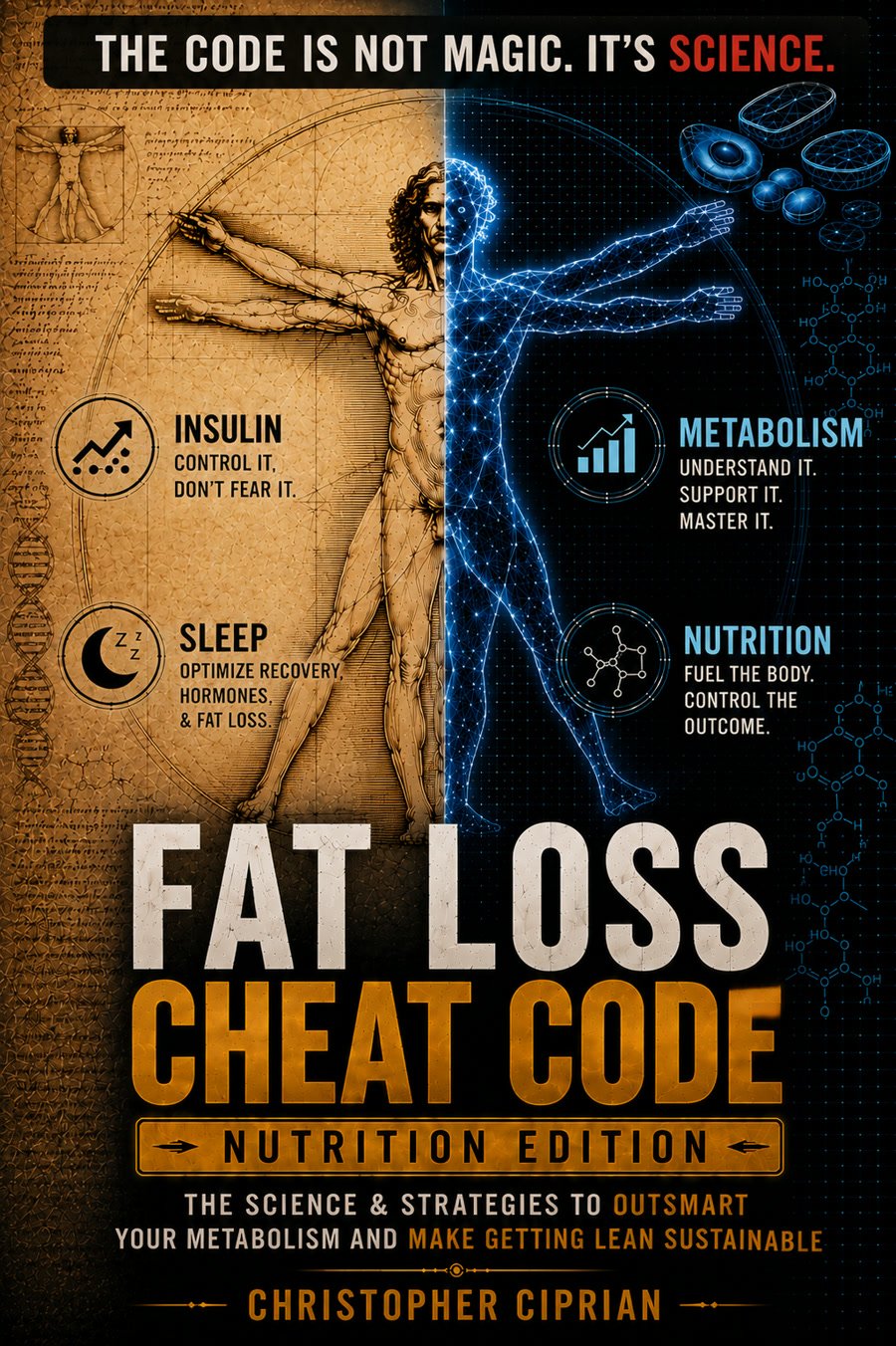
The whole system is in my book, Fat Loss Cheat Code: Nutrition Edition. It’s how you outsmart your metabolism, with every cheat code and the science behind it, from how to measure to how to set your deficit.
Buy on AmazonAnd if you’d rather have someone go through your food log with you and find where it’s leaking, that’s what coaching is for.