Quick answer: a high protein breakfast is one of the easiest ways to eat less for the rest of the day without trying. Make your first meal the most protein-heavy meal you eat, a big portion of your daily protein target, up to about half. Eggs, Greek yogurt, cottage cheese, lean breakfast meat, or a protein shake if you don’t have time to cook. Then eat any carbs on the plate last.
Okay, so here’s the thing about breakfast. Most of the “healthy” breakfasts people eat when they’re trying to lose weight are carbs with a little protein sprinkled on top. Cereal. A bagel. Oatmeal and a banana. And then by ten or eleven o’clock you’re starving, you’re raiding the snack drawer, and you’re wondering where your willpower went.
It didn’t go anywhere. Your breakfast just didn’t give your body what it was actually looking for. So here’s what we’ll cover. First, why the first meal of the day matters more than any other. Second, what a high protein breakfast actually looks like, with ideas for every situation. And third, the one trick that makes any breakfast work better, even the ones you can’t change.
Is a high protein breakfast good for weight loss?
Yes, and the reason is kind of fascinating. Your body isn’t only counting calories. It’s counting protein. The fancy name is the protein leverage hypothesis, and what it means is that your appetite keeps pushing you to eat until you hit your body’s protein target.
Think of your appetite like a shopper you sent to the grocery store with one thing on the list: protein. If you feed it a low-protein breakfast, that shopper doesn’t come home. It wanders the aisles all morning, grabbing chips and crackers and whatever’s in front of it, still looking for protein.
And we can actually see that in a study. In the American Journal of Clinical Nutrition, nineteen people doubled their protein, from fifteen percent of their food to thirty percent, and were then allowed to eat as much as they wanted. Nobody told them to cut anything. They ended up eating about 440 fewer calories a day on their own, and lost about eleven pounds in twelve weeks. Think about that. No diet. The shopper just found what it came for and went home.
(I go deeper on this, and on how much protein you actually need in a day, in how much protein you need to lose weight.)
Why breakfast, and not later in the day?
In my book, this is the Protein Leverage cheat code: get your protein in early, and make your first meal of the day especially protein-rich. Fat Loss Cheat Code: Nutrition Edition is about outsmarting your metabolism instead of fighting it, and this is one of the simplest ways to do that.
Here’s why the timing matters. If you wait until you’re already starving to start managing your appetite, you’re playing catch-up all day. But if you send the shopper to the store first thing in the morning and it loads the cart with protein, it doesn’t spend the afternoon in the snack aisle. You’re getting ahead of your hunger instead of chasing it. Protein also takes more energy to digest than carbs or fat, so you burn a little more just processing it.
So how much? It depends on the person, so I’m not going to give you one number. A 140-pound woman and a 225-pound man don’t need the same breakfast, because they don’t need the same amount of protein in a day. What I have my clients do is front-load a big portion of their own daily protein target into that first meal, up to about half, depending on their number.
And you don’t need to worry about eating “too much” at once. That old rule that your body can only use about thirty grams at a time? A study in Cell Reports Medicine gave people 100 grams in one meal after a workout, and the response was bigger and lasted more than twelve hours. It doesn’t mean you need 100 grams. It means a big breakfast isn’t wasted.
High protein breakfast ideas
Here’s one of mine, straight out of my food log. Four large eggs, about 25 grams of protein. Four chicken breakfast sausage patties for another 20. Two protein bagels for another 34. That’s 78 grams of protein, and it keeps me full for a good four to five hours. That’s my number, not yours, but you get the idea.
A few more, depending on your morning:
- Eggs, your way. Scrambled, an omelet with leftover chicken or turkey, or hard-boiled eggs made ahead for the week.
- Greek yogurt bowl. Plain Greek yogurt with a scoop of protein powder stirred in, a spoonful of chia seeds and some berries. Let the chia sit for fifteen minutes or so and it thickens right up.
- Cottage cheese. With fruit, or savory with tomatoes, salt and pepper.
- Breakfast meat on the side. Lean sausage, turkey bacon, or last night’s steak or chicken. There’s no rule that breakfast has to look like breakfast.
High protein breakfast with no eggs
Not an egg person? Greek yogurt and cottage cheese both carry a lot of protein. So do lean breakfast meats, smoked salmon, or a protein shake. And leftovers count. Chicken and vegetables at 7 AM is a perfectly good breakfast.
High protein breakfast on the go
This is the one I get asked about the most. No time to cook? Have a protein shake about fifteen minutes before your first meal. That’s straight out of my book, and it gives you a head start on your protein and on your hunger.
There’s a small study behind the head start, too. In the Diabetes and Metabolism Journal, twenty adults ate a protein and fiber bar fifteen minutes before an all-you-can-eat meal, and they ate about 170 fewer calories at that meal. A bar, not a shake, but same idea. Hard-boiled eggs, a yogurt cup, or a protein bar with real fiber in it work too.
Swaps for the breakfast you already love
In my book this is the Food Swap cheat code: don’t give up the foods you love, find a better version of them. Instead of sugary cereal, try the Greek yogurt bowl above, or a higher-protein cereal (still a processed food, so treat it like one, okay?). Instead of a regular bagel or toast, try a higher-protein, lower-carb bagel or bread. You keep the breakfast. You just upgrade it.
The one trick that makes any breakfast better
Sometimes you can’t change what’s on the plate. A hotel buffet, a diner, a family breakfast. That’s fine. Change the order.
In my book this is the Plate Sequencing cheat code: fiber and vegetables first, then protein and fat, then carbs last. At breakfast, that looks like eggs first, then berries, then the toast. A small pilot study in Diabetes Care had eleven adults with type 2 diabetes eat the exact same meal twice, a week apart: once carbs first, once carbs last. With the carbs last, the rise in their blood sugar over the next two hours was about 73 percent smaller, and their insulin was about half. Same food. Different order. It was a small study in people with diabetes, so your mileage may vary, but that’s a big effect for doing nothing but changing the order. And a smaller spike usually means less of that mid-morning crash that sends you looking for a snack.
(If insulin is part of your story, how to lower insulin to lose weight goes into why that matters.)
The one thing to do this week
Pick one breakfast from the list above and make it your default for seven days. Just the first meal. Don’t change anything else. Then notice what happens to your hunger at 10 AM, and at 3 PM.
Protein is king, and when you start the day with it, everything else gets easier.
If you want more cheat codes like this sent straight to your inbox, sign up here. It’s completely free, and just for signing up, I’ll also send you my guide, the 10 Fat Loss Commandments.
Send me the commandments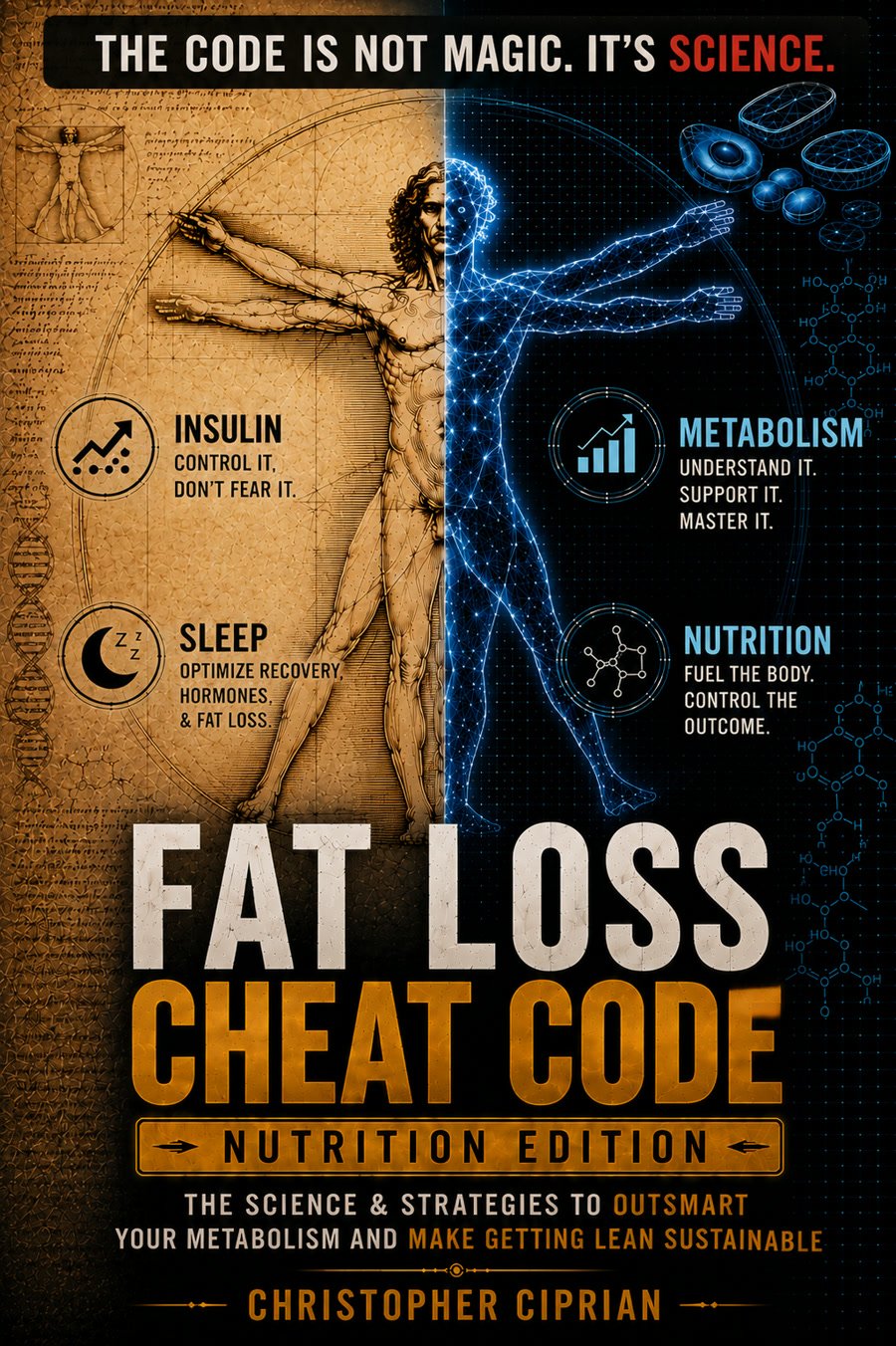
The whole system is in my book, Fat Loss Cheat Code: Nutrition Edition. It’s how you outsmart your metabolism: every cheat code with the science behind it. Protein is chapter three, and food sequencing is chapter nine.
Buy on AmazonAnd if you’d rather have someone work out your number with you and build your mornings around it, that’s what coaching is for.
Sources: Weigle et al., American Journal of Clinical Nutrition, 2005 (19 adults, 15% to 30% protein); Simpson and Raubenheimer, Obesity Reviews, 2005 (the protein leverage hypothesis); Trommelen et al., Cell Reports Medicine, 2023 (25 g vs 100 g, 36 men); Ahn et al., Diabetes and Metabolism Journal, 2019 (20 adults, a protein and fiber bar 15 minutes before a meal); Shukla et al., Diabetes Care, 2015 (11 adults with type 2 diabetes, the same meal carbs first vs carbs last); Westerterp, Nutrition and Metabolism, 2004 (thermic effect of food).