Quick answer: for a healthy adult, the amount of protein people eat to lose weight isn’t too much. A review of 28 trials found that higher protein didn’t change kidney function in healthy people. And no, your body doesn’t throw away everything over 30 grams at one meal. The real limits are calories and balance, not your kidneys. If you already have kidney disease, your doctor’s advice comes first.
Okay, so you worked out your protein number, and it’s way more than you’ve ever eaten. And right away the little voice kicks in. Isn’t that bad for your kidneys? Won’t the rest just get wasted? Didn’t somebody on the internet say too much protein turns into sugar?
These are good questions, and I get them all the time. So here’s how we’ll go. First, the kidney question. Second, the “30 grams per meal” question. And third, the places where protein actually can go wrong, because there are a couple.
Is too much protein bad for your kidneys?
For healthy kidneys, the research just doesn’t back that up. In my book this is Myth number one, and it’s one of the most stubborn ones out there.
There’s a review in the Journal of Nutrition that pulled together twenty-eight trials, more than thirteen hundred people. In healthy adults, eating more protein didn’t change kidney function compared to eating a normal amount. Twenty-eight trials. That’s not one small study somebody found.
So where does the fear come from? It comes from a real thing, it’s just been applied to the wrong people. If your kidneys are already damaged, a doctor may absolutely limit your protein. That’s the key distinction: someone with healthy kidneys versus someone who already has kidney disease. If that’s you, your doctor’s plan comes first, full stop. Okay?
How much protein is too much for one meal?
This is the “30 grams” rule. You’ve probably heard that your body can only use about 25 or 30 grams of protein at a time and that anything past that is wasted. So people split their protein into six tiny meals and carry chicken around in plastic containers.
Think of it like believing your shopping cart only holds thirty grams, so you have to make six trips to the store every day.
Here’s what a study in Cell Reports Medicine found in 2023. Thirty-six men did a full-body workout and then got either no protein, 25 grams, or 100 grams. The 100 grams didn’t get wasted. It produced a bigger muscle-building response than the 25, and that response lasted more than twelve hours. The title of the paper says the response has no upper limit in size or length.
What’s going on? A bigger protein meal just takes longer to digest, so the amino acids trickle in over a longer stretch. In my book, this is the Anabolic Ceiling cheat code: don’t let the 30-gram rule dictate your diet. Focus on hitting your total for the day, however you like to split it.
Now, the fair version. That was young men after a workout. It doesn’t mean everybody should eat 100 grams in one sitting. It means a big protein meal isn’t a waste, so you can stop stressing about it. (If you want the full breakdown of how much you actually need, it’s in how much protein you need to lose weight.)
So when can protein actually be “too much”?
Here’s where I’ll be straight with you. Protein isn’t magic, and there are a few ways to overdo it:
- Calories still count. Protein has calories. If your protein comes from huge portions of fatty meat, you can eat right past your deficit.
- It crowds out everything else. If protein pushes all the vegetables and fiber off your plate, that’s a trade you don’t want. Protein first doesn’t mean protein only.
- The fat that comes with it. In my book I call out a mistake people make a lot: ignoring the fatty-acid profile of your protein. A pound of the fattiest ground beef and a pound of chicken breast are not the same deal.
- Your kidneys, if they’re already struggling. Covered above. Doctor first.
And the other direction is a mistake too. My book lists “avoiding protein because you fear kidney damage” as a common mistake, because under-eating protein during a diet is how people end up losing muscle along with the fat.
What about protein powder and whey?
Same answer. Whey is one of the highest-quality proteins there is, and it counts toward your daily total like anything else. If you have healthy kidneys, a shake isn’t going to hurt them. What matters is your total for the day and where the rest of it comes from. And if you want a place to use it, a shake about fifteen minutes before your first meal is one of the easiest cheat codes in my book. I cover that in high protein breakfast ideas.
The one thing to do this week
Stop cutting your protein short because you’re afraid of it. Work out your number, aim for it every day for a week, and pay attention to one thing: your hunger. For most people, that’s the first thing that changes.
If you want more cheat codes like this sent straight to your inbox, sign up here. It’s completely free, and just for signing up, I’ll also send you my guide, the 10 Fat Loss Commandments.
Send me the commandments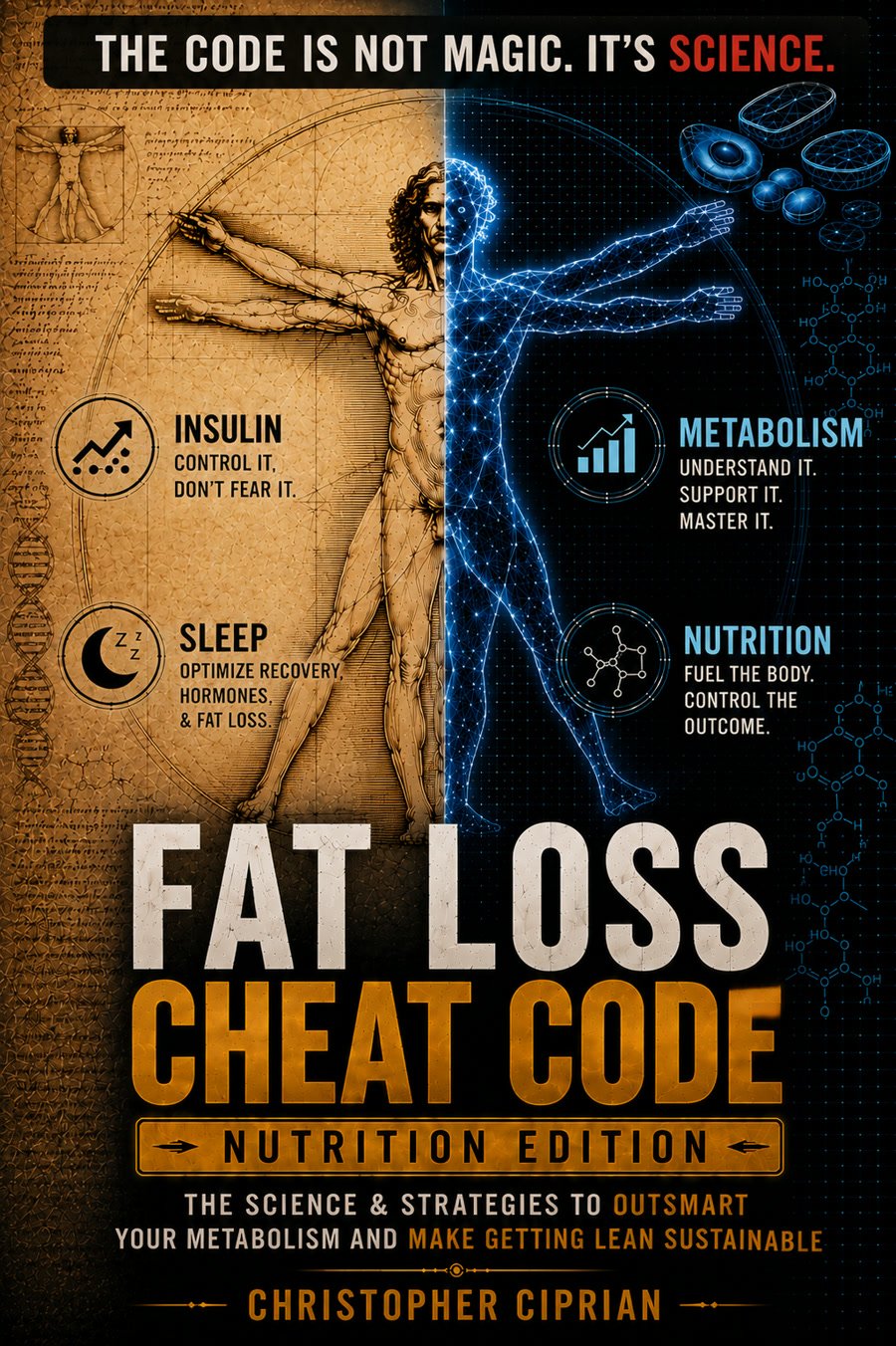
The whole system is in my book, Fat Loss Cheat Code: Nutrition Edition. It’s how you outsmart your metabolism, with every cheat code and the science behind it. Protein is chapter three.
Buy on AmazonAnd if you’d rather have someone work out your number with you and check it against your health history, that’s what coaching is for.
Sources: Devries et al., Journal of Nutrition, 2018 (28 trials, 1,358 adults, kidney function); Trommelen et al., Cell Reports Medicine, 2023 (25 g vs 100 g, 36 men).