Quick answer: fasting insulin is your insulin level first thing in the morning, before you eat. When it’s high, your body is working hard to keep your blood sugar in line, which is an early sign of insulin resistance. The quickest ways to bring it down: stop grazing and give your body real breaks between meals, cut the sugary drinks and refined carbs, build meals around protein, try a daily eating window like 16:8, lift weights, walk after meals, and sleep. There’s no overnight fix, but these start working within weeks.
Okay, so what is fasting insulin, really? It’s how much insulin is in your blood when you haven’t eaten for a while, usually measured first thing in the morning. It should be low at that point. There’s no food coming in, so there’s not much for insulin to do.
When it’s high even then, it’s a sign your cells aren’t listening to insulin as well as they should, so your pancreas keeps it turned up all the time. In my book I list elevated fasting insulin right next to the other warning signs: fat building up around your middle, hunger that’s hard to control, and big afternoon energy crashes. Sound familiar?
So here’s what we’ll cover. First, why snacking is the hidden reason a lot of people’s insulin never comes down. Second, how fasting fits in. And third, everything else that helps.
(New to all this? Start with how to lower insulin to lose weight, then come back.)
Does snacking raise insulin?
Yes. Every time you eat, especially anything with carbs, your body releases insulin to deal with it. A handful of chips. A flavored coffee. A few bites of your kid’s leftovers. A “healthy” granola bar. Each one on its own seems like nothing. But if you’re eating from the moment you wake up until the moment you go to bed, your insulin never gets a chance to come back down.
In my book this is the Anti-Grazing cheat code: create clear breaks between your meals, and stop treating every small bite as if it doesn’t count. Eat with purpose, then give your body time off.
Think of it like a doorman who never gets a break. Knock, knock, knock, all day long. Eventually he stops answering as quickly. Give him real breaks and he’s back on the job.
How often should you eat with insulin resistance?
Fewer, real meals instead of constant snacking. For a lot of people that’s two or three meals a day with nothing in between but water, black coffee or tea. I go through a study comparing two big meals with six small ones in how to lower insulin to lose weight.
Does fasting lower insulin?
When you stop eating, insulin falls. That’s the whole point. And with insulin lower, your body becomes more willing to release stored fat and use it for fuel. My book calls that metabolic switching: your body’s ability to go back and forth between burning the food you just ate and burning what you’ve stored.
And there’s research on the fasting number itself. Trials of intermittent fasting have found lower fasting insulin and better insulin sensitivity, although results vary depending on the approach and the rest of the diet.
How to start: 16:8
The simplest place to start is 16:8. You eat within an eight-hour window and fast for the other sixteen, most of which you’re asleep for. Finish dinner, then nothing but water, black coffee or tea until your first meal the next day. Now, here’s the honest part. There’s a 2022 trial in the New England Journal of Medicine with 139 adults with obesity. Everybody cut calories for a year, and half of them also ate only between 8 AM and 4 PM. The window group lost about 18 pounds, the calories-only group about 14, and that difference wasn’t big enough to count. So the window isn’t magic. Both groups lost weight because they were in a deficit. What the window does is make that deficit easier to stick to, because there are fewer chances to eat, and it gives your insulin a long stretch to come down every day.
Once you’re used to it, you can try longer windows. But my book is clear that longer isn’t automatically better. The goal is a window you can keep, while still eating enough protein and food in the hours you do eat.
Won’t fasting burn my muscle?
Not if you do it right. Short-term fasting doesn’t automatically eat into your muscle, especially when you eat enough protein during your eating window and keep lifting. Make your first meal a protein-heavy one. (Here’s how.)
One important note: if you take insulin or other blood sugar medication, talk to your doctor before you start fasting. Your dose may need to change.
Everything else that brings fasting insulin down
- Cut the sugary drinks and refined carbs. The biggest insulin spikes of the day, gone.
- Protein first at every meal. Barely moves insulin, keeps you full, less snacking.
- Lift weights. Muscle is where a lot of your blood sugar goes. More muscle, more places to put it.
- Walk after meals. Even a short one helps your muscles soak up sugar.
- Sleep and stress. Both are on my book’s list of things that make insulin resistance worse.
- Lose some fat. As body fat comes down, insulin sensitivity usually improves, which is one more reason all of this works together.
The one thing to do this week
Stop snacking between meals for seven days. Eat your meals, make them bigger if you need to, and have nothing in between but water, black coffee or tea. If that feels easy, try finishing dinner a little earlier and pushing your first meal a little later, toward a 16:8 window.
If you want more cheat codes like this sent straight to your inbox, sign up here. It’s completely free, and just for signing up, I’ll also send you my guide, the 10 Fat Loss Commandments.
Send me the commandments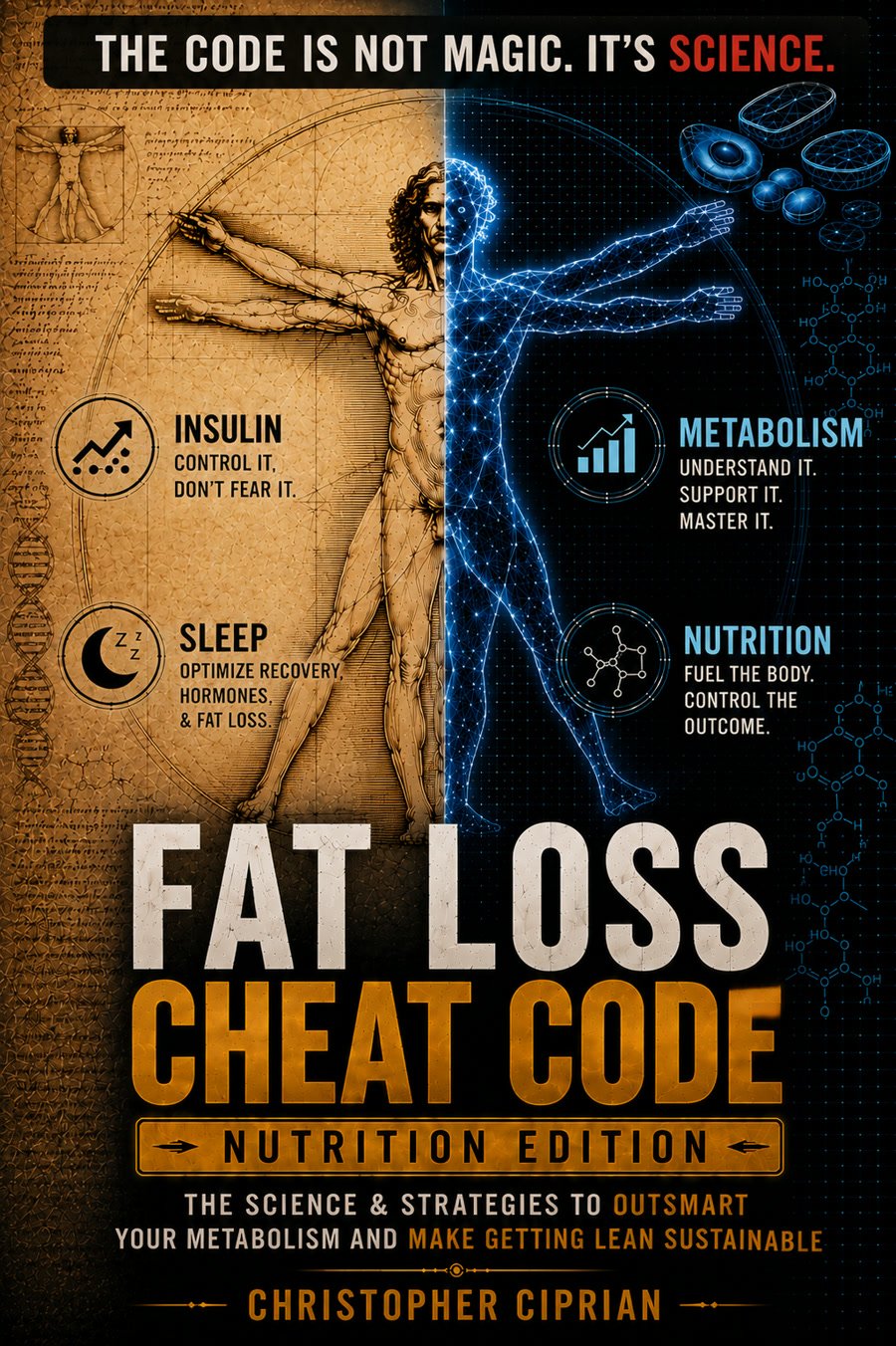
The whole system is in my book, Fat Loss Cheat Code: Nutrition Edition. It’s how you outsmart your metabolism, with every cheat code and the science behind it. Insulin is chapter four, and fasting is chapter eight.
Buy on AmazonAnd if you’d rather have someone build a fasting and eating schedule that fits your life, that’s what coaching is for.
Sources: Liu et al., New England Journal of Medicine, 2022 (139 adults with obesity, calorie restriction with or without an 8 AM to 4 PM eating window, 12 months).