Quick answer: build every meal around protein. Add vegetables and fiber. Choose carbs that are minimally processed and still have their fiber, and eat them with protein, never alone. Avoid sugary drinks, refined carbs on their own, ultra-processed snacks, and meals that pile heavy carbs and heavy fats together. You don’t have to cut out carbs completely. You have to change which ones, how much, and what you eat them with.
So here’s the thing about insulin resistance. It sounds like a disease with a strict diet attached, and the first instinct is to cut out everything. No bread, no fruit, no rice, nothing fun, forever. And then two weeks later you’re face down in a sleeve of cookies.
You don’t have to do it that way. Insulin resistance just means your cells have stopped listening to insulin as well as they used to, so your body has to make more of it to get the same job done. Think of it like a doorman who’s gone a little deaf. You have to knock louder and louder to get in. The goal of what you eat is to stop making your body knock so hard, all day long.
So here’s what we’ll cover. First, what to put on your plate. Second, what to avoid. And third, the two combinations my book says to watch out for.
(If you want the full picture of what insulin resistance is and how common it is, start with how to lower insulin to lose weight.)
What to eat for insulin resistance
- Protein at every meal. Chicken, fish, eggs, lean beef, Greek yogurt, cottage cheese. Protein barely moves insulin compared to refined carbs, and it keeps you full, so you snack less.
- Non-starchy vegetables. Salad greens, broccoli, asparagus, spinach, cauliflower. Lots of them.
- Fiber-rich foods. My book describes fiber as a speed bump, not a brick wall. It doesn’t block the carbs, it slows them down. Avocados, berries, nuts, seeds, chia and leafy greens are great ones.
- Carbs that still look like food. Beans, lentils, potatoes, whole fruit, and whole grains instead of white bread, pastries and cereal.
- Healthy fats, in sensible amounts. Olive oil, avocado, nuts. More on “sensible” in a second.
What to eat for breakfast with insulin resistance
Protein first. Eggs, Greek yogurt with berries and chia, cottage cheese, leftovers. Skip the cereal, the pastries, and the juice. I’ve got a whole list in high protein breakfast ideas.
What fruits are good for insulin resistance?
Whole fruit, not juice. Berries are a great pick because they’re high in fiber for how much sugar they carry. And eat fruit with a meal that has protein, not on its own, which brings us to the next part.
What to avoid with insulin resistance
- Sugary drinks. Soda, juice, sweet coffees, energy drinks. Pure sugar, nothing to slow it down. This is the single biggest one.
- Refined carbs on their own. A bagel by itself, crackers, a granola bar. In my book this is the Glycemic Wrapper cheat code: don’t eat your carbs alone when you can wrap them in a meal with protein and fiber.
- Ultra-processed snacks. Including a lot of so-called “health” snacks. My book calls out fortified bars and cereals that look healthy on the box. They’re still processed food.
- Grazing all day. Every bite is another insulin bump. Give your body real breaks between meals.
The two combinations to watch
Heavy carbs plus heavy fats
In my book this is the Gridlock cheat code. Your body handles protein with carbs just fine. It handles protein with fats just fine. The combination to be careful with is big amounts of carbs and fats together, especially refined carbs. Think pizza, fries, donuts, a creamy pasta. That’s a traffic jam for your metabolism.
So build meals like this:
- Protein + fats + fiber (steak, salad with olive oil, avocado), or
- Protein + complex carbs (chicken, rice, vegetables)
“Low carb” with unlimited fat
This is the Fat for Fuel cheat code, and it’s where a lot of people go wrong on keto. Cutting carbs doesn’t mean you should pour butter and oil on everything. If you’re trying to lose fat, your body already has plenty of it stored. Let your own fat supply some of the fuel. Too much added fat and you’re back out of your deficit.
One more trick for any meal
Eat the carbs last. Vegetables first, then the protein, then the carbs. That’s the Plate Sequencing cheat code from my book, and it can soften the blood sugar spike from the exact same meal.
A quick note: if you’re on medication for blood sugar, talk to your doctor before you make big changes to your carbs. The changes work, which is exactly why your medication might need adjusting.
The one thing to do this week
Look at your last few days of eating and find your “naked carbs,” the carbs you ate by themselves. The granola bar, the toast, the crackers. This week, pair every one of them with some protein, or swap it out.
If you want more cheat codes like this sent straight to your inbox, sign up here. It’s completely free, and just for signing up, I’ll also send you my guide, the 10 Fat Loss Commandments.
Send me the commandments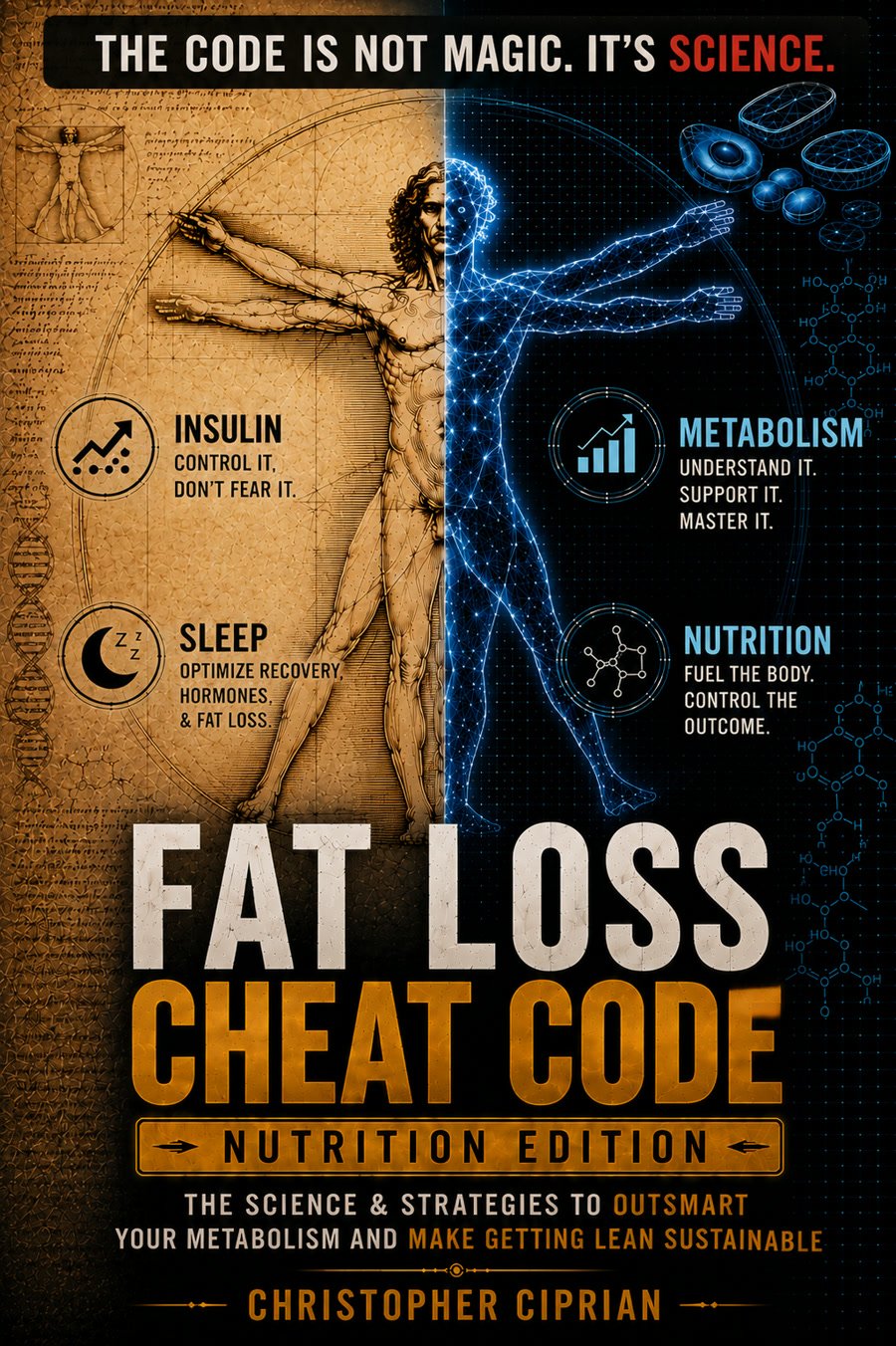
The whole system is in my book, Fat Loss Cheat Code: Nutrition Edition. It’s how you outsmart your metabolism, with every cheat code and the science behind it. Insulin is chapter four, and fiber is chapter five.
Buy on AmazonAnd if you’d rather have someone build your meals around your bloodwork and your life, that’s what coaching is for.
Sources: Shukla et al., Diabetes Care, 2015 (food order and post-meal glucose and insulin).