
Quick answer: apple cider vinegar works best right before a meal with carbs, not as a morning shot. One to two tablespoons of raw apple cider vinegar in a big glass of water shortly before you eat can slow how fast that meal turns into blood sugar. Lemon juice with starchy food and a little Ceylon cinnamon help in two other ways. Each one takes the edge off the spike. Stacked together, they work even better.
What if you could get ahead of your blood sugar before you even take your first bite?
Here’s what most people don’t know. Every time you eat, especially carbs, your blood sugar rises and your insulin spikes to handle it. And while insulin is busy with that, fat burning goes on pause. So people sit down to a bowl of pasta or a couple slices of bread and never think twice about what’s happening inside.
But there’s a simple fix, and you probably already have everything you need in your kitchen. So here’s what we’ll cover. First, apple cider vinegar. Second, lemon water. And third, cinnamon. Three common foods that, used a specific way, can blunt that spike before it starts.
Does apple cider vinegar before meals lower blood sugar?
It can take the edge off it. In my book, this is the Apple Cider Vinegar cheat code: blunt the glucose spike before your first bite.
Here’s how it works. The acetic acid in vinegar may slow down something called gastric emptying. What does that mean? It’s how fast food leaves your stomach and moves into your small intestine, which is where the sugar gets absorbed. It’s a similar mechanism to how the popular GLP-1 drugs work.
Think of your stomach like an hourglass. Normally the neck is wide open, and the sand pours through all at once. Vinegar narrows the neck a little. Same amount of sand, it just trickles through instead of dumping. So the sugar reaches your blood slower, and the spike is smaller.
There’s research behind it, too. A study in Diabetes Care took 29 adults, some healthy, some with insulin resistance and some with type 2 diabetes, and gave them a high-carb meal. Before the meal, they drank either a little over a tablespoon of apple cider vinegar or a dummy drink. In the people with insulin resistance, the vinegar improved their insulin sensitivity after that meal by up to 34 percent. From a tablespoon of vinegar. Insulin sensitivity, by the way, is just how well your body answers insulin. The better it answers, the less insulin it takes to clear the sugar from a meal, and the sooner your body gets back to burning fat.
How to take apple cider vinegar before meals
- One to two tablespoons of raw, unpasteurized apple cider vinegar, ideally the kind with “the mother” in it.
- Stirred into a large glass of water. Always diluted. It’s an acid, and straight shots are rough on your teeth and your throat.
- Shortly before you eat, especially when the meal has carbs.
- You can also take it in supplement form.
Can lemon water lower a blood sugar spike?
This one might be the easiest cheat code ever. You sit down at a restaurant and, voilà, there’s lemon water in front of you without even asking.
Here’s the science. Starch, the stuff in bread, rice, pasta and potatoes, is basically a long string of sugar beads. The moment it hits your mouth, an enzyme in your saliva called alpha-amylase starts cutting it up. Think of it like a pair of scissors snipping that string into single beads, and single beads are what hit your bloodstream as sugar. The citric acid in real lemon juice may dull those scissors. So the string gets cut slower, and the sugar comes in gradually instead of all at once.
And there’s a study on exactly this. In the European Journal of Nutrition, researchers in France had 18 healthy adults eat the same white bread three different times: once with water, once with black tea, and once with lemon juice. The tea did nothing. But with the lemon juice, their blood sugar peak came out about 30 percent lower, and it showed up more than half an hour later. Same bread. One simple change.
In my book, this is the Lemon Water cheat code. Here’s the move: next time you’re having bread, rice, pasta or potatoes, squeeze fresh lemon juice into a glass of water and drink it with your meal. Real lemon, not a lemon-flavored drink. And at a restaurant, don’t leave that lemon on the rim of the glass. Squeeze it in, and ask for extra. You can even combine it with the vinegar and double up on the benefits.
Does cinnamon lower blood sugar?
Yes, the same stuff you sprinkle on your oatmeal. And the research on it is bigger than you’d think.
A review in the Annals of Family Medicine pooled ten trials, 543 people with type 2 diabetes. On cinnamon, their fasting blood sugar, that’s your blood sugar first thing in the morning before you eat, came down by about 25 points. From a spice. That’s pretty wild.
Here’s how it may work. After a meal, sugar gets into your muscle cells through little transporters called GLUT4. They wait inside the cell until insulin calls them up to the surface. Think of it like the checkout lanes at a grocery store. The sugar is the line of shoppers, and insulin is the manager who opens more lanes. Cinnamon has plant compounds called polyphenols that may act a little like that manager, opening a few extra lanes on their own, so the line clears with less insulin.
Now, the fair version. It didn’t change A1C, the longer-term blood sugar number, and the results varied a lot from study to study. So think of it as a helper, not a fix. In my book, the Cinnamon cheat code says compounds in cinnamon may help your muscles pull sugar out of your blood.
Ceylon vs. regular cinnamon
Not all cinnamon is the same. Look for the word Ceylon on the label. That’s the kind I recommend in my book. And if you’re on diabetes medication, check with your doctor first, because cinnamon can stack on top of your meds.
Here’s one way I use it every day: I sprinkle a little Ceylon cinnamon right on top of the coffee grounds in my coffee maker before I brew. It gives your coffee a nice flavor, and you get your cinnamon every morning without thinking about it. It also goes great blended into a protein shake or mixed into Greek yogurt. And if you’re planning on a sugary dessert, that may be the best time to sprinkle.
Can you combine apple cider vinegar, lemon and cinnamon?
Yes, and that’s where it gets good. Three foods, working three different ways:
- The vinegar slows how fast food leaves your stomach.
- The lemon slows how fast starch turns into sugar.
- The cinnamon helps your muscles pull that sugar out of your blood.
Each one takes the edge off a spike on its own. Because they each work a different way, stacking them works even better. (And if you want the bigger picture on insulin, start with how to lower insulin to lose weight. The habits that do most of the work are in how to lower insulin naturally.)
The one thing to do this week
For the next seven days, before your biggest carb meal of the day, mix all three into a large glass of water: one to two tablespoons of apple cider vinegar, fresh lemon juice, and a sprinkle of Ceylon cinnamon. Drink it about ten minutes before you eat. It may not taste the best, but it works. Three foods, one glass, seven days.
Keep reading
- How to lower insulin to lose weight and turn on fat burning
- How to lower insulin naturally: the big levers and the small helpers
- What to eat for insulin resistance (and what to avoid)
If you want more cheat codes like this sent straight to your inbox, sign up here. It’s completely free, and just for signing up, I’ll also send you my guide, the 10 Fat Loss Commandments.
Send me the commandments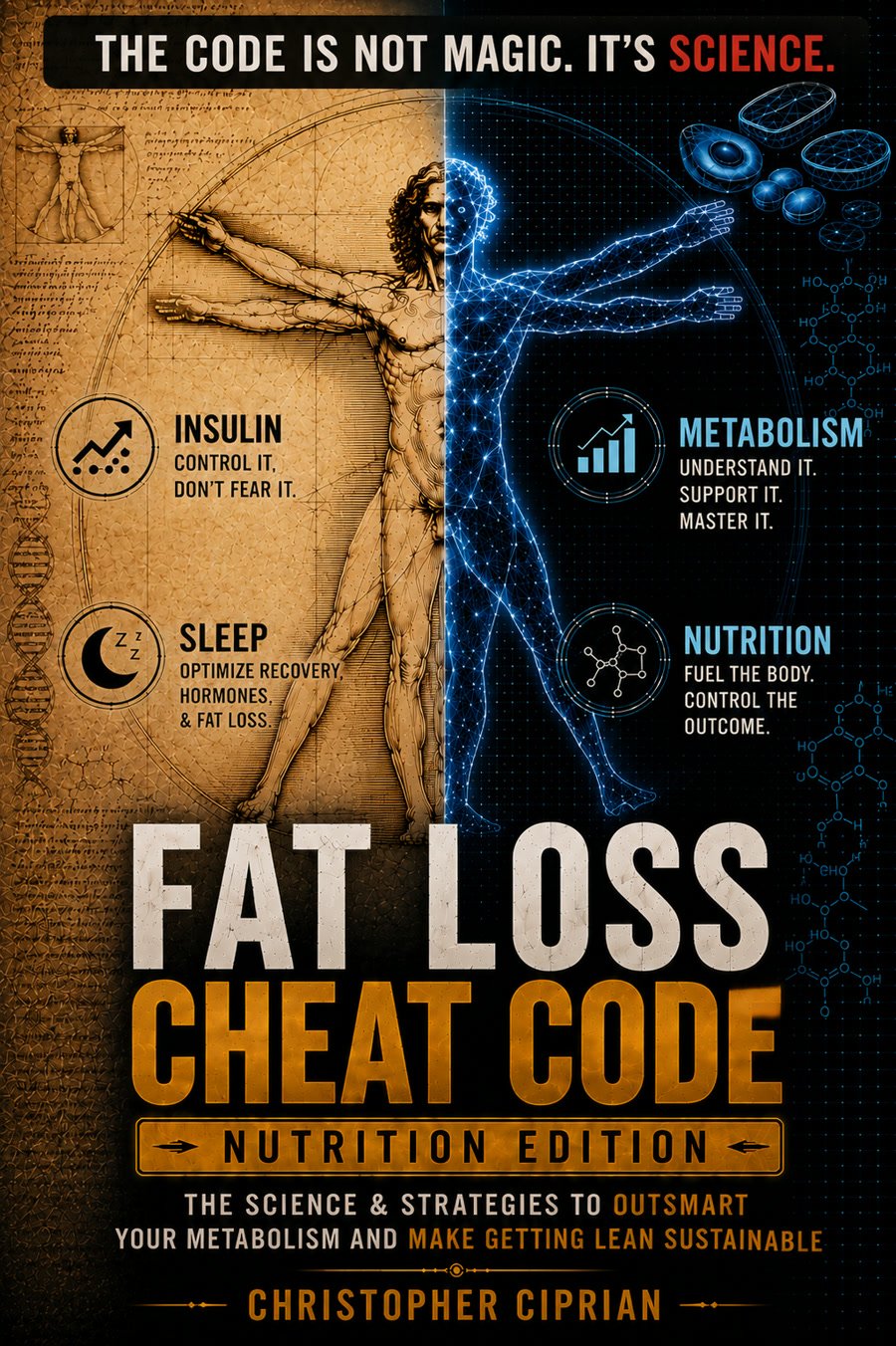
The whole system is in my book, Fat Loss Cheat Code: Nutrition Edition. It’s how you outsmart your metabolism, with every cheat code and the science behind it. These three are in chapter four.
Buy on AmazonAnd if you’d rather have someone build these into your day with you, that’s what coaching is for.
Sources: Johnston et al., Diabetes Care, 2004 (vinegar and a high-carbohydrate meal in insulin resistance); Freitas et al., European Journal of Nutrition, 2021 (white bread with water, black tea or lemon juice, healthy adults); Allen et al., Annals of Family Medicine, 2013 (10 trials, 543 people with type 2 diabetes).