
Quick answer: if you can’t lose weight and you’re doing everything right, ask your doctor for four things: a full thyroid panel (TSH, free T4, free T3), your sex hormones, your fasting glucose and insulin, and your vitamins and minerals (vitamin D, magnesium, iron and B12). Each one can quietly slow fat loss, and you can’t see any of them from the outside.
You finally decide to get your blood checked. You go in, they run the basic panel, and a week later you hear, “Everything looks normal.” But you still feel tired, you’re still not losing, and nothing in your life has changed.
Here’s the problem. A routine checkup often doesn’t include the tests that matter most for fat loss. If you don’t ask for them, you might not get them.
Here’s the plan. First, why a blood test is worth it at all. Second, the four things to ask for and what each one tells you. Third, the vitamin that about four in ten American adults are low in.
Why get a blood test for weight loss?
Because you can’t see what’s going on inside from the outside.
In my book, Fat Loss Cheat Code, which is all about how to outsmart your metabolism, I compare your metabolism to a high-performance car. You can fill the tank with premium gas, but if the spark plugs are worn out, the timing is off, or one of the sensors isn’t working, the engine still sputters. A full blood panel is like popping the hood. It shows you what might be working against you before you spend months on more cardio and fewer calories.
The goal isn’t a perfect score on every number. It’s awareness.
What blood tests should you ask for when you can’t lose weight?
Four things.
1. A full thyroid panel
Ask for TSH, free T4 and free T3, not just TSH. Your thyroid works like your body’s thermostat: it sets how fast your cells burn energy. TSH is the signal your brain sends to it, free T4 is the stored hormone, and free T3 is the active one your cells actually use. About one in twenty Americans has a low thyroid, and many don’t know. More in how to lose weight with a slow metabolism.
2. Your sex hormones
Estrogen and progesterone for women, testosterone for men. These decide where your body stores fat and how well you hold on to muscle. When they shift, often after 40, fat starts heading for your belly, and the scale doesn’t always show it. More in how to lose weight after 40.
3. Your fasting glucose and insulin
Insulin is the hormone that moves sugar out of your blood and into your cells, and it’s also the hormone that stores fat. When your cells stop listening to it, that’s insulin resistance. Some warning signs:
- More fat around your belly
- Hunger that’s hard to control
- Big energy crashes in the afternoon
Your fasting glucose is your blood sugar after a night without food. Fasting insulin is how much insulin your body needs to keep it there. Fasting glucose is usually on a standard panel. Fasting insulin often isn’t, so ask for it by name. If it comes back high, start with how to lower fasting insulin.
4. Your vitamins and minerals
Vitamin D, magnesium, iron and B12. These are the spark plugs: the small stuff your body uses to actually make energy. You can eat the right number of calories, hit your protein, and still be running low.
Is vitamin D deficiency linked to weight gain?
It’s more common in people carrying extra weight. A study in Nutrition Research looked at the blood of nearly 4,500 American adults. 42% were low in vitamin D, and it was more common in people with obesity.
Forty-two percent. That’s not rare. That’s close to half the room.
Vitamin D works more like a hormone than a vitamin. It’s tied to your testosterone, your muscles, your mood and how well your body handles insulin. And it’s not the only one worth checking:
- Magnesium is involved in over 300 reactions in your body, including how you make energy and handle blood sugar.
- Iron carries oxygen to your muscles.
- B12 helps make red blood cells and energy.
When iron or B12 are low, you feel it in your workouts first.
What foods are high in these nutrients?
- Vitamin D: salmon, trout, sardines, egg yolks
- Magnesium: pumpkin seeds, chia seeds, spinach, almonds, black beans, dark chocolate
- Iron: red meat, oysters, lentils, spinach
- Vitamin B12: clams, beef, tuna, nutritional yeast, dairy, eggs
Food first. If your results come back low, your doctor can tell you whether you need more than food.
What do you do with the results?
Read them with your doctor. I’m a nutrition consultant, not a medical doctor, and your doctor knows your history.
And don’t chase perfect numbers. The point of testing is to find what might be holding you back, not to earn a perfect grade on every line. If everything comes back normal, that’s useful too: you’ve ruled out the engine, and you can look at the next thing. For the big picture, read why you can’t lose weight.
The one thing to do this week
Call your doctor and book a full blood panel. Write these four things down and bring the list with you:
- Full thyroid panel: TSH, free T4, free T3
- Sex hormones
- Fasting glucose and insulin
- Vitamin D, magnesium, iron and B12
One blood test, four things to ask for, and no more guessing.
Keep reading
- Why you can’t lose weight (even with clean eating and exercise)
- How to lose weight with a slow metabolism (check your thyroid first)
- How to lose weight after 40: why fat moves to your belly
If you want more cheat codes like this sent straight to your inbox, sign up here. It’s completely free, and just for signing up, I’ll also send you my guide, the 10 Fat Loss Commandments.
Send me the commandments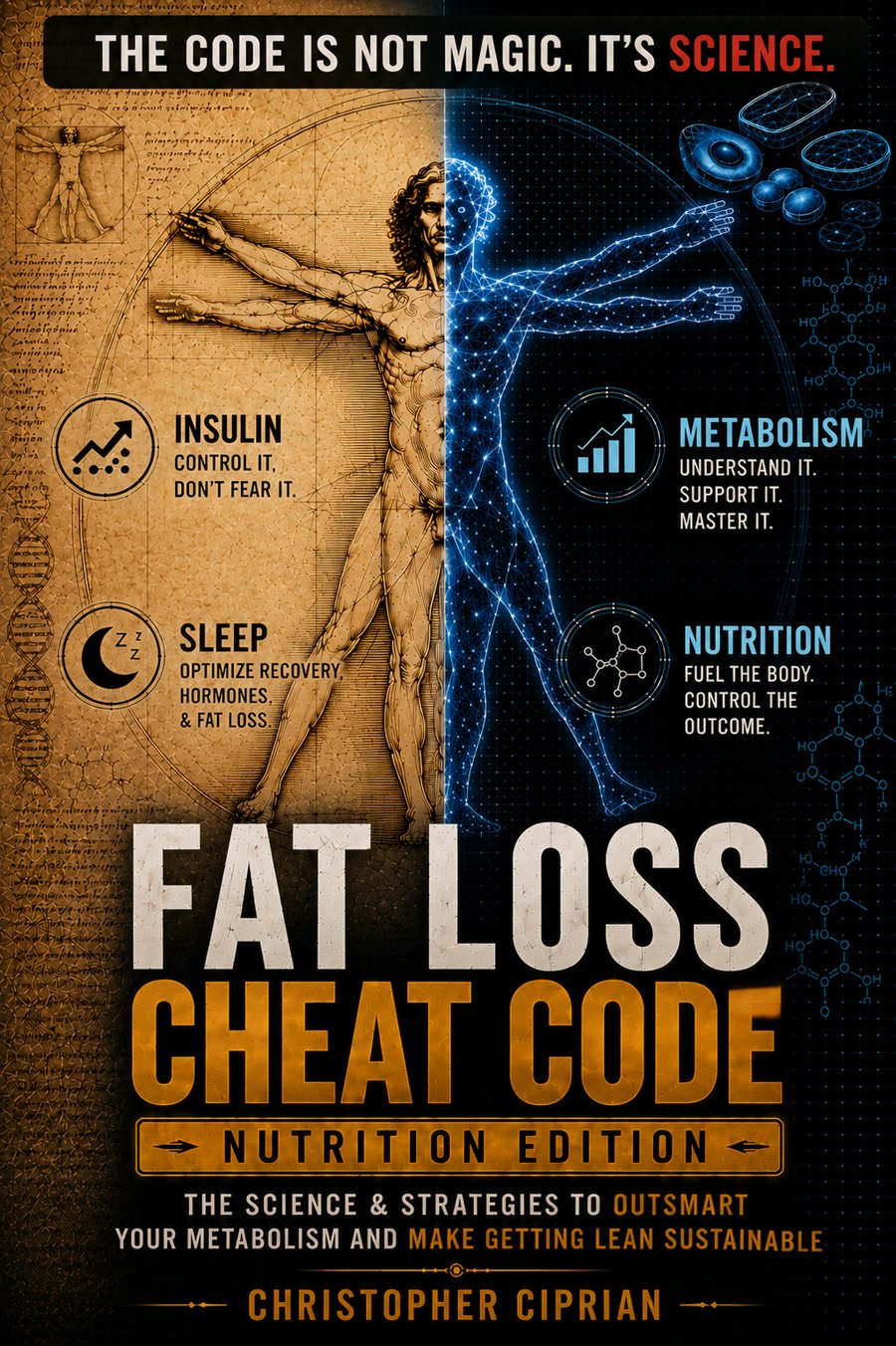
The whole system is in my book, Fat Loss Cheat Code: Nutrition Edition. It’s how you outsmart your metabolism, with every cheat code and the science behind it. The blood panel is in chapter one.
Buy on AmazonAnd if you want help reading the whole picture and turning it into a plan, that’s what coaching is for.
Sources: Forrest and Stuhldreher, Nutrition Research, 2011 (4,495 US adults, NHANES 2005-2006); Hollowell et al., Journal of Clinical Endocrinology & Metabolism, 2002 (17,353 people, NHANES III).