Quick answer: losing weight after 40 is harder because your hormones change. Estrogen drops around menopause and testosterone runs lower, and both shift fat toward your belly while muscle gets harder to keep. In one big study, women’s rate of fat gain almost doubled at the menopause transition while the scale barely showed it. Get your hormones checked, watch your waist instead of just the scale, and protect your muscle.
You’re doing what always worked. Same food, same workouts, same routine. But somewhere after 40, it just stopped working. The weight creeps up anyway, and now it’s showing up in new places, mostly right around your middle.
Here’s the thing. You’re probably not doing anything wrong. Fat loss isn’t the same game for a 25-year-old as it is for a 55-year-old, and that’s exactly why I coach people in their 40s and 50s differently than people in their 20s.
Here’s the plan. First, why fat moves to your belly after 40. Second, what’s different for women and for men. Third, why your scale might be lying to you, and what to do about it.
Why is it harder to lose weight after 40?
Because your hormones change the rules.
Think of your hormones like the GPS that decides where your body delivers fat. For years, it runs the same routes, and the deliveries get spread around: some to the hips, some to the thighs, a little everywhere. Then you hit 40, the GPS installs an update, and suddenly every new delivery gets routed straight to your belly.
Same driver, same food, brand-new storage location.
So when the old approach stops working, it’s not a willpower problem. In my book, Fat Loss Cheat Code, which is all about how to outsmart your metabolism, one of the biggest mistakes I warn about is blaming your willpower. When you blame yourself, you miss what’s actually going on inside.
Why do women gain belly fat during menopause?
For women, it’s estrogen. As it drops around menopause, your body can start storing more fat around your belly instead of your hips.
A long-running study called SWAN followed over 1,200 women through menopause with body scans. Before the change started, they were gaining about 1% fat a year. Once the transition kicked in, that rate almost doubled. And at the same time, their muscle went from slowly growing to slowly shrinking.
Same women, same age bracket, different rules.
Why do men gain weight after 40?
For men, it’s testosterone. It helps you hold on to muscle, recover from your workouts, keep your energy up, and handle carbs better. When it runs low, fat gets stubborn and muscle gets harder to keep.
Some warning signs of low testosterone:
- Fat that sticks around no matter what you do
- Losing muscle
- Slow recovery after workouts
- Low sex drive
- Low energy
- Feeling tired for no clear reason
Testosterone matters for women too, just in smaller amounts. And men need some estrogen. It’s a balance on both sides.
Why doesn’t the scale show it?
Here’s the part nobody tells you. In that SWAN study, the women’s weight on the scale kept the same trend. The fat went up while the muscle went down, so the scale said everything was fine.
That’s why the scale alone can fool you after 40. You can lose a few pounds of muscle and gain a few pounds of fat, and the number doesn’t move at all. Meanwhile your pants are getting tighter.
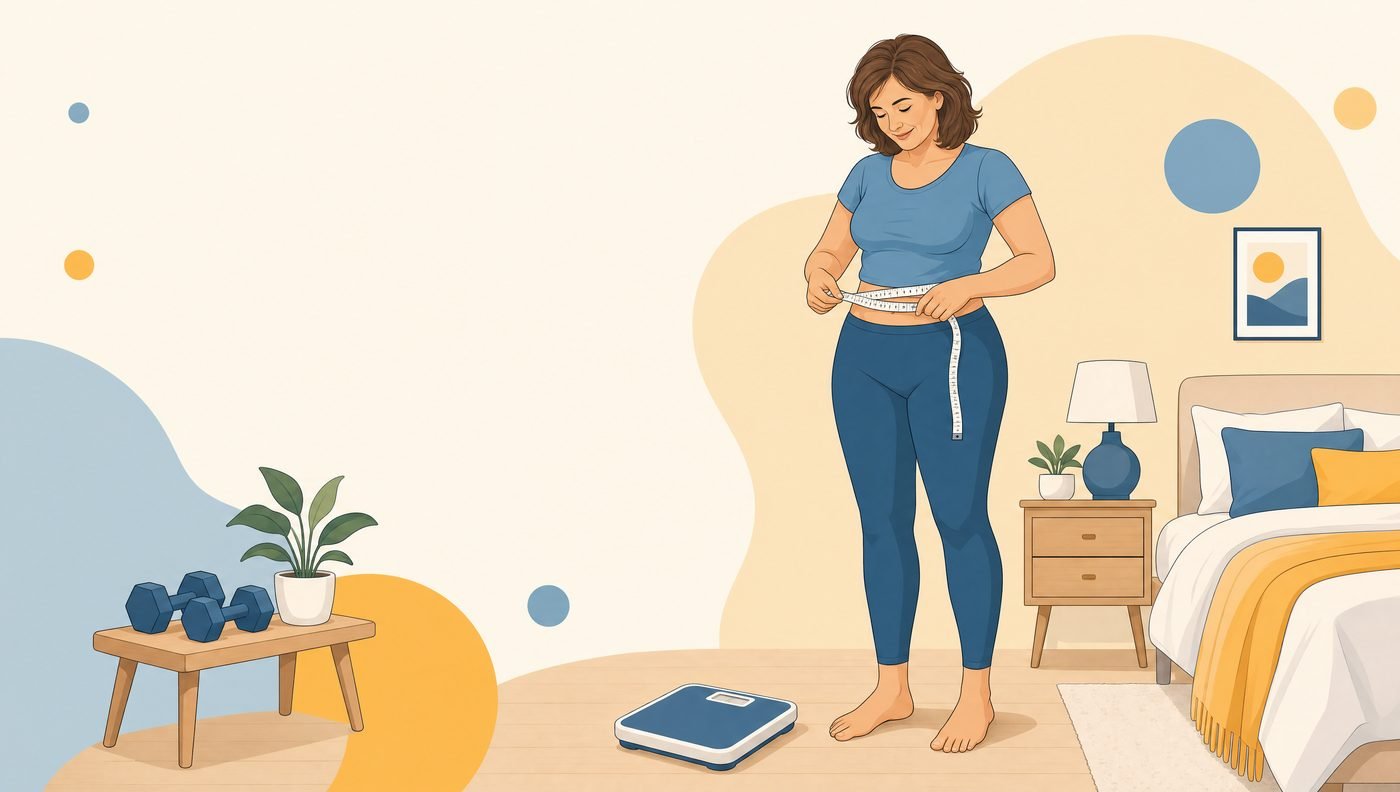
So don’t just watch the scale. Watch your waist. Grab a tape measure once a week, same day, same time, right around your belly button. If your waist is going up while your weight sits still, the GPS update is happening, and the scale won’t tell you.
How do you lose weight after 40?
You don’t need to try harder. You need to work with the new rules.
- Get your hormones checked. Ask your doctor to check estrogen and progesterone for women, testosterone for men. That tells you whether the GPS really did update, and how much.
- Watch your waist, not just your weight. That tape measure tells you what the scale can’t.
- Protect your muscle. Muscle is the part that starts slipping after 40, so hold on to it. Lift something heavy a few times a week, and make protein the center of every meal. How much depends on your body; I explain how to find your own amount in how much protein a woman over 50 needs.
- Check the rest of the engine. Hormones aren’t the only thing that shifts. A slow thyroid or low vitamin D can stack on top. The full list is in blood tests for weight loss.
I’m a nutrition consultant, not a medical doctor, so let your doctor read your results with you and decide what comes next. For the bigger picture of why the scale gets stuck even when you’re doing everything right, read why you can’t lose weight.
The one thing to do this week
Measure your waist. Write it down. Then call your doctor and ask for your hormones to be checked. If you’re over 40 and the old approach suddenly stopped working, you’re probably not doing anything wrong. The rules changed, and now you get to find out how.
Keep reading
- Why you can’t lose weight (even with clean eating and exercise)
- How to lose weight with a slow metabolism (check your thyroid first)
- Blood tests for weight loss: the 4 things to ask your doctor for
If you want more cheat codes like this sent straight to your inbox, sign up here. It’s completely free, and just for signing up, I’ll also send you my guide, the 10 Fat Loss Commandments.
Send me the commandments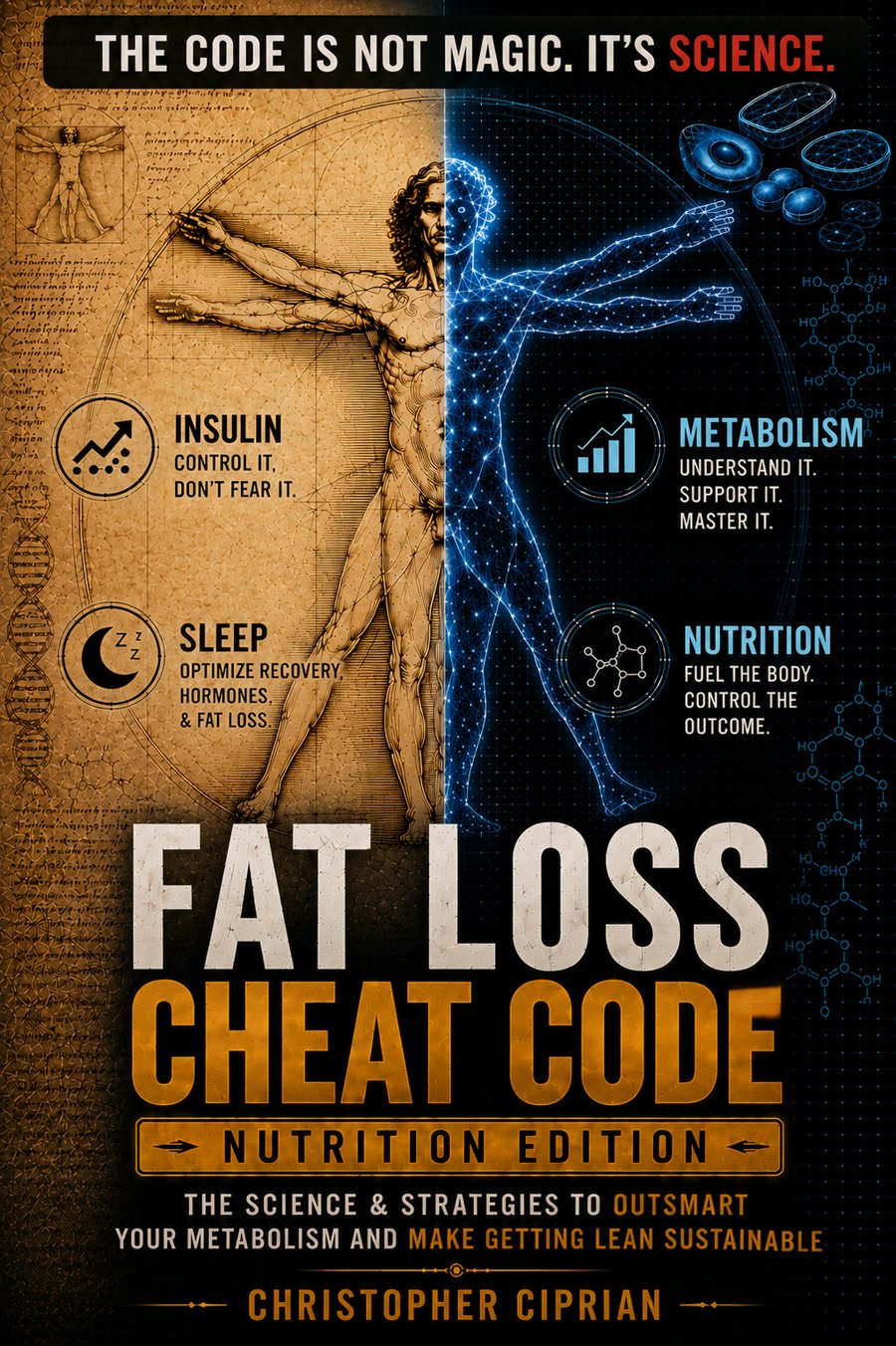
The whole system is in my book, Fat Loss Cheat Code: Nutrition Edition. It’s how you outsmart your metabolism, with every cheat code and the science behind it. Hormones are in chapter one.
Buy on AmazonAnd if you want a plan built around where your body is right now, that’s what coaching is for.
Sources: Greendale et al., JCI Insight, 2019 (SWAN, 1,246 women, body scans through the menopause transition).