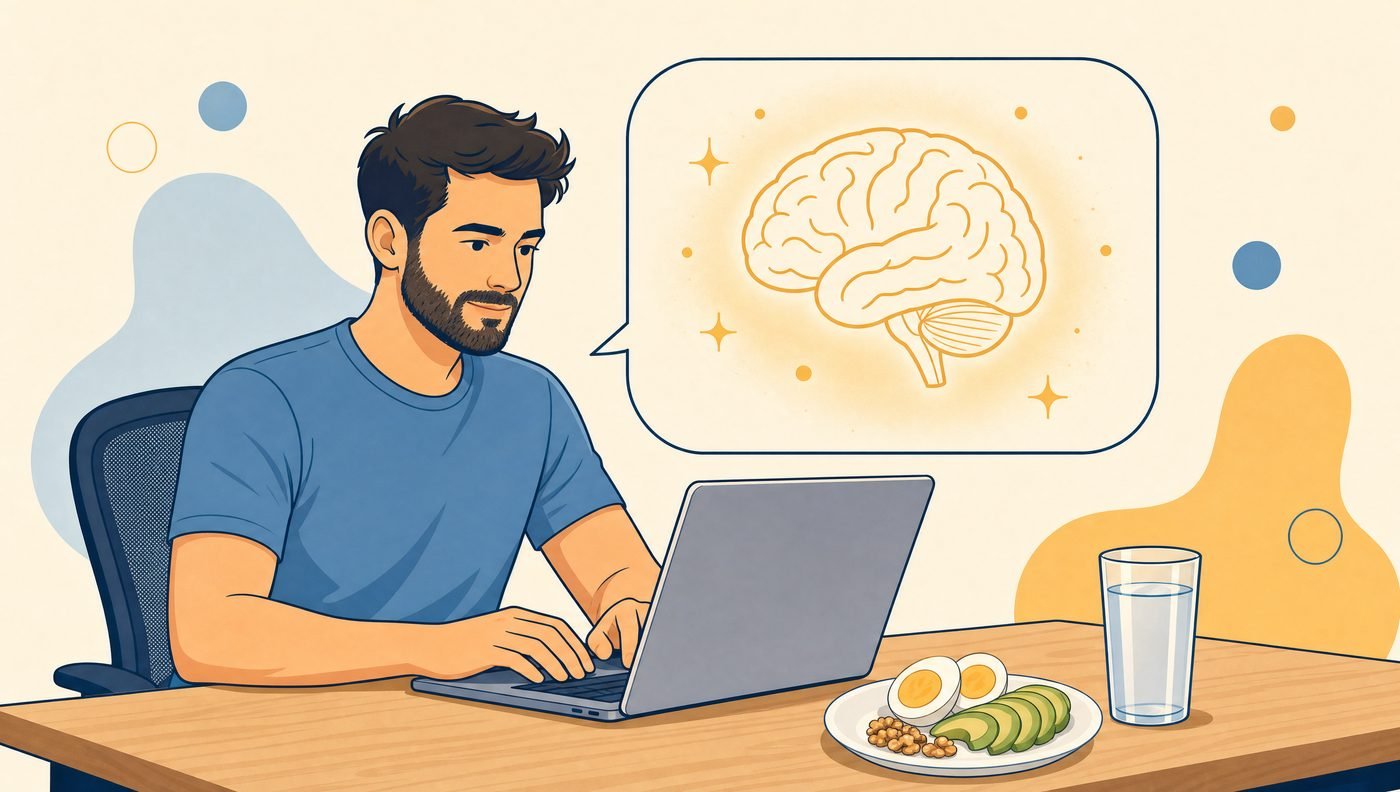
Quick answer: no, your brain doesn’t need carbs from your food. It needs some glucose, and your liver can make that glucose from protein and fat through a process called gluconeogenesis. When carbs are low, ketones made from fat become a major fuel for your brain. Carbs aren’t an essential nutrient. Your body can make what it needs without them.
You’ve probably heard it from a trainer, a relative or half the fitness internet: “Your brain runs on sugar. Cut the carbs and you’ll be foggy, slow and miserable.”
It sounds scientific. It’s also only half the story, and the missing half is the part that matters.
Here’s the plan. First, what your brain actually burns. Second, where it gets fuel when carbs are low. Third, why you might feel foggy at first, and how long that lasts.
Does the brain run on glucose?
Yes, most of the time. On a normal diet with plenty of carbs, glucose is your brain’s main fuel. That’s where the myth comes from, and that part is true.
But “the brain uses glucose” is not the same as “you have to eat carbs.” Those are two very different claims.
What is gluconeogenesis?
Gluconeogenesis is a long word for something simple: your liver making new glucose. “Gluco” is sugar, “neo” is new, “genesis” is making. Your liver can build glucose out of other things, like the building blocks of protein and part of the fat molecule.
Think of your liver as an in-house bakery. You can buy bread at the store, or the bakery in your own house can make it. If you stop buying bread, you don’t run out. The bakery just fires up the ovens.
So even when you eat almost no carbs, your blood sugar stays in a normal range, and your brain still gets the glucose it needs.
Are carbs an essential nutrient?
No. In my book, *Fat Loss Cheat Code*, which is all about how to outsmart your metabolism, I call this the Essential Nutrient Fallacy.
“Essential” has a specific meaning in nutrition. It means your body can’t make it, so you have to eat it:
- Essential amino acids come from protein. Your body can’t make them.
- Essential fatty acids come from fat. Your body can’t make them.
- Carbs have no essential version. Your liver makes the glucose you need.
That doesn’t make carbs toxic or bad. It just means that, unlike protein and fat, carbs aren’t required for survival.
What does the brain use for fuel without carbs?
Ketones. When carbs are low, your liver turns fat into ketones, and your brain is very good at using them.
The research on this goes back decades, to George Cahill, a pioneer of how the body handles fasting. His work showed that during fasting, a ketone called beta-hydroxybutyrate (BHB for short) takes over from glucose as the brain’s main fuel. That’s how people have survived months without food. The liver keeps making the small amount of glucose the brain still needs, and ketones cover the rest.
And it happens fast. A recent review found that after just two days of fasting, ketone levels in the blood rise about twentyfold.
You don’t have to fast to get there. A low carb diet gets you into the same fuel switch, just more gently.
Do some people need more carbs?
Some do. In my book I point out the exceptions: elite endurance athletes and explosive athletes like sprinters may need more carbs to fuel that kind of training. For the average person trying to lose fat, your brain and your muscles do fine on low carb once you’ve adapted.
Why do I feel foggy when I cut carbs?
Because your body is changing fuel sources, and that takes time. During the first one to three weeks of cutting carbs, you can feel tired, foggy or a little flat. That’s the adjustment, not your brain starving.
Once your body gets good at using fat and ketones, many people find their energy and focus steadier than before, with fewer afternoon crashes. Me personally? When I eat a carb-heavy meal, I’m ready for a nap after.
How long the fog lasts, and how to get through it faster, is in the keto flu timeline.
The one thing to do this week
Next time someone tells you your brain needs carbs, remember the in-house bakery. Then, if you want to try low carb, give it a full three weeks before you decide how your brain feels on it. If you’re still choosing between keto, carnivore or something in between, start with low carb diets explained: keto, carnivore, fact vs myth.
Keep reading
- Low carb diets explained: keto, carnivore, fact vs myth
- Keto macros for weight loss: why you don’t need all that fat
- Keto flu timeline: how long it lasts and how to get through it
If you want more cheat codes like this sent straight to your inbox, sign up here. It’s completely free, and just for signing up, I’ll also send you my guide, the 10 Fat Loss Commandments.
Send me the commandments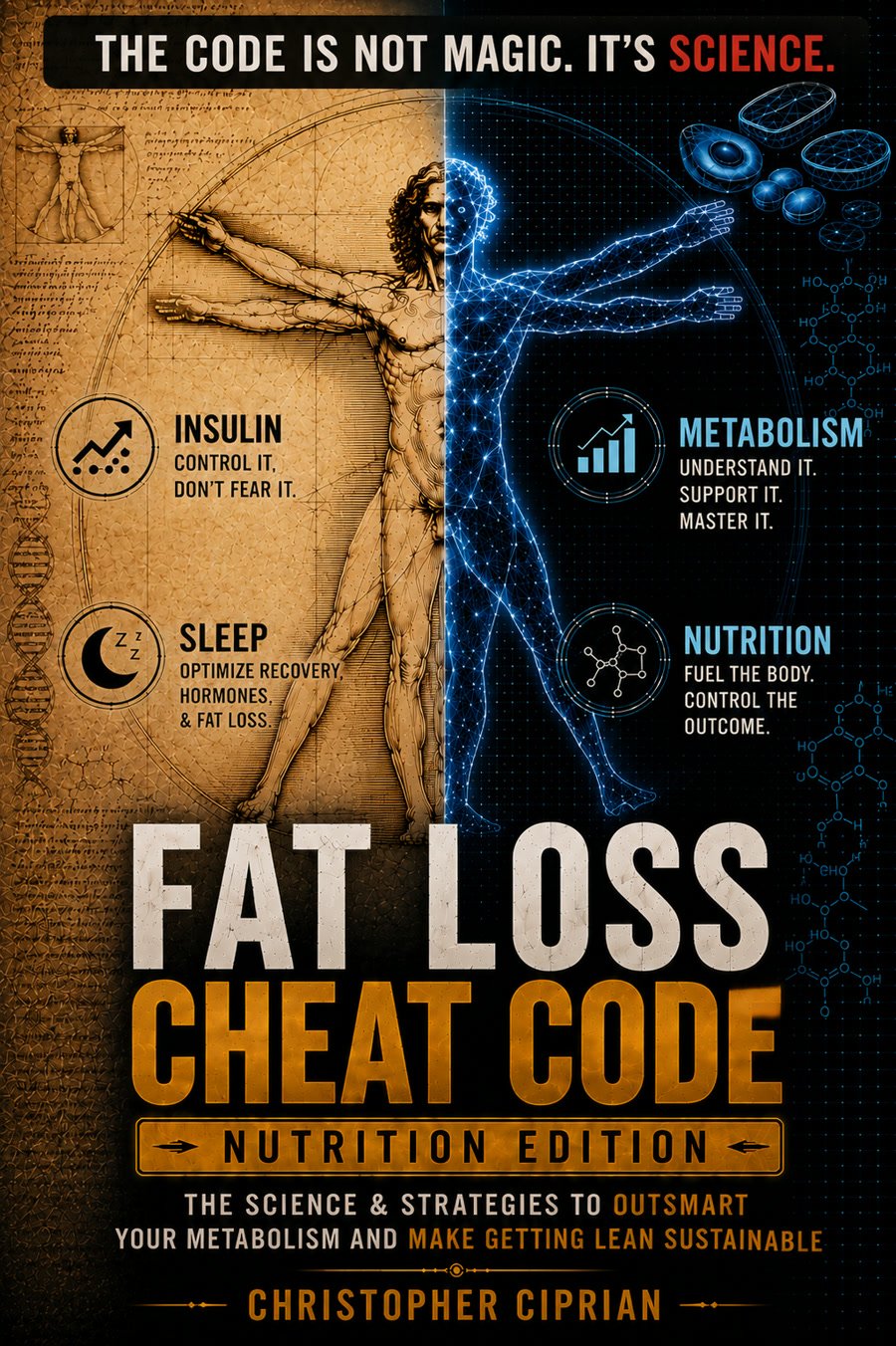
The whole system is in my book, Fat Loss Cheat Code: Nutrition Edition. It’s how you outsmart your metabolism, with every cheat code and the science behind it. The low carb myths are in chapter four.
Buy on AmazonAnd if you’d rather have someone guide you through the switch, that’s what coaching is for.
Sources: Cahill, Annual Review of Nutrition, 2006 (fuel metabolism in starvation); Cahill and Veech, Transactions of the American Clinical and Climatological Association, 2003 (ketoacids as fuel); Bougnères, Cells, 2026 (review, ketone bodies as brain fuel).