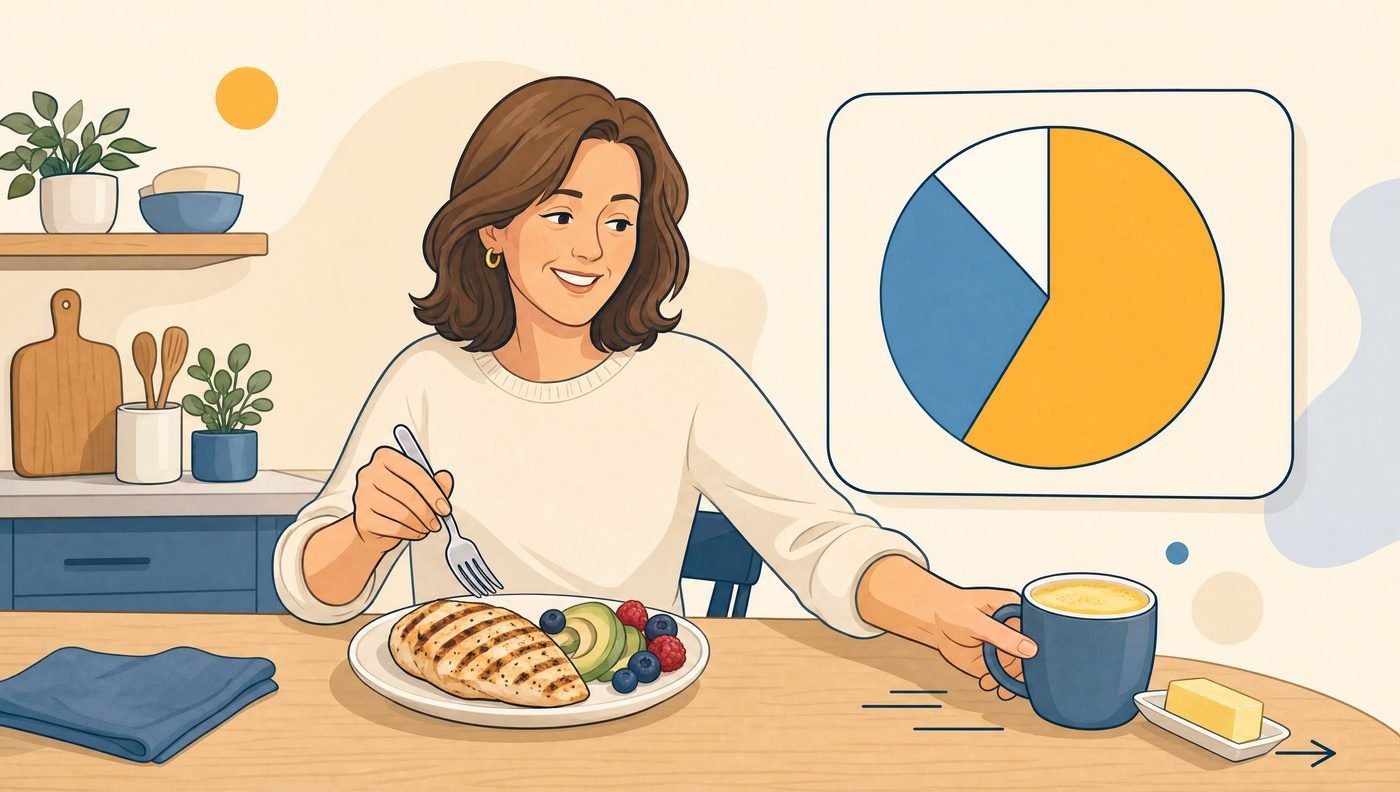
Quick answer: standard keto macros are about 70 to 80% fat, very low carb and moderate protein. For weight loss, you don’t need that much fat. Your body already carries a supply of it. I use high protein, moderate fat and low carb instead: about 35% or more protein, 50% fat and 15% or less carbs.
You started keto. You cut the bread, you added the butter, the bulletproof coffee and the fat bombs. And the scale hasn’t moved.
That’s not you failing keto. That’s keto being explained wrong. The numbers most people use were built to get you into ketosis, not to get fat off your body.
Here’s the plan. First, what standard keto macros look like. Second, why they can stall your fat loss. Third, the split I use and how to set yours.
What are the standard keto macros?
The textbook ketogenic diet is very low carb, moderate protein and high fat. In practice that usually means something like:
- Fat: about 70 to 80% of your calories
- Protein: about 15 to 20%
- Carbs: about 5 to 10%
To give you a real example, when researchers at the National Institutes of Health ran a keto diet on a metabolic ward, it was 80% fat, 15% protein and just 5% carbs.
Those numbers do one job well: they push you into ketosis, where your liver turns fat into ketones and your body runs on fat instead of sugar. But “running on fat” doesn’t tell you whose fat.
Why the standard keto macros can stall fat loss
In my book, *Fat Loss Cheat Code*, which is all about how to outsmart your metabolism, this is the Fat for Fuel cheat code: let your body provide some of the fat you burn.
If your goal is to lose body fat, your body already has a large supply of it on hand. Your own stored fat. If you keep adding butter, oils, MCT oil and heavy cream, your body burns that first. You’re feeding it fat so it doesn’t have to go get its own.
Those extra fats are also the most calorie-dense food there is. A couple of tablespoons of butter in your coffee and a drizzle of oil on everything can quietly erase your whole calorie deficit. Dietary fat still matters for your hormones and your cells. You just don’t need to force it.
That same metabolic ward study is a good reality check. On equal calories, the people on 80% fat didn’t lose body fat faster. In the first weeks, their fat loss actually slowed. Ketosis isn’t magic. You still need the deficit.
What macros should I eat on keto to lose weight?
Here’s the split I personally use. I keep protein high:
- Protein: 35% or more
- Fat: about 50%
- Carbs: about 15% or less
At 2,000 calories a day, that works out to about 175 grams of protein, 111 grams of fat and 75 grams of carbs. Your own numbers will be different. They depend on your size, your activity and how much you’re eating, so treat my split as a starting shape, not a prescription.
This is the method I used to take my body from 217 pounds down to 165. Don’t be afraid of eating fats. Just don’t go out of your way to throw extra fat into your food for the sake of being “keto.”
Why keep protein so high on keto?
Protein is what keeps you full. In one study, people raised their protein from 15 to 30% of their calories, kept their carbs exactly the same, and ate 441 fewer calories a day without trying. Protein also protects your muscle while you lose fat, and muscle is what keeps your metabolism up. I go deeper on this in how much protein to lose weight.
What carbs can I eat on keto?
At 15% or less, carbs are a small part of your day, so make them count. Pick low glycemic, whole foods, not processed junk. In my book, anything with a glycemic index of 55 or less counts as low. The ones I generally eat:
- Berries
- Watermelon
- Sweet potatoes, which do better alongside protein than eaten on their own
Leafy greens, broccoli, cauliflower, asparagus and avocado barely register at all.
How do I set my own keto macros?
- Start with protein. Set it high, then build every meal around it.
- Keep carbs low and slow. Whole foods with a low glycemic index.
- Let fat fill in the rest. Eat the fat that comes with your food. Skip the fat you add just to hit a number.
- Watch the scale and your hunger for two to three weeks before you change anything.
If you’re not sure whether keto, carnivore or something in between fits you, start with low carb diets explained: keto, carnivore, fact vs myth.
The one thing to do this week
Take one added fat out of your day. The butter in your coffee, the fat bomb, the extra drizzle of oil. Put a palm of protein in its place, and see how your hunger and your scale look by the weekend.
Keep reading
- Low carb diets explained: keto, carnivore, fact vs myth
- Does your brain need carbs to function?
- Keto flu timeline: how long it lasts and how to get through it
If you want more cheat codes like this sent straight to your inbox, sign up here. It’s completely free, and just for signing up, I’ll also send you my guide, the 10 Fat Loss Commandments.
Send me the commandments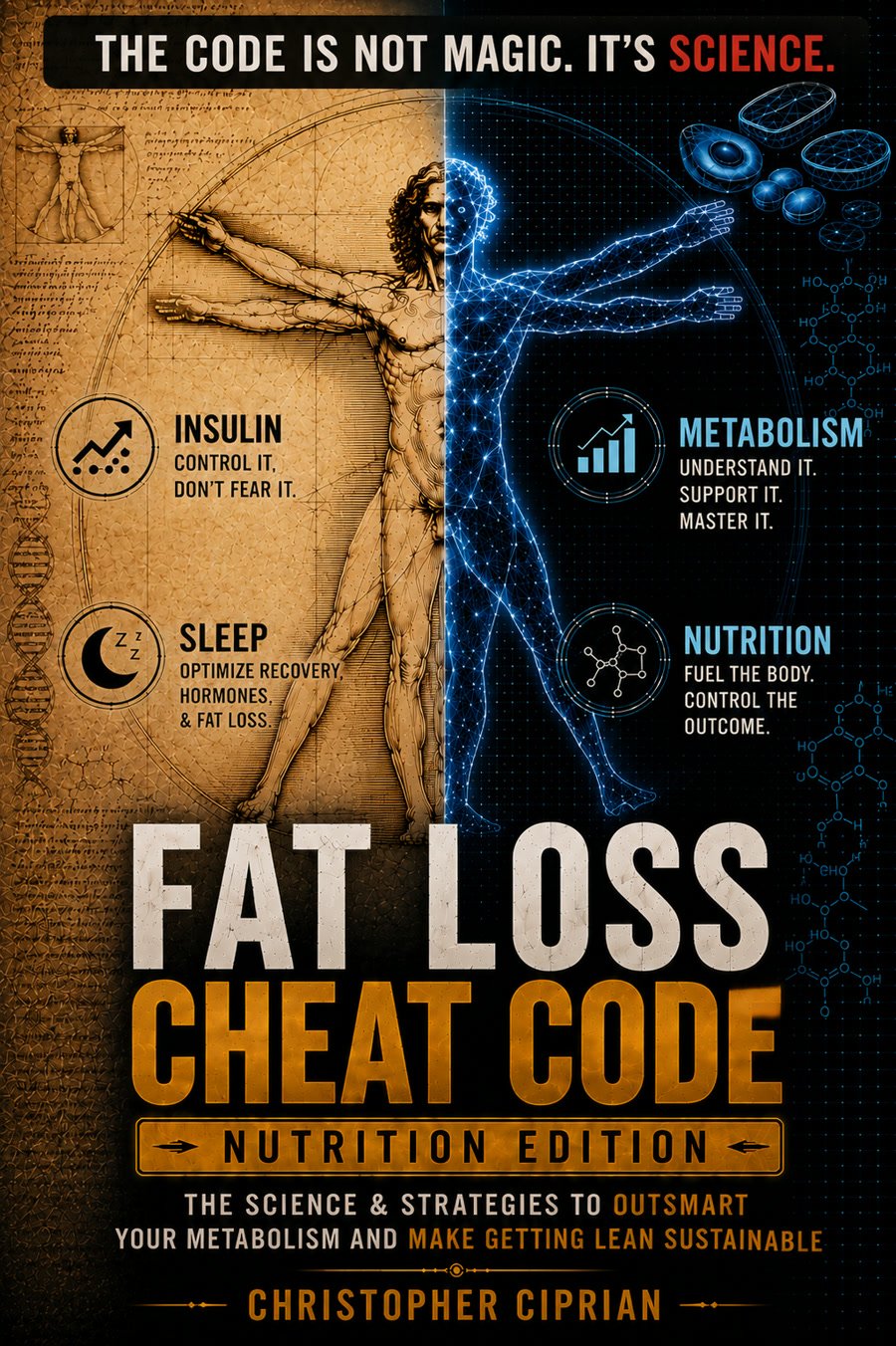
The whole system is in my book, Fat Loss Cheat Code: Nutrition Edition. It’s how you outsmart your metabolism, with every cheat code and the science behind it. Fat for Fuel is in chapter four.
Buy on AmazonAnd if you want your macros set for your own body and adjusted as you go, that’s what coaching is for.
Sources: Hall et al., American Journal of Clinical Nutrition, 2016 (17 men, metabolic ward, 80% fat keto on equal calories); Weigle et al., American Journal of Clinical Nutrition, 2005 (protein 15% to 30%).