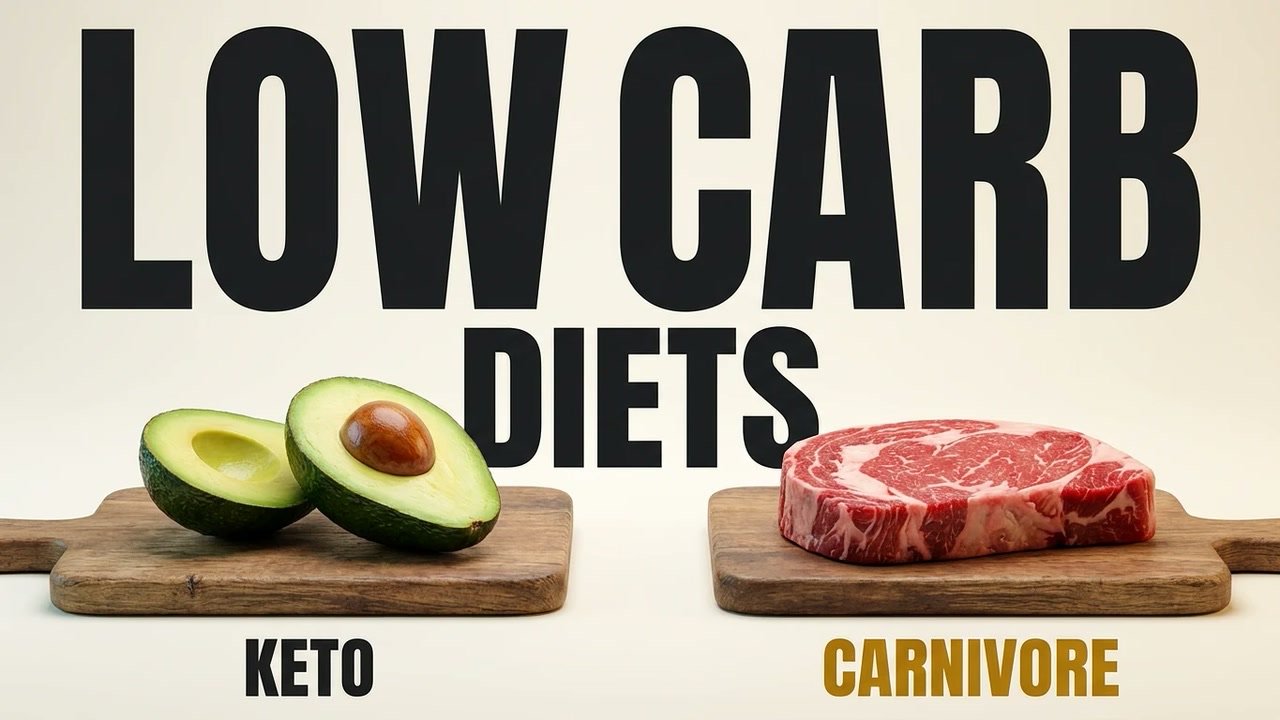
Quick answer: keto and carnivore are both low carb diets. Keto is very low carb, moderate protein and high fat; carnivore takes low carb all the way, with animal foods only. Both can work, most of the scary stories about them are myths, and the best one is the one you can keep up. The biggest mistake on either is piling on extra fat.
Keto, carnivore, low carb? What’s the difference?
Most people think keto means putting butter and bacon on everything. Well, that’s probably why you’re not seeing results. So let’s cut through the online noise, so you can confidently choose the right path for your body.
Here’s the plan. First, keto and the cheat code to burn your own fat for fuel. Second, carnivore, maybe the meatiest diet ever. Third, facts versus myth.
What is the keto diet?
Keto is usually defined as a very low carb, moderate protein, high fat diet. Cut the carbs low enough, and your liver starts turning fat into something called ketones. Think of ketones as a backup fuel source. Your brain and your muscles run on them just fine.
With fewer carbs coming in, your insulin, the hormone that stores fat, stays lower and steadier. So your body leans more on the fat it already has.
Here’s the part people love. A meta-analysis of keto diets found people were less hungry and wanted to eat less. The change was small, and mostly it kept hunger from climbing the way it usually does when you diet. And in the BMJ, a study of 164 adults found that on a low carb diet, ghrelin, the hormone that basically tells your stomach “feed me,” was lower. Less hunger means less fighting yourself. That’s a big deal.
Is keto just butter and bacon?
No, and this is the number one thing people get wrong.
In my book, *Fat Loss Cheat Code*, which is all about how to outsmart your metabolism, this is the Fat for Fuel cheat code: let your body provide some of the fat you burn.
The standard definition of keto has you eating very high fat, like 70 to 80% of your calories. But ketosis isn’t a diet. It’s a metabolic state. Being keto doesn’t mean you have to eat as much fat as possible. You already have a big supply of it on hand, right around your waistline. So why would you take in more fat to use as fuel, when you could just use the fat you already have in storage?
When you pile on the butter, the oils and the heavy cream, you can wipe out your whole calorie deficit without noticing.
How I do keto instead
This is the method I used to take my own body from 217 pounds down to 165. I just change the numbers around: high protein, moderate fat, low carb. Don’t be afraid of eating fats, but don’t go out of your way to throw extra fat into your food just for the sake of being “keto.”
I break down my exact split in keto macros for weight loss.
What is the carnivore diet?
Carnivore is low carb taken all the way. You eat animal foods only: meat, fish, eggs, maybe some high-fat dairy. That’s it. Carbs are basically zero, which keeps your insulin very low. You get complete protein. And honestly, it’s simple. No counting, and no menu drama.
Is carnivore an elimination diet?
That’s the second side most people overlook. In my book, carnivore is the ultimate elimination framework. You pull out the usual troublemakers:
- Grains
- Nightshades (tomatoes, peppers, potatoes, eggplant)
- Dairy
- FODMAPs, which are hard-to-digest carbs that can upset your gut
Then you add foods back one at a time and watch how you feel. Think of it as a police lineup for your food. It makes it easier to find the culprit.
Why do people stick with carnivore?
A survey of more than two thousand people who stayed on carnivore for six months or longer found high satisfaction and better self-reported health. It’s a survey of people who stuck with it, so it can’t prove carnivore works for everyone, but it tells you why the ones who like it really like it.
A big reason is protein. A meta-analysis found that after a high-protein meal, hunger goes down and fullness goes up. In one study, people raised their protein from 15 to 30% of their calories, kept their carbs the same, and ate 441 fewer calories a day without even trying. That’s protein doing the work, which means you can get that full feeling whether you’re keto or carnivore. More on that in how much protein to lose weight.
What about fiber on carnivore?
This is the big question. Honestly, the science isn’t there yet. Nobody has put carnivore through a proper human trial on gut health.
Keto vs carnivore: which is better for weight loss?
Neither one wins outright. They can both work, and they work for some of the same reasons: fewer carbs, steadier insulin, and lots of filling protein.
There’s also a hybrid of the two, called keto-vore. It’s mostly carnivore, with some added fruits, vegetables, nuts and ancient grains. It’s close to what I eat myself: high protein, low carb, moderate fat.
So here’s what I recommend. Never be strictly bound to a diet protocol just because it’s popular. Go with the choice that best suits your lifestyle. In the end, the best diet out there is the one you can actually stick to, and that’s not the same for every person.
Keto and carnivore myths vs facts
Let’s knock these down one at a time.
Myth 1: “Your brain needs carbs to function”
Fact: your liver makes the glucose your brain needs through a process called gluconeogenesis, and when carbs are low, ketones step in and become your brain’s main fuel. That’s from Cahill’s research, and it’s in my book too. Carbs are not an essential nutrient. The full story is in does your brain need carbs.
Myth 2: “Ketosis is the same as ketoacidosis”
Fact: ketosis is a normal metabolic state. Ketoacidosis is a rare medical emergency, mostly in type 1 diabetes. They sound the same, but they aren’t. If you’re breastfeeding or on a diabetes medication, talk to your doctor before you go keto.
Myth 3: “All that protein wrecks your kidneys”
Fact: a review of 28 trials and over 1,300 healthy adults found that high protein did not harm kidney function. That’s healthy kidneys. If you already have kidney disease, that’s a conversation for your doctor.
Myth 4: “You’ll lose muscle and strength on low carb”
Fact: three separate meta-analyses looked at this. One pooled five studies of resistance-trained people, one looked at squat and bench press strength, and one covered eleven trials on muscle growth. None found a meaningful difference between people eating carbs and people eating low carb, as long as protein was matched.
Myth 5: “You’ll crash and feel awful”
Fact: the first one to three weeks can feel rough while your body switches fuel sources. After that, a lot of people find their energy steadier. And me personally? When I eat a carb-heavy meal, I’m ready for a nap after.
One caveat: when you eat low carb, your kidneys flush out more fluid, which is part of why the scale drops fast. Stay hydrated and take your electrolytes. I walk through the whole first month in the keto flu timeline.
Myth 6: “You’ll only lose water weight”
Fact: in the first week or two, yes, a lot of it is water. Your body stores carbs along with three to four times their weight in water, so when carbs drop, the scale drops fast. But it doesn’t stop there. A review of 33 trials found that between six months and two years, people on low carb lost about three pounds more than people on low fat.
The one thing to do this week
So, keto, carnivore, or somewhere in between? There’s no one wrong answer. They can all work, and most of what scares people off is pure myth.
Pick the version that fits your life, and give it a solid three weeks before you judge it. That first stretch is always the roughest, but once you make it past that, the rest is easier. And if you want to know why mixing a big load of carbs and fat jams things up, read metabolic flexibility explained.
Keep reading
- Keto macros for weight loss: why you don’t need all that fat
- Does your brain need carbs to function?
- Keto flu timeline: how long it lasts and how to get through it
If you want more cheat codes like this sent straight to your inbox, sign up here. It’s completely free, and just for signing up, I’ll also send you my guide, the 10 Fat Loss Commandments.
Send me the commandments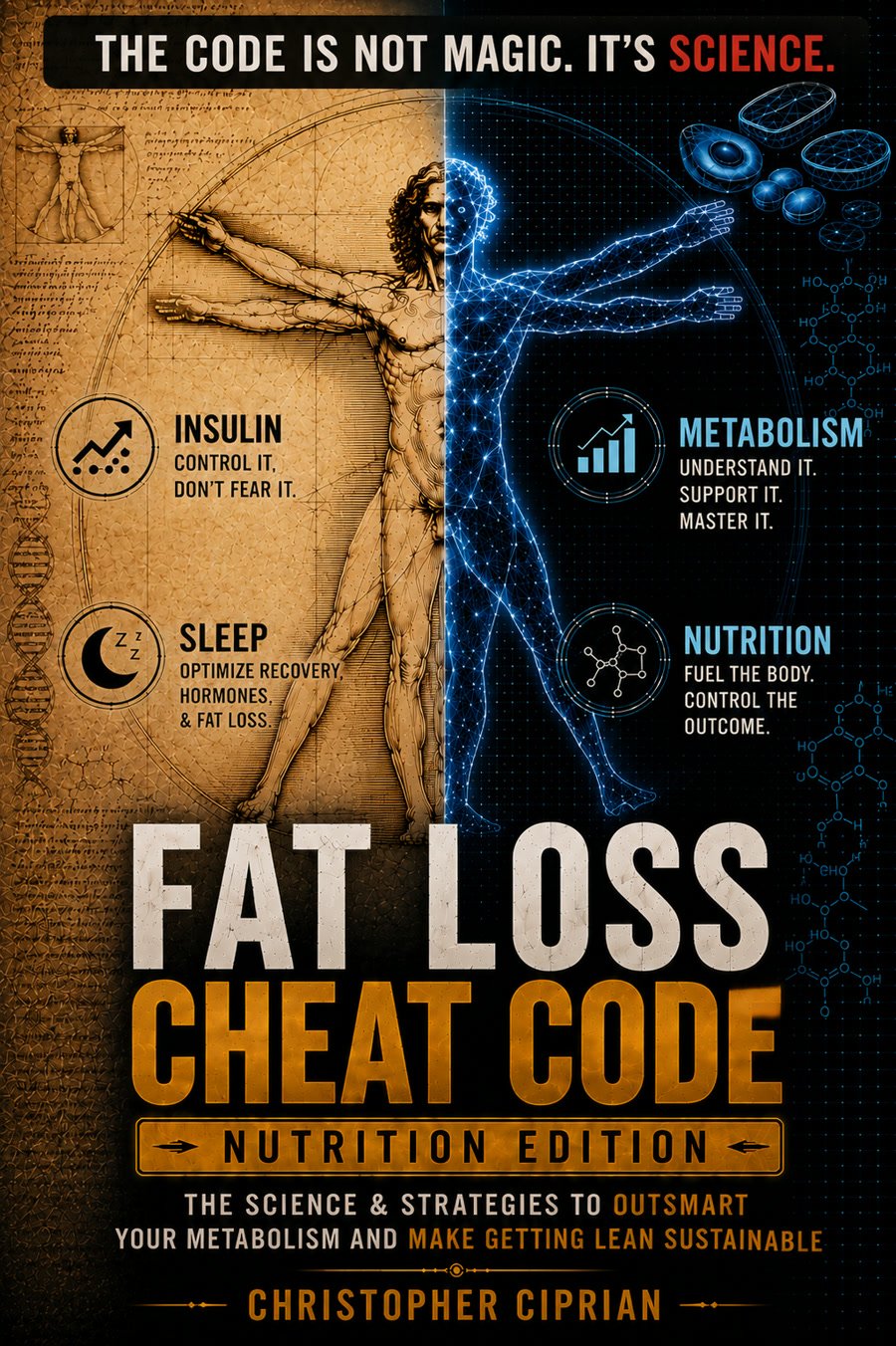
The whole system is in my book, Fat Loss Cheat Code: Nutrition Edition. It’s how you outsmart your metabolism, with every cheat code and the science behind it. Fat for Fuel and the low carb myths are in chapter four.
Buy on AmazonAnd if you’d rather have someone build this around your life with you, that’s what coaching is for.
Sources: Gibson et al., Obesity Reviews, 2015 (meta-analysis, appetite on ketogenic diets); Ebbeling et al., BMJ, 2018 (164 adults, ghrelin on low carb); Lennerz et al., Current Developments in Nutrition, 2021 (survey of 2,029 adults on carnivore 6+ months); Kohanmoo et al., Physiology and Behavior, 2020 (meta-analysis, protein and appetite); Weigle et al., American Journal of Clinical Nutrition, 2005 (protein 15% to 30%); Cahill, Annual Review of Nutrition, 2006; Schade and Eaton, 1983 (diabetic ketoacidosis); de Amorim et al., Nutrition Research, 2024 (breastfeeding); Somagutta et al., Korean Journal of Family Medicine, 2022 (SGLT2 medications); Devries et al., Journal of Nutrition, 2018 (28 trials, 1,358 adults); Vargas-Molina et al., 2022 and 2024; Henselmans et al., Sports Medicine, 2026 (11 trials); Kreitzman et al., American Journal of Clinical Nutrition, 1992 (glycogen and water); Lei et al., 2022 (33 trials, low carb vs low fat).