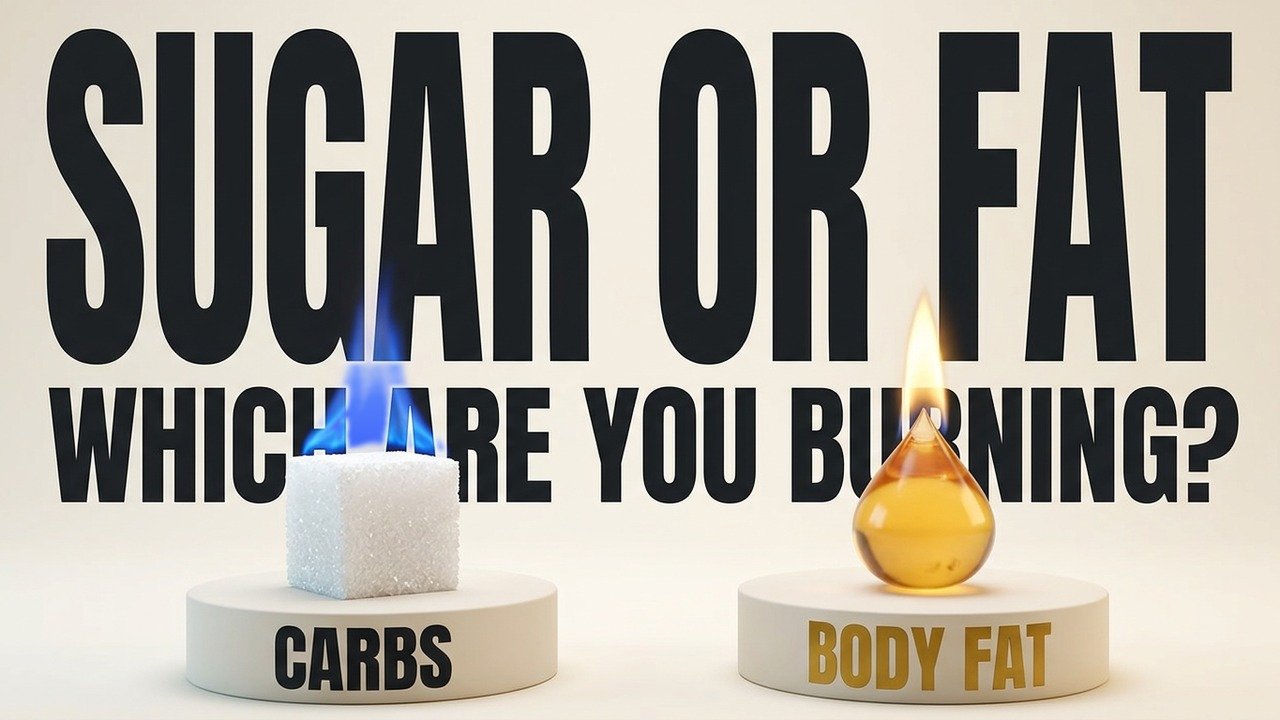
Quick answer: metabolic flexibility is your body’s ability to switch easily between burning the food you just ate and burning the fat you have stored. A big load of carbs and fat in the same meal can jam that switch, which is why pizza, donuts, ice cream and fries are so hard to stop eating. To get the switch working again, build every meal around protein, then pick carbs or fat beside it. Not a big load of both.
Have you ever had one slice of pizza, then another, then another, and it felt like a switch that wouldn’t turn off? Next thing you know, the whole pizza is gone and so is a pint of ice cream.
Most people blame their willpower. I did too. But look at the list of foods you can’t stop eating. It’s donuts, pizza, ice cream, fries. Carbs and fat, together. That pairing does something to your appetite, and it’s not your fault. It’s biology. And the good news is you can outsmart your biology.
Here’s the plan. First, how the pair hijacks your hunger. Second, how it jams your fuel switch. Third, what metabolic flexibility actually is and how to get it back.
Why can’t I stop eating pizza, donuts and ice cream?
I used to wonder why I overate. That pizza question at the top of this page was real for me. I’ve done it more times than I’d like to admit. Then I tried keto and realized it was the types of food making me eat that way. High carbs and high fats at the same time flip a switch in your brain, sending dopamine and reward signals that light up your pleasure circuits like a Christmas tree.
There’s science behind that switch. In 2018, researchers published a study in *Cell Metabolism*. They put people in a brain scanner and had them bid, like at an auction, on snack foods. The foods were matched for calories, familiarity and how much people liked them. Some were mostly fat, some mostly carbs, and some were both.
People bid more for the foods with both. Same calories, higher price. And the reward center in their brains lit up harder too. That’s the part of your brain that says, “Do that again.”
Here’s the kicker. People were pretty good at guessing the calories in the fat foods. But with fat and carbs together, their guesses were off. So your brain loves it more, and it can’t tell how much you’re actually eating. That’s a recipe for a whole pizza.
It’s not just a lab trick, either. At the National Institutes of Health, 20 adults ate an ultra-processed menu for two weeks and an unprocessed menu for two weeks, with the meals matched. On the processed menu they ate about 500 more calories a day. That study was about processed food, not the pair alone. But most ultra-processed food is built on exactly this combination.
So when you can’t stop, it isn’t weakness. It’s a reward system doing what it was designed to do.
What is metabolic gridlock?
Picture rush hour on a highway. When traffic is light, cars flow one after another. Your body handles fuel the same way: sugar from carbs in one lane, fat in the other. Most of the day they merge in and out, taking turns, and you never notice.
But when a big load of both shows up at once, you get a jam. Two lines of cars trying to squeeze into the same lane. In my book, I call that metabolic gridlock.
This isn’t a new idea. Back in 1963, a researcher named Randle noticed that when there’s a lot of fat in the blood, your muscles burn more fat and take in less sugar. Fat gets waved through. Sugar sits there and waits.
In 1996, a team at Yale tested it in people. Nine healthy adults got an IV to raise the fat in their blood. After about six hours, their bodies were taking up less than half as much sugar as normal.
That was an IV drip, not a slice of pizza, so I’m not saying your dinner does exactly this. But you can see where it goes: sugar sitting in your blood, stuck in traffic.
Doesn’t fat lower the blood sugar spike?
You might have heard that eating fat with carbs lowers your blood sugar spike. That’s true, because fat slows how fast your stomach empties. But there’s a big difference between avocado toast, where a little fat helps flatten the spike, and a slice of pizza, where you’re getting a big load of both. Besides, this isn’t about the spike. It’s about which fuel your body picks, and what the other one is doing while it waits in line.
The real wiring inside your cells is far more complicated than a highway. The basic push and pull, though, has held up for decades.
What is metabolic flexibility?
Metabolic flexibility is a fancy term for something simple: your body’s ability to switch between burning the food you just ate and burning the fat you have stored.
Stay with the traffic picture. It’s like having someone directing traffic for you, deciding which lanes open and which close. Just ate? The sugar lane opens. Hours since your last meal? The fat lane opens.
In healthy muscle, the lanes open and close just as they should. In people with obesity and type 2 diabetes, they get stuck: the fat lane doesn’t close after a meal or open up between meals. A 2018 review found that what you eat, how often you eat, and how much you move all change how flexible you are.
Can you improve metabolic flexibility?
It’s not set in stone. In one small study, 11 adults ate all their food in a six-hour window in the morning for just four days. Their bodies got better at switching to fat, and their hunger evened out. It was small and short, but it shows this can change.
Remember what I said about keto? When I cut carbs, I took a lane off the road. No more two lines of cars fighting over one lane. That’s why I finally felt full. You don’t have to go keto to get some of that. You just have to stop sending both at the same time and give your switch a chance to work.
No single change is the whole fix. It’s how you pair your food, when you eat, and how you move, all adding up.
How do you get your metabolic flexibility back?
In my book, this is the Gridlock cheat code: avoid the metabolic traffic jam of heavy carbs and heavy fats together. Your body handles protein with carbs, and it handles protein with fats. It’s the big load of both at once that jams the lanes. That’s how you outsmart your metabolism instead of fighting it. In the video I call it the Metabolic Gridlock Cheat Code, and here’s what it looks like at the table:
- Build every meal around protein.
- Then pick a side. Either add fats and fiber, or add complex carbs.
- Don’t stack a big load of both.
What that looks like:
- Chicken with avocado and a big salad
- Chicken with a baked sweet potato and some vegetables
- An omelette with some bacon
See how easy that is? Do it at every meal for the next seven days. And if you’re switching fuel sources from one meal to the next, give your digestion a few hours to clear out in between.
Does intermittent fasting help metabolic flexibility?
If you want to give your flexibility an extra push, try time-restricted eating, also called intermittent fasting. It just means keeping all your meals inside a set window each day, which gives your digestion a rest. It can help train your body to switch fuels more efficiently, and it’s one of the easiest things you can try. The evidence on flexibility itself is small (that four-day study), so treat it as an extra, not the foundation.
Do I have to give up pizza and ice cream?
No. They don’t have to be banned. Make them the exception, not the routine.
The one thing to do this week
For the next seven days, build every meal around protein, then pick a side: fats and fiber, or complex carbs. Just not a big load of both. At the end of the week, notice one thing: does that “can’t stop” switch get a little quieter?
Keep reading
- How to lower insulin to lose weight and turn on fat burning
- How to lower insulin naturally: the big levers and the small helpers
- Apple cider vinegar before meals: three kitchen cheat codes for a blood sugar spike
If you want more cheat codes like this sent straight to your inbox, sign up here. It’s completely free, and just for signing up, I’ll also send you my guide, the 10 Fat Loss Commandments.
Send me the commandments
The whole system is in my book, Fat Loss Cheat Code: Nutrition Edition. It’s how you outsmart your metabolism, with every cheat code and the science behind it. The Gridlock cheat code is in chapter four.
Buy on AmazonAnd if you’d rather have someone build these into your day with you, that’s what coaching is for.
Sources: DiFeliceantonio et al., Cell Metabolism, 2018 (snack foods matched for calories in a brain scanner); Hall et al., Cell Metabolism, 2019 (NIH, 20 adults, ultra-processed vs unprocessed menus); Randle et al., The Lancet, 1963 (the glucose-fatty acid cycle; reviewed by Hue and Taegtmeyer, 2009); Roden et al., Journal of Clinical Investigation, 1996 (Yale, 9 healthy adults); Gentilcore et al., Journal of Clinical Endocrinology and Metabolism, 2006; Kelley et al., Annals of the New York Academy of Sciences, 2002; Smith et al., Endocrine Reviews, 2018 (metabolic flexibility review); Ravussin et al., Obesity, 2019 (11 adults, early time-restricted eating for four days).