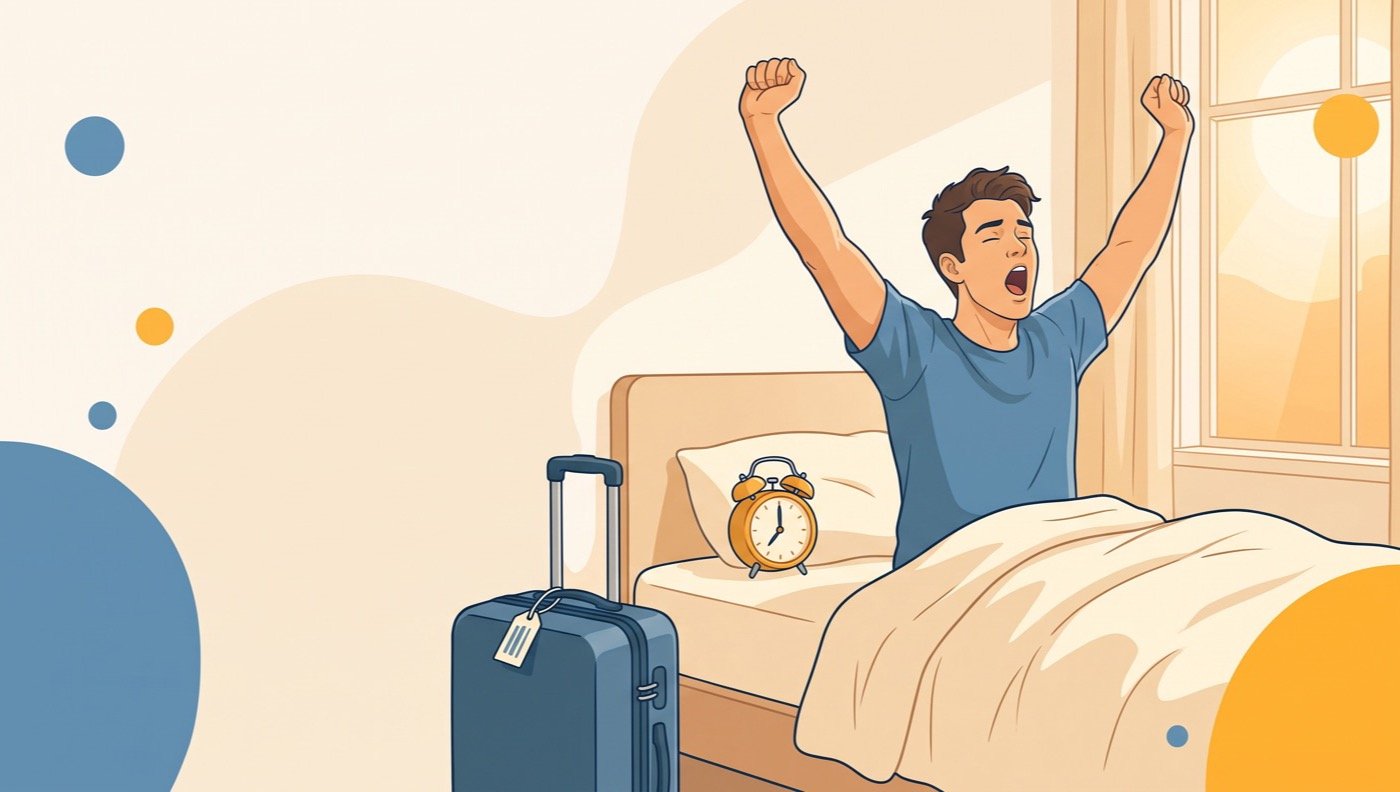
Quick answer: social jetlag is the gap between your weekday and weekend sleep times. Staying up late and sleeping in on weekends shifts your body clock like flying across time zones and back, every week. In a study of 815 adults, a bigger gap went with more obesity and worse metabolic health. The fix: wake up within about an hour of your weekday time, even on weekends.
Sleeping in on Saturday feels like the reward for a long week. You finally get to “catch up.” And Monday morning, you feel worse than you did on Friday.
That Monday feeling is a clue. Your body didn’t get a rest. It got moved, and it’s still trying to figure out what time it is.
Here’s the plan. First, what social jetlag is. Second, why it messes with your metabolism. Third, the simple rule that fixes it, which is one of the easiest cheat codes in my book.
What is social jetlag?
Say during the week you go to bed at ten and get up at six. But Friday and Saturday you’re up till one and you sleep in till ten.
You never left your house. But to your body, it’s like you flew across three or four time zones on Friday night and flew back on Sunday night. Every single weekend. That’s social jetlag: jet lag you give yourself with your social schedule instead of a plane ticket.
What does social jetlag do to your body clock?
Your body runs on an internal clock that’s roughly 24 hours long, called your circadian rhythm. It tells your body when to release melatonin, the hormone that makes you sleepy at night, and when to release cortisol in the morning to wake you up. It also helps run your digestion, your body temperature and your metabolism.
A steady schedule gives that clock clear signals, and over time it learns when to do what. When you keep moving the clock around, your body isn’t sure what time it is. You get the fatigue, the foggy head, and a body that feels out of sync with itself.
Does social jetlag cause weight gain?
It’s linked to it. A long-running study in New Zealand, the Dunedin study, looked at 815 adults who don’t work shifts. The bigger the gap between their weekday and weekend sleep, the more likely they were to be obese and to have worse metabolic health, like higher blood sugar markers and more inflammation.
That kind of study shows a link, not proof that one causes the other. But it lines up with everything else we know: when your clock is off, your hormones are off, and your hunger and blood sugar follow. (More on what short sleep does to hunger in does lack of sleep cause weight gain.)
Can you catch up on sleep on the weekend?
Not really, and this is the part most people get wrong. Sleeping in doesn’t pay back the sleep debt from staying up late. It just moves your body clock into a different time zone. Then Sunday night you can’t fall asleep, Monday’s alarm feels brutal, and the cycle starts over.
In my book, Fat Loss Cheat Code, which is all about how to outsmart your metabolism, this one gets its own rule, the Circadian Cheat Code: keep your wake-up time within about 60 minutes of your normal weekday time, even on weekends. Consistency matters more than hours banked.
And honestly, from what I’ve seen, a consistent sleep window can sometimes matter more than your total sleep. A steady seven hours beats a wild swing between five and ten.
How do you fix social jetlag?
Here’s what I’d do:
- Set a weekend alarm. If you get up at six during the week, set it for no later than seven on Saturday and Sunday.
- Keep your bedtime close too. A late night here and there happens. Just don’t make one a.m. the weekend default.
- Nap instead of sleeping in. If you’re tired, take a short nap in the afternoon rather than sleeping till ten. You get the rest without moving your clock.
- Get morning light. Step outside or open the blinds soon after you wake up. Light is one of the strongest signals your body clock uses to know it’s morning.
- Give it a week. Your clock needs a few days of the same signal before it settles.
The one thing to do this week
Pick your wake-up time and set it for all seven days, weekends included, within an hour. Then see how Monday morning feels next week compared to this one.
Keep reading
- Sleep and weight loss: why the same diet gets different results
- Does lack of sleep cause weight gain? What short nights do to belly fat
- Ghrelin and leptin: why you’re hungrier after a bad night’s sleep
If you want more cheat codes like this sent straight to your inbox, sign up here. It’s completely free, and just for signing up, I’ll also send you my guide, the 10 Fat Loss Commandments.
Send me the commandments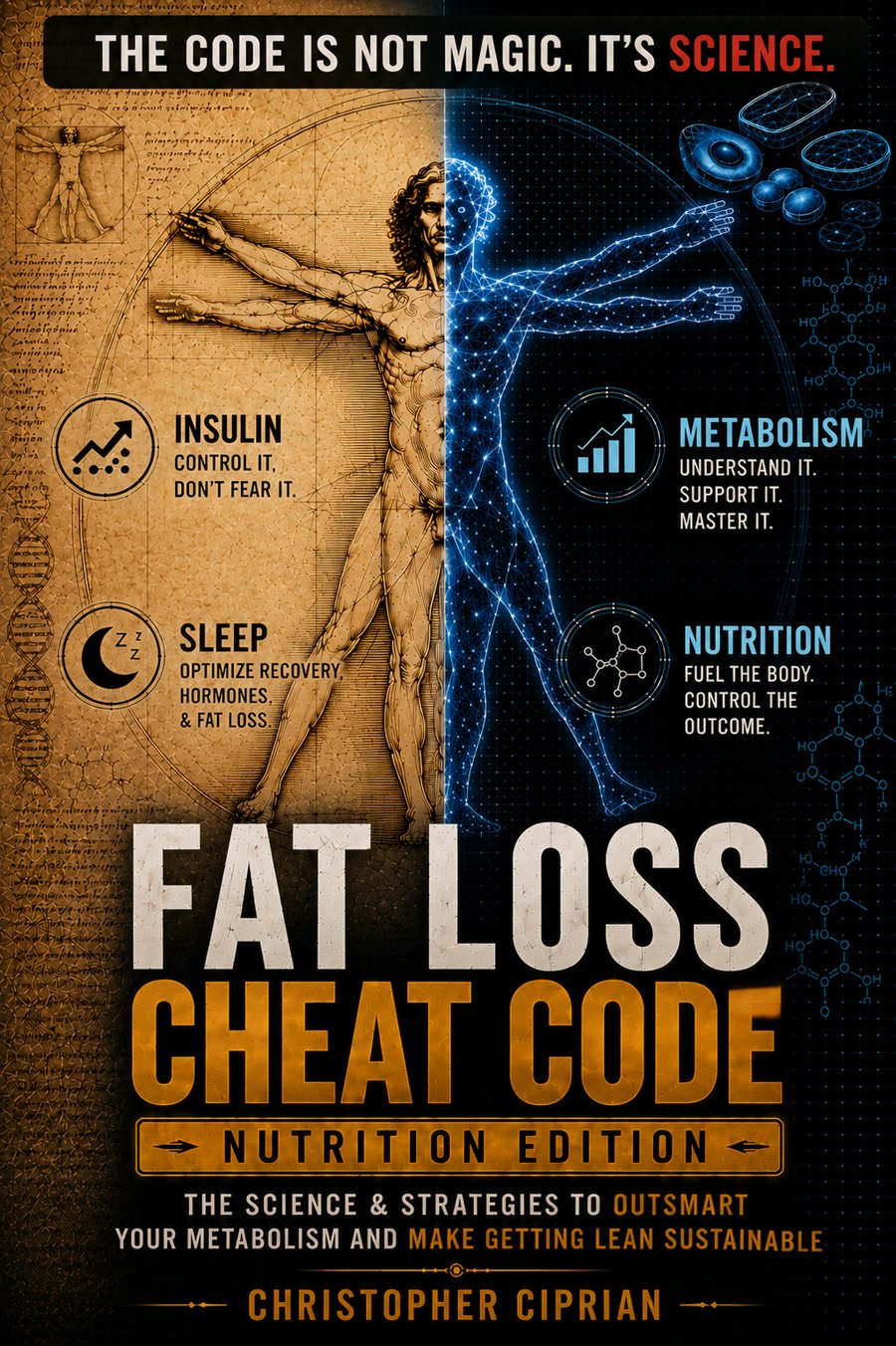
The whole system is in my book, Fat Loss Cheat Code: Nutrition Edition. It’s how you outsmart your metabolism, with every cheat code and the science behind it. The Circadian Cheat Code is in chapter one.
Buy on AmazonAnd if you want someone to look at your whole picture with you and adjust as you go, that’s what coaching is for.
Sources: Parsons et al., International Journal of Obesity, 2015 (Dunedin study, 815 adults who don’t work shifts).