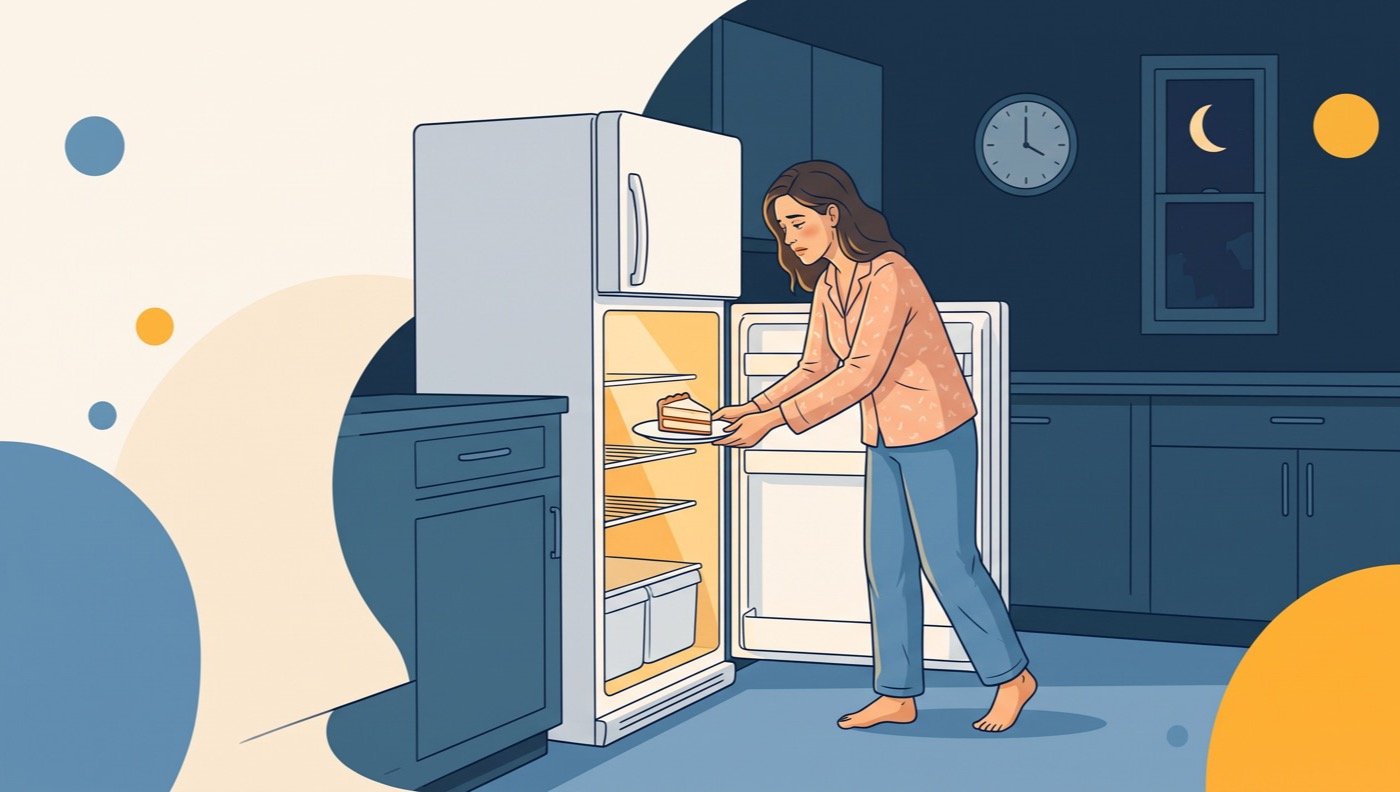
Quick answer: yes, lack of sleep can cause weight gain. Short sleep makes you hungrier, so you eat more without noticing, and a Mayo Clinic study found the extra fat went to the belly, including the deep fat around the organs. The good news works both ways: people who added about an hour of sleep a night ate about 270 fewer calories a day.
You didn’t change your diet. You didn’t stop going to the gym. But the last couple of months have been rough on sleep, and somehow your jeans are tighter around the middle. You’re not imagining it.
Sleep is one of the quietest ways weight sneaks back on, because it doesn’t feel like a food decision. It feels like being tired. But your body treats it as a lot more than that.
Here’s the plan. First, why short sleep makes you eat more. Second, why the extra fat heads for your belly. Third, what one extra hour of sleep can do, and how to get it.
Can lack of sleep make you gain weight?
It can, and mostly through your appetite. When you’re short on sleep, your hunger hormone goes up and your fullness hormone goes down. You feel hungrier, you feel satisfied later, and you want the calorie-dense, carb-heavy stuff. No willpower problem required. (Both hormones explained in ghrelin and leptin.)
Then there’s what happens to the food once you eat it. In my book, Fat Loss Cheat Code, which is all about how to outsmart your metabolism, I list three things poor sleep can do to your body’s signals:
- Your insulin sensitivity takes a hit. Your body gets worse at handling carbs, and that can start after a single bad night.
- Your hunger signals go up. Ghrelin rises, leptin falls.
- Your cortisol rises. Your body reads exhaustion as stress, and cortisol can make it harder to let go of stored fat while it breaks down muscle for energy.
Put those together and the same plate of food lands differently after a five-hour night than after an eight-hour one.
Does lack of sleep cause belly fat?
This is where it gets interesting. A Mayo Clinic study kept twelve young adults on four hours of sleep a night for two weeks and let them eat whatever they wanted. They ate more and they gained more. And the fat didn’t spread out evenly: it went straight to the belly, including the deep fat around the organs.
That deep fat is called visceral fat. It sits around your liver and gut, and it’s the kind tied to metabolic disease. So short sleep isn’t just a few extra pounds. It’s a few extra pounds in the worst spot.
Belly fat gets stubborn after 40 for other reasons too, and I cover those in how to lose weight after 40. But sleep is the one you can start fixing tonight.
Can you lose weight if you don’t sleep enough?
You can still lose weight. The question is what you lose. Think of your body as having two savings accounts, fat and muscle. When you cut calories after a good night’s sleep, your body pulls from the fat account. After a poor one, it starts pulling from the muscle account instead.
In a University of Chicago study, ten overweight adults did the same reduced-calorie diet twice, once with eight and a half hours in bed and once with five and a half. With short sleep, the fat they lost dropped by 55% and the lean mass they lost went up by 60%. Same diet, the wrong kind of weight. The full story is in sleep and weight loss.
Does more sleep help you lose weight?
Yes, and this is the good news. In a 2022 study, adults with overweight who usually slept less than six and a half hours got some simple sleep coaching and added about an extra hour a night. Nobody gave them a diet. They ended up eating about 270 fewer calories a day, without even trying.
Now picture that over a month. That’s the kind of deficit most people fight for with willpower, and they got it from going to bed earlier.
How do you fix sleep to stop gaining weight?
Start with these:
- Set a bedtime, not just an alarm. Most people only plan the wake-up. Pick the time you’re in bed too.
- Aim for at least seven hours in that window, especially while you’re trying to lose.
- Keep it steady on weekends. Wake up within about an hour of your weekday time. (Why this matters: social jetlag.)
- Have a plan for the morning after a bad night. A protein-heavy breakfast, and the bread and snacks out of sight. Don’t fight your hunger hormones with willpower.
- Nap instead of sleeping in. A short afternoon nap won’t shove your body clock around the way sleeping till ten does.
The one thing to do this week
Pick a bedtime that gives you at least seven hours before your alarm, and protect it for seven nights straight. Same window every night, weekends included. Then watch how your hunger feels by the end of the week.
Keep reading
- Sleep and weight loss: why the same diet gets different results
- Ghrelin and leptin: why you’re hungrier after a bad night’s sleep
- Social jetlag: why sleeping in on weekends stalls your fat loss
If you want more cheat codes like this sent straight to your inbox, sign up here. It’s completely free, and just for signing up, I’ll also send you my guide, the 10 Fat Loss Commandments.
Send me the commandments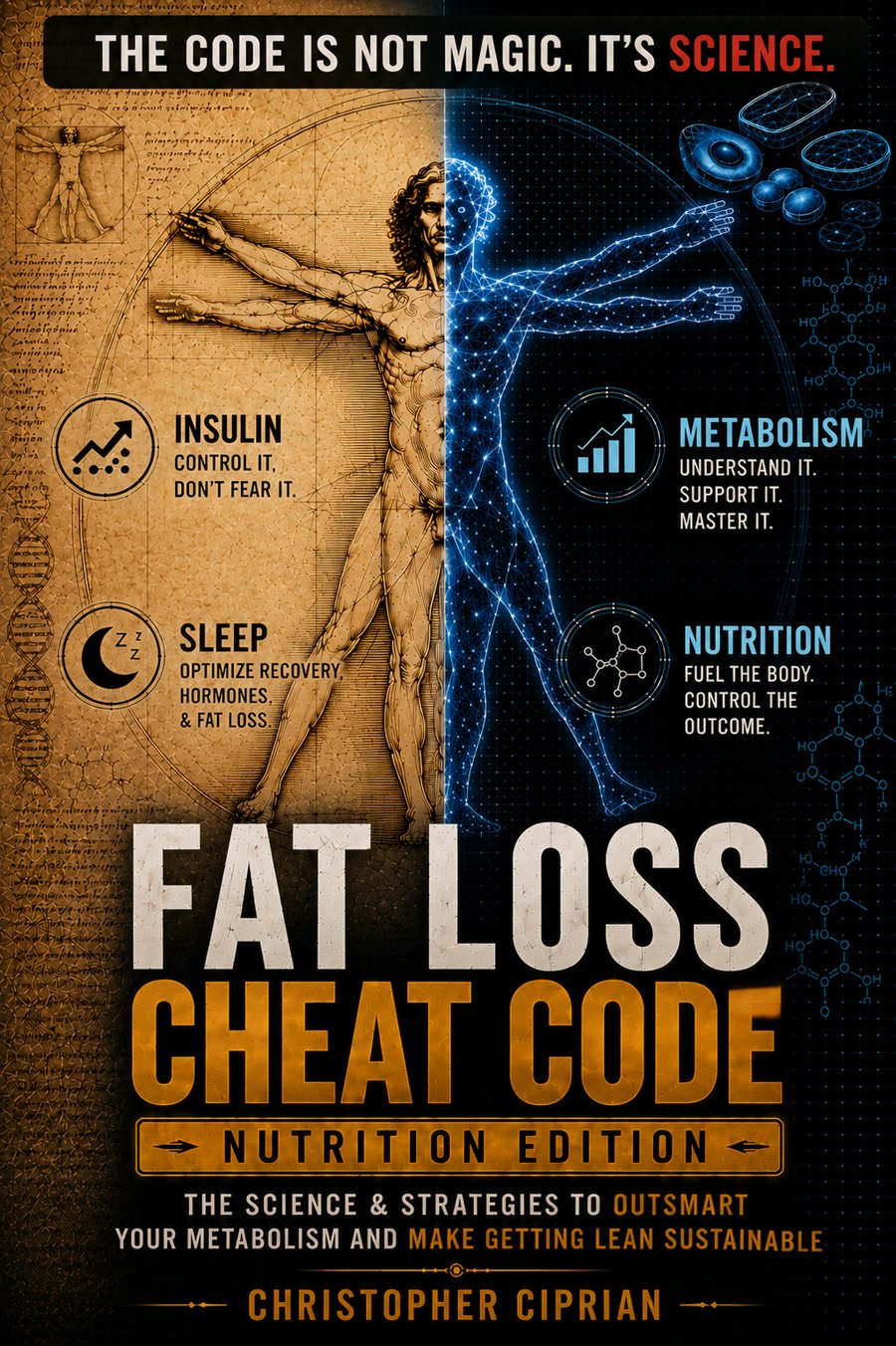
The whole system is in my book, Fat Loss Cheat Code: Nutrition Edition. It’s how you outsmart your metabolism, with every cheat code and the science behind it. Sleep is in chapter one.
Buy on AmazonAnd if you want someone to look at your whole picture with you and adjust as you go, that’s what coaching is for.
Sources: Covassin et al., Journal of the American College of Cardiology, 2022 (Mayo Clinic, 12 healthy young adults, two weeks of 4 hours of sleep with free access to food). Tasali et al., JAMA Internal Medicine, 2022 (80 adults with overweight who slept under 6.5 hours). Nedeltcheva et al., Annals of Internal Medicine, 2010 (10 overweight adults, 8.5 vs 5.5 hours in bed on the same diet).