Quick answer: ghrelin is your hunger hormone and leptin is your fullness hormone. When you sleep badly, ghrelin goes up and leptin goes down, so you feel hungrier and stay hungry longer. In one study, two nights of four-hour sleep raised ghrelin 28%, dropped leptin 18%, and boosted cravings for carb-heavy foods by up to 45%.
You know the morning. You got maybe five hours, and by ten a.m. you’ve already raided the break room. The donuts look amazing. The salad you packed looks like punishment.
That isn’t a character flaw. It’s chemistry. And once you know what’s going on, you can plan around it instead of white-knuckling your way to lunch.
Here’s the plan. First, what ghrelin and leptin actually do. Second, what one bad night does to them. Third, what to eat the morning after so they don’t run your day.
What are ghrelin and leptin?
They’re the two main hormones that run your hunger.
- Ghrelin is the hunger hormone. It’s made mostly in your stomach, and it’s the “time to eat” signal. It climbs before meals and drops after you eat.
- Leptin is the fullness hormone, sometimes called the satiety hormone. It comes from your fat cells and tells your brain you’ve had enough and there’s fuel in the tank.
In my book, Fat Loss Cheat Code, which is all about how to outsmart your metabolism, I point out that poor sleep pushes these two in exactly the wrong directions, and that combination makes sticking to a calorie-controlled diet much harder.
What does lack of sleep do to ghrelin and leptin?
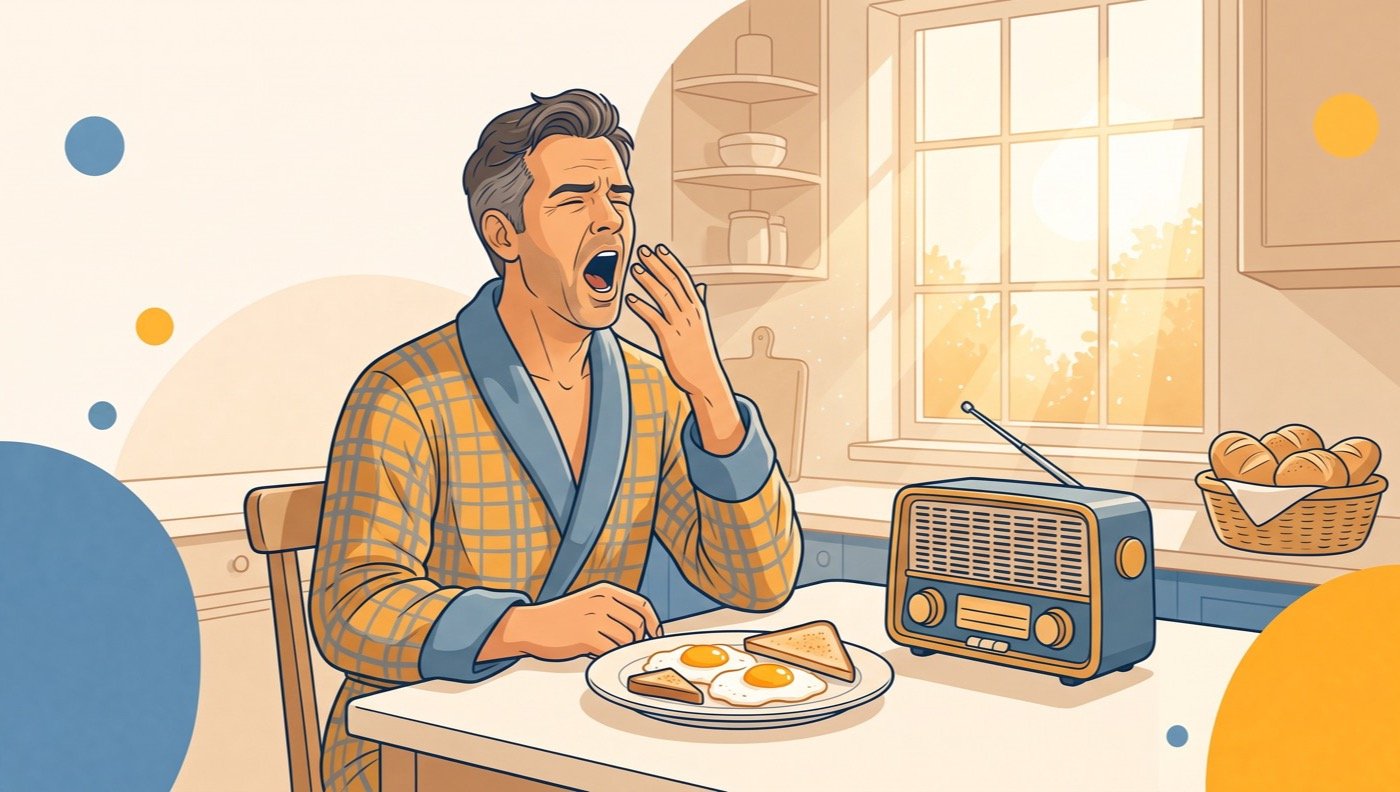
Think of them as two volume knobs on an old radio. One is marked hungry, one is marked full. When you’re well rested, they’re balanced. After a short night, it’s like somebody cranked the hungry knob up and turned the full knob way down.
This was measured. In a study in the Annals of Internal Medicine, twelve healthy young men slept just four hours a night for two nights. Their ghrelin went up 28%. Their leptin dropped 18%. And their appetite for calorie-dense, carb-heavy foods, think bread, cookies, chips, jumped 33 to 45%.
After just two nights. Not two months. Two nights.
So when you’re starving after a bad night, your body isn’t being dramatic. The volume really is turned up. And it doesn’t stop at cravings: over a couple of weeks of short sleep, the extra eating shows up as weight, a lot of it around the middle. I cover that in does lack of sleep cause weight gain.
Why do you crave carbs when you’re tired?
Look at what went up the most in that study: not hunger for anything, but appetite for the fast, calorie-dense, carb-heavy foods. When you’re tired, your body goes looking for quick energy, and the bread basket is the quickest thing in the room.
Short sleep also makes your body handle carbs worse. So the foods you crave the most after a bad night are the ones your body is least ready for. That’s a rough combo, and it’s why “I’ll just have a little” turns into half the box.
How do you control your hunger hormones after a bad night?
Don’t try to fight them with willpower. Plan around them instead:
- Start with a protein-heavy breakfast. Protein is the most filling thing you can eat, so it gives the full knob some help. Ideas in high protein breakfast for weight loss.
- Keep the bread and snacks stashed. Out of sight on the days you’re tired. If it’s on the counter, ghrelin wins.
- If you’re going to overeat, make it protein. An extra chicken breast does a lot less damage than an extra bagel.
- Get back on schedule that night. Same bedtime as usual, not a late one to “make up” for it the next morning.
Can you reset ghrelin and leptin?
The best reset is the one that caused the problem: sleep. In a 2022 study, adults with overweight who usually slept less than six and a half hours added about an extra hour a night. Nobody put them on a diet, and they ate about 270 fewer calories a day without trying.
That’s the radio knobs settling back down on their own. Getting there is mostly about a steady schedule, same bedtime and wake-up time every day, which I explain in sleep and weight loss.
The one thing to do this week
Next time you wake up after a short night, decide on your breakfast before you’re hungry: a protein-heavy one, ready to go. And put the snacks somewhere you’d have to go looking. Let the plan make the decision, not your hunger hormones.
Keep reading
- Sleep and weight loss: why the same diet gets different results
- Does lack of sleep cause weight gain? What short nights do to belly fat
- Social jetlag: why sleeping in on weekends stalls your fat loss
If you want more cheat codes like this sent straight to your inbox, sign up here. It’s completely free, and just for signing up, I’ll also send you my guide, the 10 Fat Loss Commandments.
Send me the commandments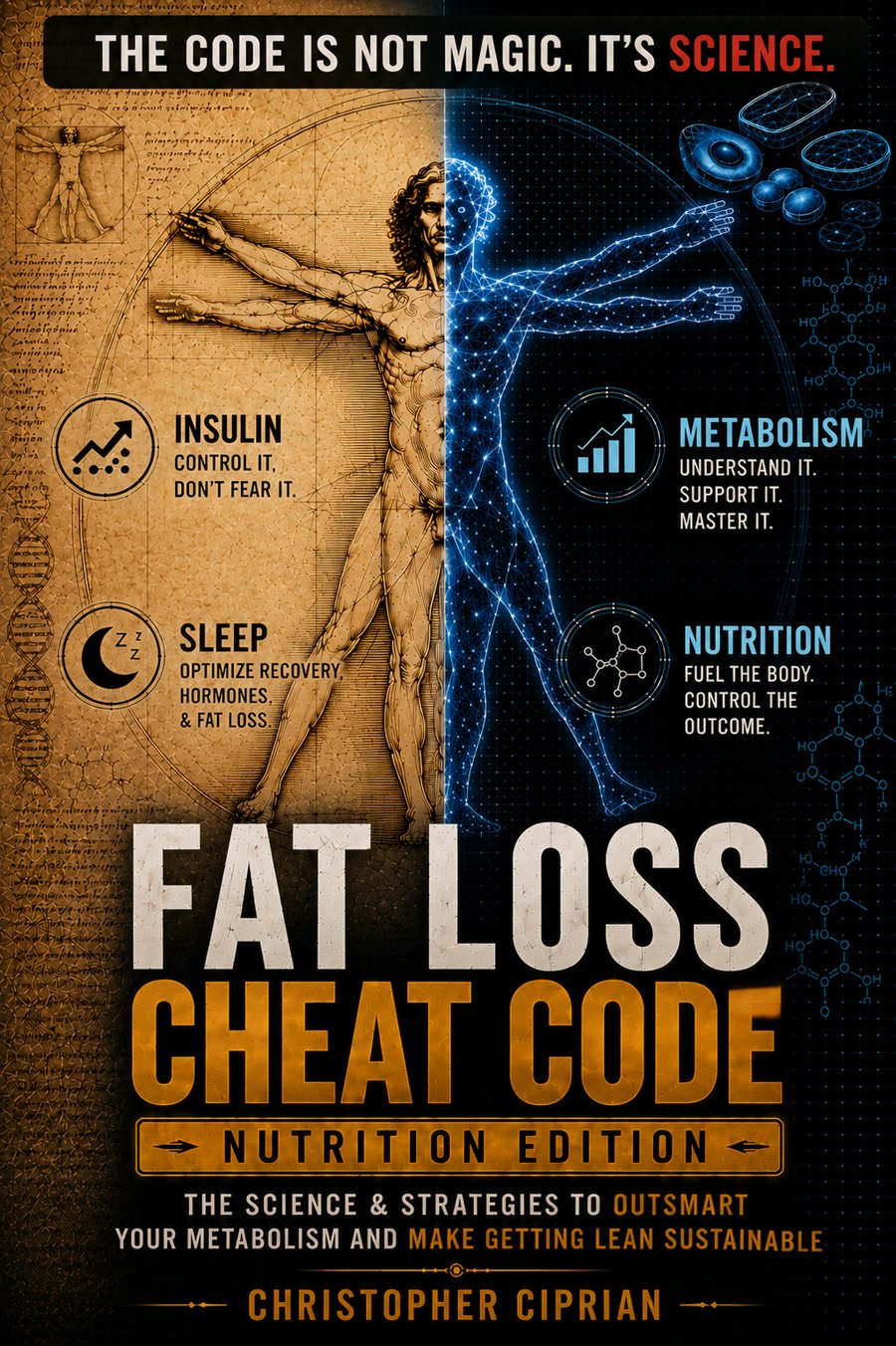
The whole system is in my book, Fat Loss Cheat Code: Nutrition Edition. It’s how you outsmart your metabolism, with every cheat code and the science behind it. Sleep and your hunger signals are in chapter one.
Buy on AmazonAnd if you want someone to look at your whole picture with you and adjust as you go, that’s what coaching is for.
Sources: Spiegel et al., Annals of Internal Medicine, 2004 (12 healthy young men, two nights of 4 hours in bed). Tasali et al., JAMA Internal Medicine, 2022 (80 adults with overweight who slept under 6.5 hours).