Quick answer: intermittent fasting helps you lose weight mostly by making it easier to eat less: fewer hours to eat means fewer chances to overeat. Start with twelve hours overnight, seven p.m. to seven a.m., then stretch to sixteen once that’s easy. Keep lifting, put protein first when you eat, and don’t chase fasts past about thirty-six hours, because for fat loss more hours doesn’t mean more results.
Most people do intermittent fasting backwards. They hear “16:8,” skip breakfast on Monday with no warm-up, and by eleven they’re starving. Then lunch turns into a feast, the afternoon turns into snacking, and by Thursday they’ve decided fasting just isn’t for them.
The problem isn’t fasting. It’s the starting line and the finish line. Start too big and you quit. Go too long and you get less for your trouble.
Here’s what we’ll cover. First, how intermittent fasting actually helps you lose weight. Second, where to start, and how to work up. Third, where to stop, and the mistakes that undo all the work.
Does intermittent fasting work for weight loss?
Yes, but probably not the way you’ve been told.
Think of your body like a car with two tanks. The main tank is the food you just ate. The reserve tank is your body fat. A little past twelve hours without food, your body starts switching over to the reserve. Every hour you’re not refilling the main tank is time spent on the reserve. (The full hour-by-hour trip is in what happens to your body when you fast.)
But the biggest effect is simpler than that. As I put it in my book, fasting cuts down the number of chances you get to eat. Instead of making food decisions from the moment you wake up until you go to bed, you’ve got a set time to eat and a set time not to.
Here’s the proof. In a year-long trial in the New England Journal of Medicine, 139 adults all cut calories. Half of them also ate only in an eight-hour window. Both groups lost a lot of weight: about 17.6 pounds with the window, 13.9 without. But the gap between them wasn’t big enough to call it a real difference.
So the window isn’t magic. What it does is make eating less a lot easier to stick to. And it gives you long stretches of low insulin, the hormone that tells your body to store. (More on that in how to lower insulin to lose weight.)
For me, intermittent fasting was one of the two biggest needle movers when I went from 217 to about 155 pounds in under a year. The other was my modified keto: low carb, high protein, moderate fat. They work well together.
How do you start intermittent fasting for weight loss?
At twelve hours, not sixteen. My book is blunt about it: if you’re new to fasting, there’s no reason to jump straight into a sixteen-hour fast.
- Week one: twelve hours. Close the kitchen after dinner, seven p.m. to seven a.m. Most of that is sleep. That’s where the metabolic switch starts to flip.
- Then sixteen. Once twelve feels easy, push one day to sixteen, then a few days a week. Finish dinner at eight, first meal at noon.
- Then experiment, if you want. 18:6, 20:4 or one meal a day are options once you’ve adapted. But longer isn’t automatically better. The goal is a window you can keep while still getting enough protein and food in.
Hunger comes in waves around the times you usually eat, and each wave passes on its own. Your first few days are the hardest because your body is used to being topped off.
Will intermittent fasting make me lose muscle?
Not if you do two things: keep lifting, and put protein in your first meal.
In one study, men who lifted weights and ate in an eight-hour window, so sixteen hours of fasting, lost more fat than men eating the same calories spread through the day. And they kept their muscle and their strength.
That’s the whole idea. The fast handles the fat. The lifting and the protein tell your body to hold on to muscle.
What if I hate fasting every day?
Then don’t. There’s another way to do it.
In my book, this is the Mini-MATADOR cheat code: concentrate your calorie cut into specific days instead of fighting hunger every day of the week. The 5:2 approach is the simple version: eat normally five days, and cut way back on two days that aren’t back to back.
The advantage is as much in your head as in your metabolism. You know exactly which days are the hard days, and the rest of the week you get a break.
How long should you fast to lose weight?
For most people, somewhere between twelve and twenty-four hours, and sixteen is a great everyday target. Past about thirty-six hours, the fat-loss payoff starts dropping and the risk of muscle loss goes up, especially if you’re not lifting.
If you’re wondering about the bigger fasts, here’s what happens when you fast for 24 hours. And the sixteen-to-eighteen-hour range has a bonus, too: it’s where your cells’ recycling crew switches on, which I cover in autophagy fasting.
So which stage should you stop at? That’s like asking how much gas you should stop at when you’re driving. It depends on the trip: your goal, whether you’re lifting, how hungry you get, and whether you can still get your protein in. My book puts it simply: the best fasting schedule is the one you can actually keep. And if you take medicine for blood sugar or blood pressure, check with your doctor before you start fasting, because doses sometimes need changing.
What breaks intermittent fasting weight loss?
These are the mistakes I see most:
- Starting with an extreme fast. A twenty-four-, thirty-six- or forty-eight-hour fast on day one is a great way to quit by day three.
- Turning the window into a free-for-all. What you eat in the window still matters. If you eat back everything you skipped, you’ve erased the deficit.
- Breaking the fast with a feast. In one study, after a sixteen-hour fast, people ate about 28% more at their next meal than after twelve hours. Your hunger wants to make up for lost time. Don’t let it.
- Forgetting salt and water. If you get foggy or a headache in the later hours, a pinch of sea salt in water usually fixes it.
How should you break a fast?
Small, protein first, and slowly. Start with something light, like bone broth or collagen in water, and wait about forty-five minutes to an hour if it was a long fast. Then make your first meal a small to moderate portion built around protein: eggs, lean meat, Greek yogurt, vegetables. (Ideas here: high protein breakfast for weight loss.) Skip the pizza, sugar and fried stuff. And eat slowly.
The one thing to do this week
Pick one night, close the kitchen after dinner, and go twelve hours. Seven p.m. to seven a.m. Once that feels easy, push one day to sixteen, and break it with protein.
Keep reading
- What happens to your body when you fast, hour by hour (7 stages)
- Autophagy fasting: how long do you have to fast?
- What happens when you fast for 24 hours?
If you want more cheat codes like this sent straight to your inbox, sign up here. It’s completely free, and just for signing up, I’ll also send you my guide, the 10 Fat Loss Commandments.
Send me the commandments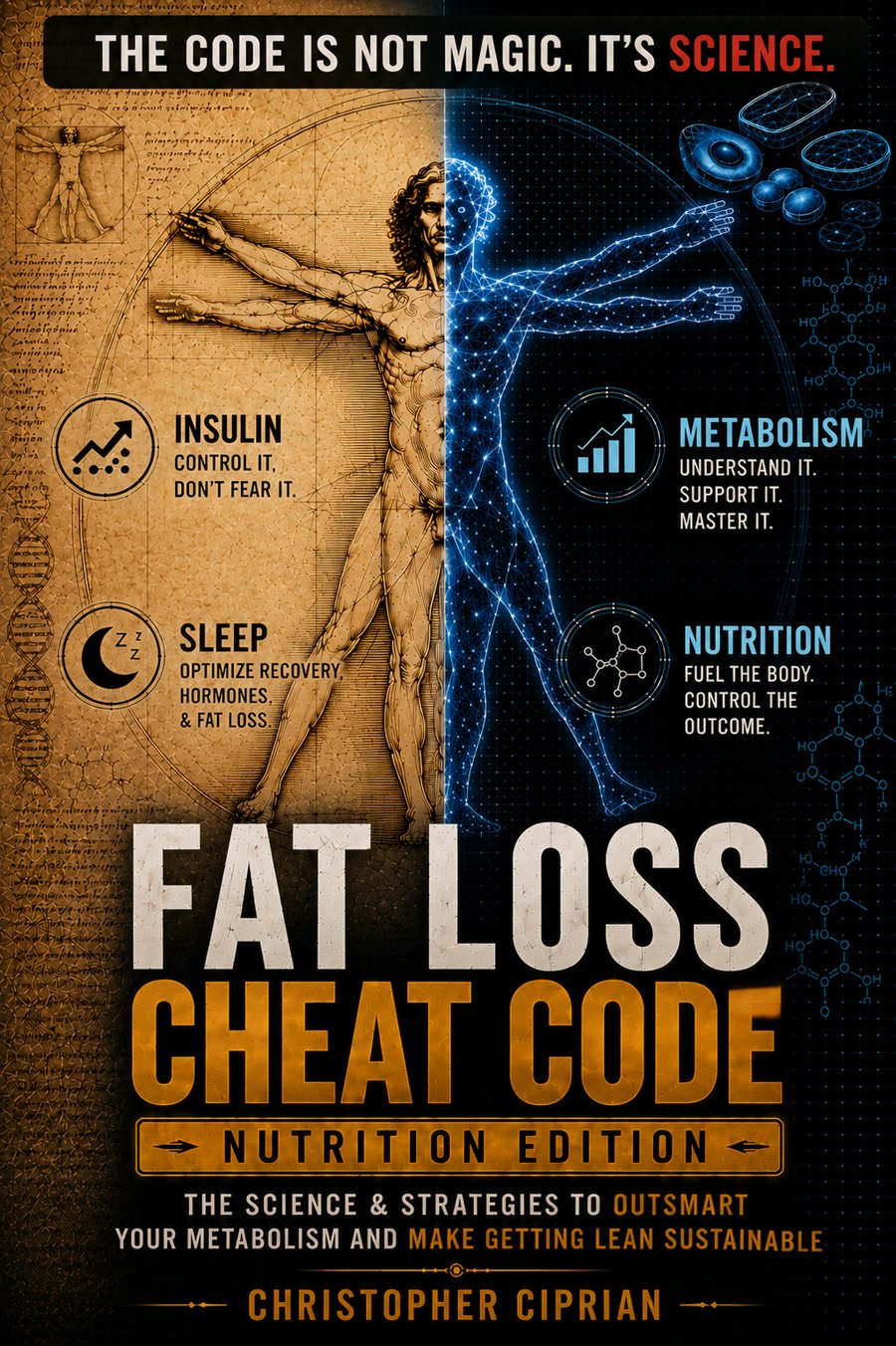
The whole system is in my book, Fat Loss Cheat Code: Nutrition Edition. It’s how you outsmart your metabolism, with every cheat code and the science behind it. Fasting, the Mini-MATADOR and how to break a fast are all in chapter eight.
Buy on AmazonAnd if you want someone to set your window around your life and your training, and adjust it as you go, that’s what coaching is for.
Sources: Liu et al., New England Journal of Medicine, 2022 (139 adults with obesity, 12 months, calorie restriction with or without an 8-hour eating window). Moro et al., Journal of Translational Medicine, 2016 (34 resistance-trained men, 16:8 for 8 weeks). Atkinson et al., Nutrients, 2020 (24 adults; 12-, 14- and 16-hour fasts).