
Quick answer: in the first twelve hours of a 24-hour fast, you burn your last meal and the sugar stored in your liver. A little past twelve, your body switches to burning fat. From about sixteen to twenty-four hours, fat burning ramps up, your liver starts making ketones, and hunger often eases off rather than getting worse. Growth hormone climbs, too. But for fat loss, a full day isn’t automatically better than a shorter daily fast.
A full day without food sounds brutal. Most people picture hour twenty being ten times worse than hour ten.
It usually isn’t. A lot of people find the hardest part of a fast is the beginning, not the end. Here’s why, hour by hour.
First, what happens in each stretch of the twenty-four hours. Second, why the hunger doesn’t just keep climbing, and what to do about the headache. Third, whether a 24-hour fast is actually better for fat loss than a shorter one.
What happens hour by hour in a 24-hour fast?
Think of your body like a car with two tanks. The main tank is your last meal. The reserve tank is your body fat. Your body drains the main tank first.
- 0 to 4 hours: you just ate. Insulin is up, and your body is in storage mode, putting the extra away.
- 4 to 12 hours: you’re running on that last meal and the sugar stored in your liver. This is the hungry stretch, because your body is used to being topped off.
- 12 to 16 hours: the metabolic switch. Insulin has dropped, the liver’s sugar is running low, and your body starts reaching for the reserve tank.
- 16 to 20 hours: you’re burning your own fat, and autophagy, your cells’ recycling crew, switches on. (More on that in autophagy fasting.)
- 20 to 24 hours: fat burning really ramps up. Your liver is turning fat into ketones, an energy source your brain and muscles can run on when sugar is low.
The timing isn’t exact. A big, carb-heavy dinner the night before fills the main tank more, so everything shifts later. Here’s the full seven stages, including what happens after a day.
Does hunger get worse the longer you fast?
Usually not. Hunger comes in waves, not a straight line up.
In one study, researchers took blood every twenty minutes from people doing a twenty-four-hour fast. Their hunger hormone rose and fell on its own, right around the times they usually ate, and overall it drifted down over the day. So when that 6 p.m. wave hits, it’s a habit talking, not an empty tank. Ride it out, and it passes. (Here’s how your hunger hormones, ghrelin and leptin, work.)
Then the ketones help. A review in Obesity Reviews pooled the studies on low-carb ketosis, where your body runs on ketones because carbs are low, and found people were less hungry and had less desire to eat. Fasting gets you into ketones a different way, but it’s the same fuel. That’s a big reason hour twenty often feels easier than hour ten.
Why do I get a headache when fasting?
It’s probably salt, not hunger. When insulin is low, your kidneys let go of more water and salt. Lose enough and you feel foggy, tired or headachy.
The fix is cheap: a pinch of sea salt in a glass of water. In my book I list ignoring electrolytes as one of the common fasting mistakes. It’s the same thing a lot of people feel in their first week of low carb, which I walk through in the keto flu timeline.
What does growth hormone do during a fast?
It climbs, a lot. Growth hormone helps your body pull fat out of storage, and it helps you hang on to muscle while no food is coming in. In one study, by the second day of a fast, men were making about five times more of it. That’s just crazy.
But you’ll hear people say growth hormone protects your muscle no matter what. It helps, but it’s not a guarantee. Lifting and getting your protein in when you eat still do the heavy lifting.
Is a 24-hour fast good for weight loss?
It can work, but it isn’t magic, and it isn’t automatically better than a shorter fast every day.
Here’s a study that surprised a lot of people. Lean adults cut the same number of calories for three weeks, either a little every day or with a full 24-hour fast every other day. The everyday group lost more than twice as much fat. The fasting-day group lost a little less weight, and much less of it was fat.
That fits what happens next on the clock. From about twenty-four to thirty-six hours, fat loss starts to slow down, and you get diminishing returns. Past thirty-six, the payoff keeps dropping and the risk of muscle loss goes up.
So a full-day fast now and then is fine if you like it. But for fat loss, a sixteen-hour window you can repeat every day will usually do more for you than one heroic day a week. That’s why I tell people not to jump straight into a 24-hour fast just because longer sounds better. And if you take medicine for blood sugar or blood pressure, talk to your doctor before you try one, because doses sometimes need changing.
How do you end a 24-hour fast?
Small, protein first, and slowly:
- Start with something light, like bone broth or collagen in water.
- Give it about forty-five minutes to an hour.
- Then a small to moderate meal built around protein, like eggs, lean meat, vegetables or Greek yogurt.
- Skip the feast. Pizza, sugar and fried stuff after a long fast are a fast track to a blood sugar spike and an upset stomach.
- Eat slowly. Your hunger wants to make up for lost time.
The one thing to do this week
If you’ve never done a twelve-hour overnight fast, start there before you try a full day. If twelve and sixteen already feel easy, pick one day this week, stop eating after dinner, and see how far toward twenty-four you get. Keep the salt water handy.
Keep reading
- What happens to your body when you fast, hour by hour (7 stages)
- Autophagy fasting: how long do you have to fast?
- Intermittent fasting for weight loss: where to start (and where to stop)
If you want more cheat codes like this sent straight to your inbox, sign up here. It’s completely free, and just for signing up, I’ll also send you my guide, the 10 Fat Loss Commandments.
Send me the commandments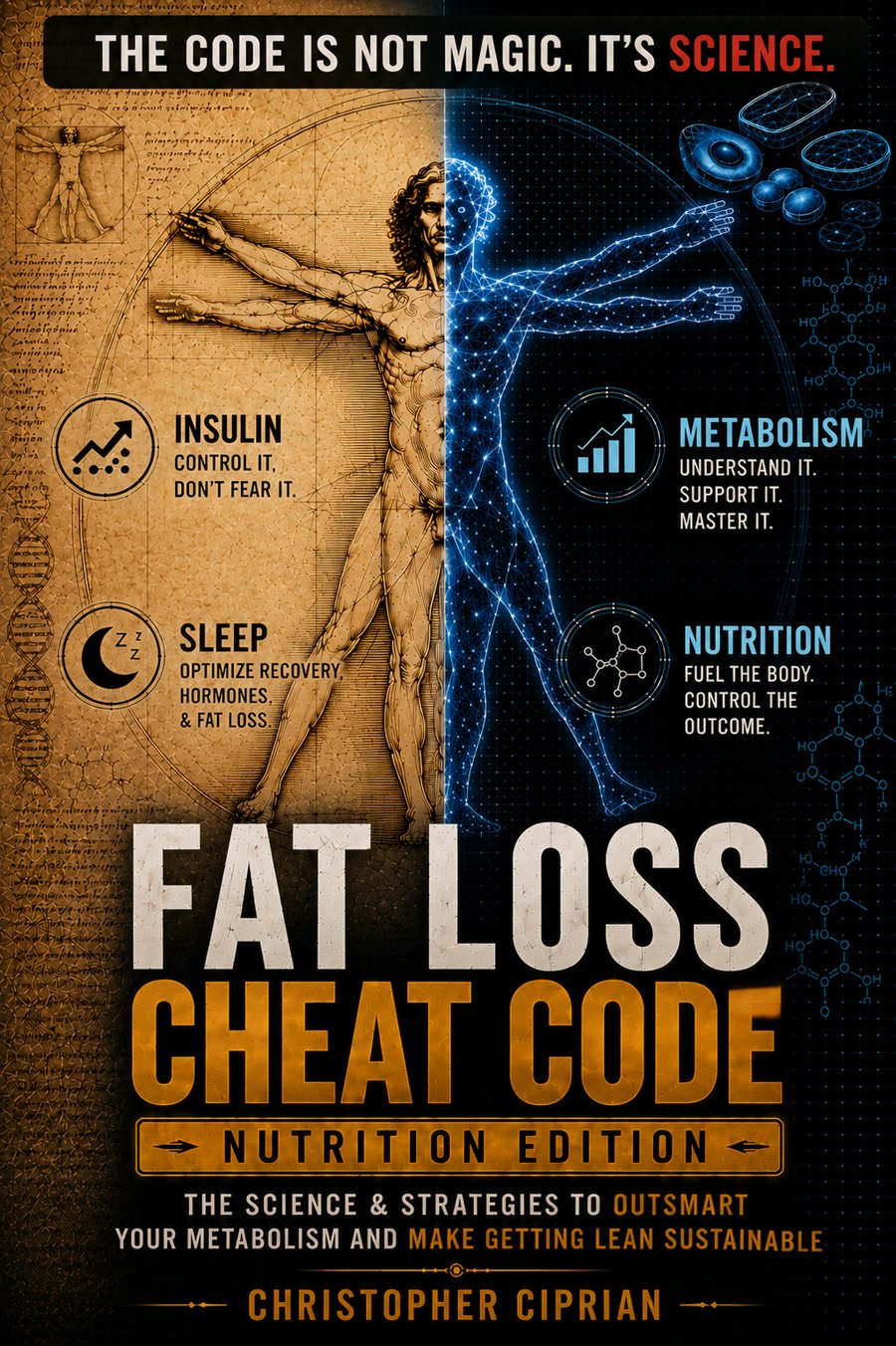
The whole system is in my book, Fat Loss Cheat Code: Nutrition Edition. It’s how you outsmart your metabolism, with every cheat code and the science behind it. Fasting is chapter eight.
Buy on AmazonAnd if you want someone to plan your fasts around your training and your week, that’s what coaching is for.
Sources: Natalucci et al., European Journal of Endocrinology, 2005 (6 healthy adults, 24-hour fast). Gibson et al., Obesity Reviews, 2015 (low-carb ketosis and hunger). Hartman et al., Journal of Clinical Endocrinology and Metabolism, 1992 (9 men, 2-day fast). Templeman et al., Science Translational Medicine, 2021 (36 lean adults, 3 weeks, daily calorie cut vs 24-hour fasts on alternate days).