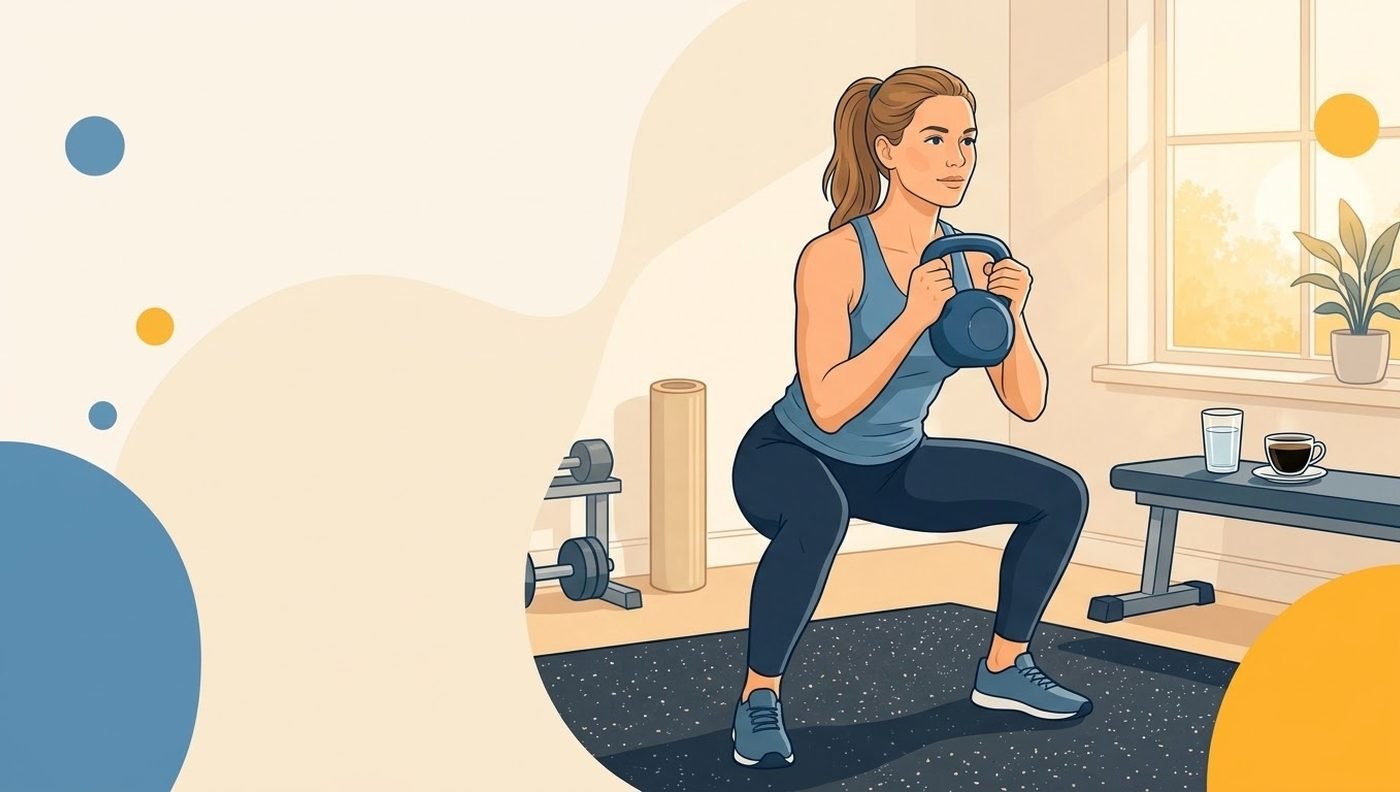
Quick answer: no, for most people lifting weights fasted doesn’t burn muscle. A 2025 review found the same muscle and the same strength whether people lifted fasted or fed, with a little more fat lost in the fasted groups. The studies are small, so the best choice is whichever one keeps you training consistently, and then getting enough protein when you do eat.
You’ve probably heard it. Train on an empty stomach and your body will eat your muscle for fuel. Have a banana, or a shake, or something, before you touch a barbell.
I’ve trained fasted for years. It’s how I trained the whole time I went from 217 to 155 pounds, and I kept my muscle and got stronger. (It was one of six things I changed; the full list is in how I lost 60 pounds in under a year.) But “it worked for me” isn’t proof, so let’s look at what the studies say.
First, why lifting matters so much when you’re losing fat. Second, what the research found on fasted versus fed training, including the part that doesn’t go my way. Third, how to do it, and who should eat first.
Does lifting weights help you lose fat?
Yes and no. Lifting doesn’t burn a huge amount of calories while you’re doing it. A set of squats isn’t a long run. The payoff is indirect, and it’s bigger: the muscle you build raises how much energy your body uses just to keep you alive, all day, every day.
And lifting is what protects that muscle while you diet. When you eat less, your body is happy to break down muscle along with fat. Lifting tells it not to. A review of six trials in older adults with obesity found that lifting prevented almost all of the muscle loss that normally comes with cutting calories.
So the real question isn’t fasted or fed. It’s whether you lift at all.
Does fasted training burn muscle?
For most people, no. Here’s what the research shows.
- A 2025 review pooled the trials comparing lifting fasted versus fed. Same muscle, same strength either way, and a little more fat lost in the fasted groups. Those were small studies, but there was no sign fasted training burned muscle.
- A 2025 trial had twenty-eight young adults lift twice a week for twelve weeks, either after an overnight fast or one to two hours after a carb meal. They built the same muscle, strength and power.
- A 2016 study of thirty-four trained men found that eating in a 16:8 window while lifting meant more fat lost, with muscle and strength kept.
- A 2024 study of trained men found that twelve or even sixteen hours without food didn’t change their strength, power or reps. The one thing that changed at sixteen hours? They were hungrier.
The other side, to be fair: two studies during Ramadan, when people go without food and water all day, found that men who lifted fasted in the late afternoon kept their muscle but gained less strength than men who lifted after breaking the fast. That’s a much harder fast than skipping breakfast with water and black coffee, but it’s a good reminder: if you feel weak training fasted, don’t force it.
And if you’ve heard fasted training “burns more fat”, that’s mostly about cardio. A big review of twenty-seven studies found fasted cardio burns more fat during the session. For lifting, the fat-loss edge in the 2025 review was small.
Why I train fasted
Two reasons.
First, I feel like you should earn that first meal. Think of your body as having two fuel tanks: one is breakfast, the other is the fat stored around your waist. Why burn the food you just ate when you’ve got plenty in the reserve tank?
Second, plain comfort. Food in my stomach makes me queasy when I brace for a heavy squat or deadlift. An empty stomach just feels better under the bar.
That’s my preference, not a rule. The right answer is whichever one keeps you showing up.
What should you eat after a fasted workout?
Protein, and plenty of it. This is where people undo the good work: they train fasted, then grab a coffee and a muffin.
Make your first meal after training a real one, built around a complete protein: eggs, meat, fish or Greek yogurt. And don’t worry about “wasting” protein if it’s a big meal.
In my book, Fat Loss Cheat Code: Nutrition Edition, which is all about how to outsmart your metabolism, this is THE ANABOLIC CEILING CHEAT CODE: don’t let the 30-gram rule dictate your diet. Eating more than 30 grams at one meal doesn’t mean the rest is wasted. Focus on reaching your total daily protein target. After a fasted workout, a big protein meal is exactly what you want. (How much you need: how much protein to lose weight.)
How do you start training fasted?
- Start with what you already do. If you work out in the morning, just skip the pre-workout snack and see how it feels.
- Drink first. Water with a pinch of sea salt, or black coffee. A lot of “fasted weakness” is really being dehydrated.
- Keep the lifting the same. Same weights, same sets. If your strength drops week after week, eat something small first and see if it comes back.
- Eat a real protein meal afterward. Not a coffee. A meal.
- Pair it with an earlier eating window if you like. Training fasted in the morning and eating earlier in the day fit together well. (More on that: early time-restricted eating.)
Who should eat first: if you take medication for blood sugar, if you get dizzy or shaky training on an empty stomach, or if you’re pregnant, eat something before you train, and check with your doctor.
The one thing to do this week
Lift at least twice this week. If you feel up to it, try one of those sessions fasted, then follow it with a big protein meal. Either way, the part that matters is that you show up.
Keep reading
- How I lost 60 pounds in under a year (the exact methods)
- Early time-restricted eating: why I stopped eating after dark
- Is walking good for weight loss? Why short walks beat one long one
If you want more cheat codes like this sent straight to your inbox, sign up here. It’s completely free, and just for signing up, I’ll also send you my guide, the 10 Fat Loss Commandments.
Send me the commandments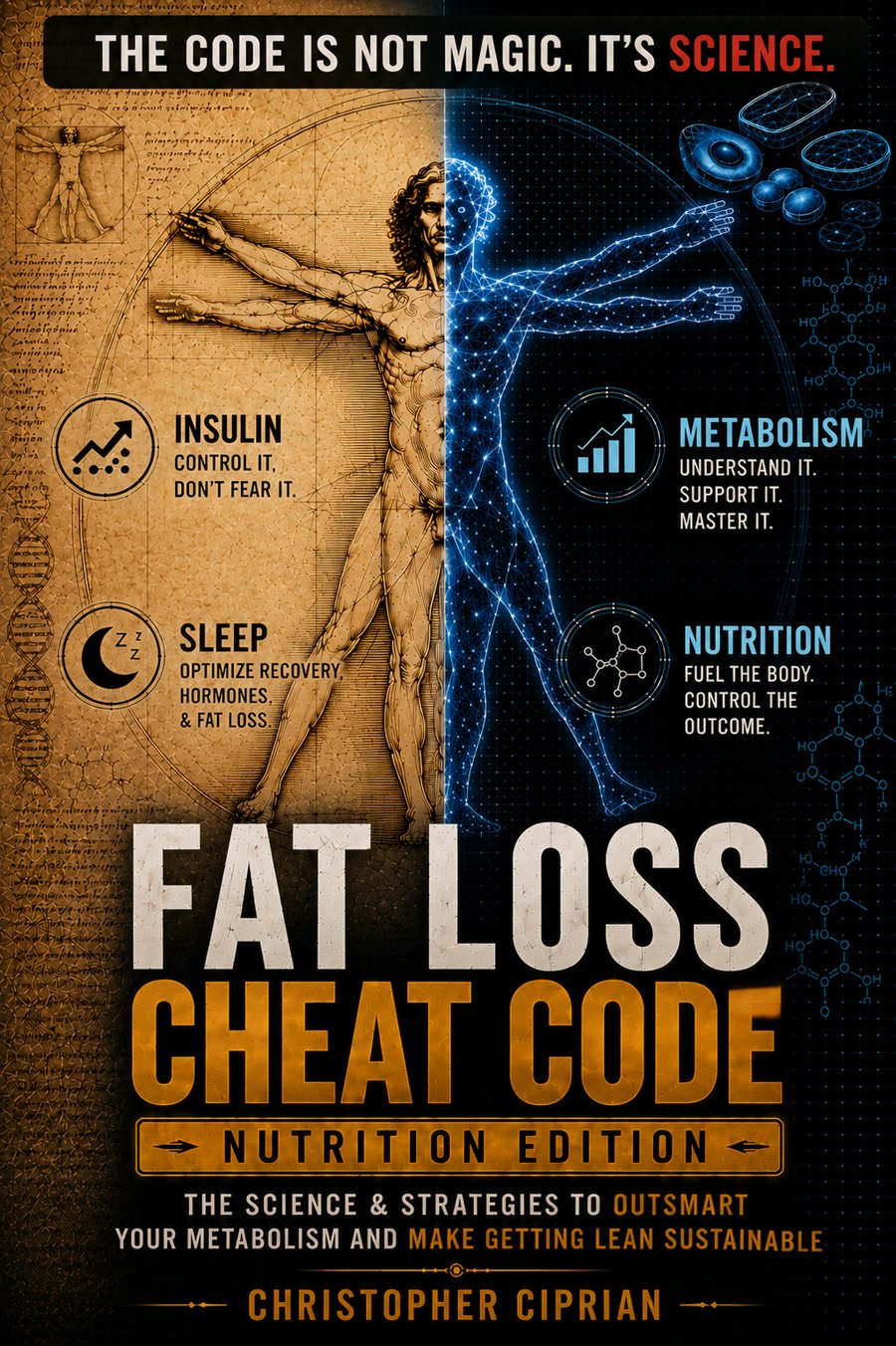
The whole system is in my book, Fat Loss Cheat Code: Nutrition Edition. It’s how you outsmart your metabolism, with every cheat code and the science behind it. Protein, and the Anabolic Ceiling cheat code, are in chapter three.
Buy on AmazonAnd if you want someone to build your training and your eating window around each other, that’s what coaching is for.
Sources: Sardeli et al., Nutrients, 2018 (6 trials, resistance training while dieting in older adults with obesity). Vieira et al., Journal of Bodywork and Movement Therapies, 2025 (review, fasted vs fed resistance training). Vieira et al., International Journal of Sport Nutrition and Exercise Metabolism, 2025 (28 young adults, 12 weeks). Moro et al., Journal of Translational Medicine, 2016 (34 men, 16:8 and lifting). Drummond et al., Biology of Sport, 2024 (trained men, 12 and 16 hours fasted). Triki et al., International Journal of Sports Physiology and Performance, 2023, and Frontiers in Nutrition, 2024 (lifting during Ramadan). Vieira et al., British Journal of Nutrition, 2016 (27 studies, fasted aerobic exercise).