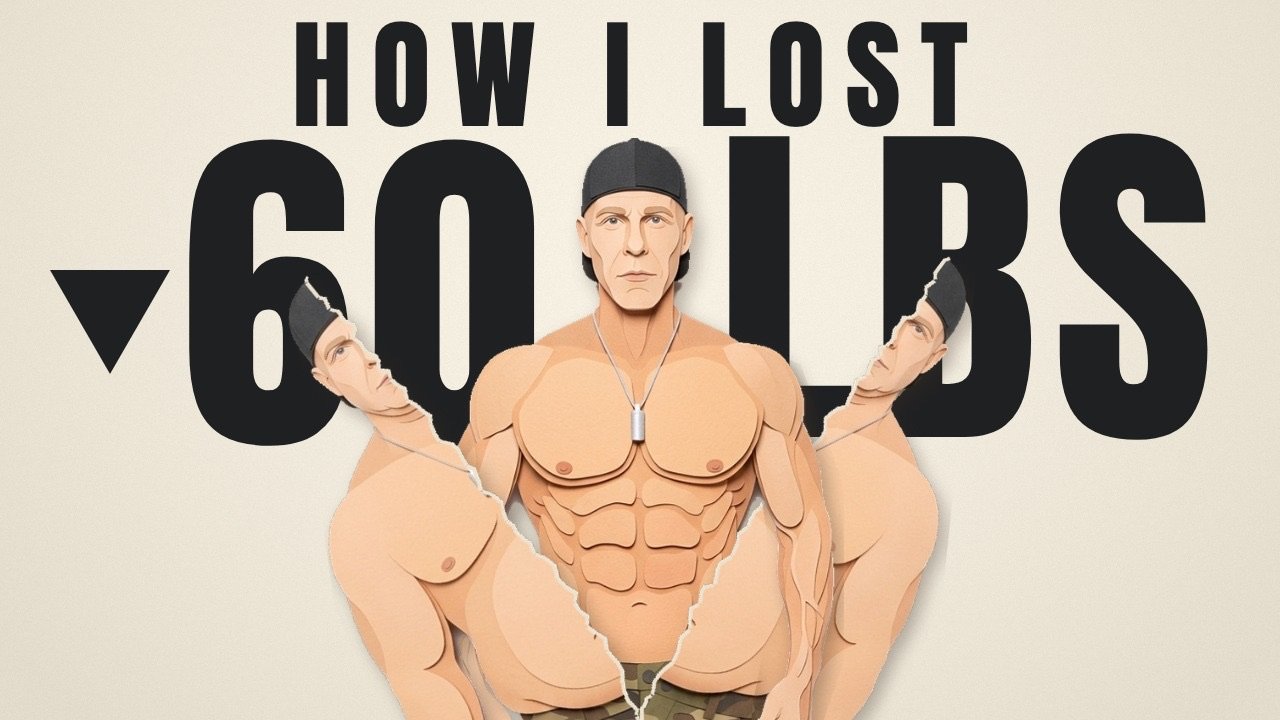
Quick answer: I went from 217 pounds to 155 in under a year with no single magic trick. I stacked six things: I cut processed food and went low carb, high protein; I moved my eating window earlier and stopped eating after dark; I lifted a few days a week, usually fasted; I walked several short times a day; I added a few supplements, one at a time; and I fixed two mistakes, cutting calories too hard and not eating enough protein.
People always ask me what the one thing was. The diet, the pill, the workout. And honestly? There wasn’t one. If there were, I’d have written a very short book.
I started at two hundred and seventeen pounds, untrained, with almost no muscle. In under a year I was down to one fifty-five. Today I sit around one seventy, and I’m leaner and stronger in my fifties than I was in my twenties. Every method below has the science behind it, and every one of them is something you can start this week.
Here’s what we’ll cover. First, what I ate, and the change that had me dropping weight without counting a single calorie. Second, when I ate, and the timing trick that broke my plateaus. Third, how I trained. Fourth, walking. Fifth, the supplements I took. And sixth, the two mistakes that were holding me back, because there’s a good chance you’re making them too. If you’d rather watch, the whole thing is in the video above.
What did I eat to lose weight?
Two changes, in this order.
First, I cut out processed food and ate whole foods. This should be step one of any diet, because on its own it can make you lose weight without counting a single calorie.
Researchers at the National Institutes of Health had twenty adults live at their clinic for a month. For two weeks they ate ultra-processed food, and for two weeks whole, unprocessed food, as much as they wanted either way. On the processed food they ate about five hundred more calories a day and gained about two pounds. On the whole food they lost about two pounds. Nobody counted anything.
Then I went low carb, high protein, with moderate fat. Think of it as a modified keto. For a lot of people, me included, carbs flip a switch. Once you start eating them, it’s hard to stop. Cut them down and that switch turns off: you actually feel full, the cravings fade, and the blood sugar crashes stop, because now you’re running on fat instead of carbs.
A review in Obesity Reviews pooled the studies on low-carb ketogenic diets. People on them were less hungry and had less desire to eat. The biggest win? It stopped the hunger that normally creeps up while you’re losing weight. (I go deeper on keto in low carb diets explained: keto, carnivore, fact vs myth.)
The fix: start with your first meal of the day. Make it protein and fat. Some potatoes are okay, but no bread and no cereal, and make it a complete protein: meat, fish, eggs or Greek yogurt. Then just notice how long you stay full.
Does when you eat matter for weight loss?
Yes, and this is the one that broke my plateaus.
Most people know the 16:8 method: fast sixteen hours, eat in an eight-hour window. But when you open that window matters too. Shifting your meals earlier in the day is called early time-restricted feeding, and it lines your eating up with your body’s natural clock, when you handle blood sugar best and burn more fat.
That’s why I don’t eat after dark. Once the sun goes down your body starts winding down, melatonin kicks in, and it gets harder to clear blood sugar and burn fat. And when I was really stuck on a plateau, I’d finish eating by one in the afternoon every now and then. It gave my digestion a real break, and the scale usually moved the next morning.
The research backs this up. Scientists fed adults the exact same food, either between eight in the morning and two in the afternoon, or stretched out until eight at night. Eating early, they burned more fat, their hunger hormone dropped, and their hunger evened out across the day. Same food. Just earlier.
The fix: don’t snack at night. Pick a cut-off time and make it a rule: if it’s dark out, the kitchen’s closed. A lot of night “hunger” is really habit, or thirst. Try a tall glass of water with electrolytes, a squeeze of lemon or a pinch of sea salt first. The whole method is in early time-restricted eating: why I stopped eating after dark.
Does lifting weights help you lose fat?
Yes and no. Lifting doesn’t burn a huge number of calories while you’re doing it. The payoff is indirect, and it’s big: the muscle you build raises how much energy your body needs just to exist.
And lifting is what protects your muscle while you diet. A review of six trials in older adults with obesity found that lifting prevented almost all of the muscle loss that normally comes with cutting calories.
Should you train fasted or fed? Whichever one keeps you showing up. I’ve always trained fasted. I feel like you should earn that first meal. And why burn the food you just ate when you’ve got plenty stored around your waistline?
If you’re worried fasted training eats your muscle: a 2025 review of lifting fasted versus fed found the same muscle and the same strength either way, with a little more fat lost in the fasted groups. Those were small studies, but there was no sign fasted training burned muscle. Another study found men eating in a 16:8 window while lifting lost more fat and kept their muscle and strength.
The fix: lift at least a few days a week. If you feel up to it, try it fasted. Either way, the part that matters is showing up. More on this in lifting weights fasted: does it burn muscle?
Is walking good for weight loss?
Walking may just be the king of fat loss.
At an easy pace, your fat stores supply most of the fuel. The harder you push, the more your body switches over to carbs. And walking is easy on your joints, needs no equipment and takes no recovery, so you can do it several times a day. Which is exactly the point.
Frequency beats volume. It’s better to move all through the day than to crush a morning workout and then sit at a desk for eight hours. Five short walks that add up to eight thousand steps beat one big ten-thousand-step session in the morning.
Researchers in New Zealand had seventy adults sit for nine hours on three separate days. One day they just sat. One day they walked thirty minutes first, then sat. And one day they got up every half hour and walked for one minute and forty seconds, which adds up to the same thirty minutes. The short breaks lowered blood sugar and insulin more than the one long walk, which barely moved their blood sugar at all.
The fix: split your movement into five or six 10-minute breaks through the day. Walking is perfect, but air squats, push-ups or calf raises count too. The full case is in is walking good for weight loss? Why short walks beat one long one.
What supplements did I take to lose weight?
First, the honest part: supplements work best when your eating and training are already locked in. Think of them as a booster bolted onto a solid foundation. On their own, they don’t do much.
With that said, here’s what I took:
- Caffeine and green tea. Researchers in the Netherlands pooled six studies where people spent a full day in sealed rooms that measure every breath. Caffeine plus a green tea compound called EGCG burned about a hundred extra calories a day, and sixteen percent more fat. That’s almost a pound of fat a month.
- Creatine. One of the most studied supplements there is. Your muscles have a quick-energy backup battery, and creatine tops it off, so you can lift heavier and squeeze out more reps. The International Society of Sports Nutrition calls it safe for up to five years in healthy people.
- Yohimbine. Stubborn fat has receptors that act like an emergency brake, keeping it locked up. Yohimbine blocks that brake so your body can get at the fat. It’s a strong one, so check with your doctor first, especially if you have heart or blood pressure issues.
- Apple cider vinegar. In one study, about a tablespoon before a high-carb meal helped people with insulin resistance handle that meal better. (How I use it: apple cider vinegar before meals.)
- TMG (trimethylglycine). In one six-week study of trained men, the TMG group lost more body fat and built more muscle than the placebo group, with training kept the same.
The fix: build the foundation first. Then add one supplement at a time, so you can tell what’s actually working for you. If you’re picking one to start, start with creatine.
What mistakes stopped my fat loss?
Two big ones. And they’re so common there’s a good chance you’re making at least one of them right now.
Mistake one: cutting calories way too hard
It’s easy to think that cutting more calories means faster fat loss. And it does, until it doesn’t.
Your body has a self-defense system called metabolic adaptation. Restrict calories long enough and your body reads it as a famine, so it turns down how much energy it burns, without you even noticing. In plain language: you burn fewer calories. A lot of people get stuck right there, with maintenance calories so low that fat loss stalls.
The fix is to reverse diet out of it. Over about six to eight weeks, add a hundred to two hundred calories a day back in, raising it every week or two until your maintenance is back where you want it. When you cut again, you’re cutting from a higher number, and fat loss gets easier. (Step by step: how to reverse diet properly.)
Then stop dieting straight through. In my book, Fat Loss Cheat Code: Nutrition Edition, which is all about how to outsmart your metabolism, this is THE MATADOR CHEAT CODE: cycle your deficit instead of treating restriction as permanent. Two weeks at a moderate deficit, then two weeks around maintenance, and repeat.
Here’s why. Researchers in Australia started fifty-one men with obesity on sixteen weeks of dieting. One group dieted straight through. The other went two weeks on, two weeks off at maintenance, over and over. Among the men who finished, the on-and-off group lost about twenty-seven pounds of fat, compared to about eighteen, and their metabolism slowed down about half as much. (Is a slowed metabolism permanent? Can metabolic damage be fixed?)
Mistake two: not enough protein, or the wrong kind
When you cut calories, protein should go up, not down, to hold on to your muscle. But the less you eat, the harder it gets to fit enough in.
Researchers at McMaster University put young men on a forty percent calorie deficit for four weeks, training hard six days a week. The group eating double the protein actually gained about two and a half pounds of lean muscle and lost more fat. The lower-protein group gained almost none.
The kind matters too. Most plant proteins aren’t complete, so they give your muscles only part of the signal an animal protein does. Think of it like Wheel of Fortune: an incomplete protein is a word with the vowels missing. Essential amino acids (EAAs) are the vowels. They fill in the gaps and complete the word. In another McMaster study, a plant protein blend only switched on muscle building as well as whey once extra leucine, one of the essential amino acids, was added.
The fix: build every meal around protein. If it’s plant protein, add essential amino acids. And actually check that you’re getting enough. (How much is enough? How much protein to lose weight.)
The one thing to do this week
Don’t try all six at once. Start with your first meal: make it protein and fat, no bread, no cereal, and see how long you stay full. Once that’s easy, close the kitchen when it gets dark. Then add the next one.
Keep reading
- Early time-restricted eating: why I stopped eating after dark
- Lifting weights fasted: does it burn muscle?
- Is walking good for weight loss? Why short walks beat one long one
If you want more cheat codes like this sent straight to your inbox, sign up here. It’s completely free, and just for signing up, I’ll also send you my guide, the 10 Fat Loss Commandments.
Send me the commandments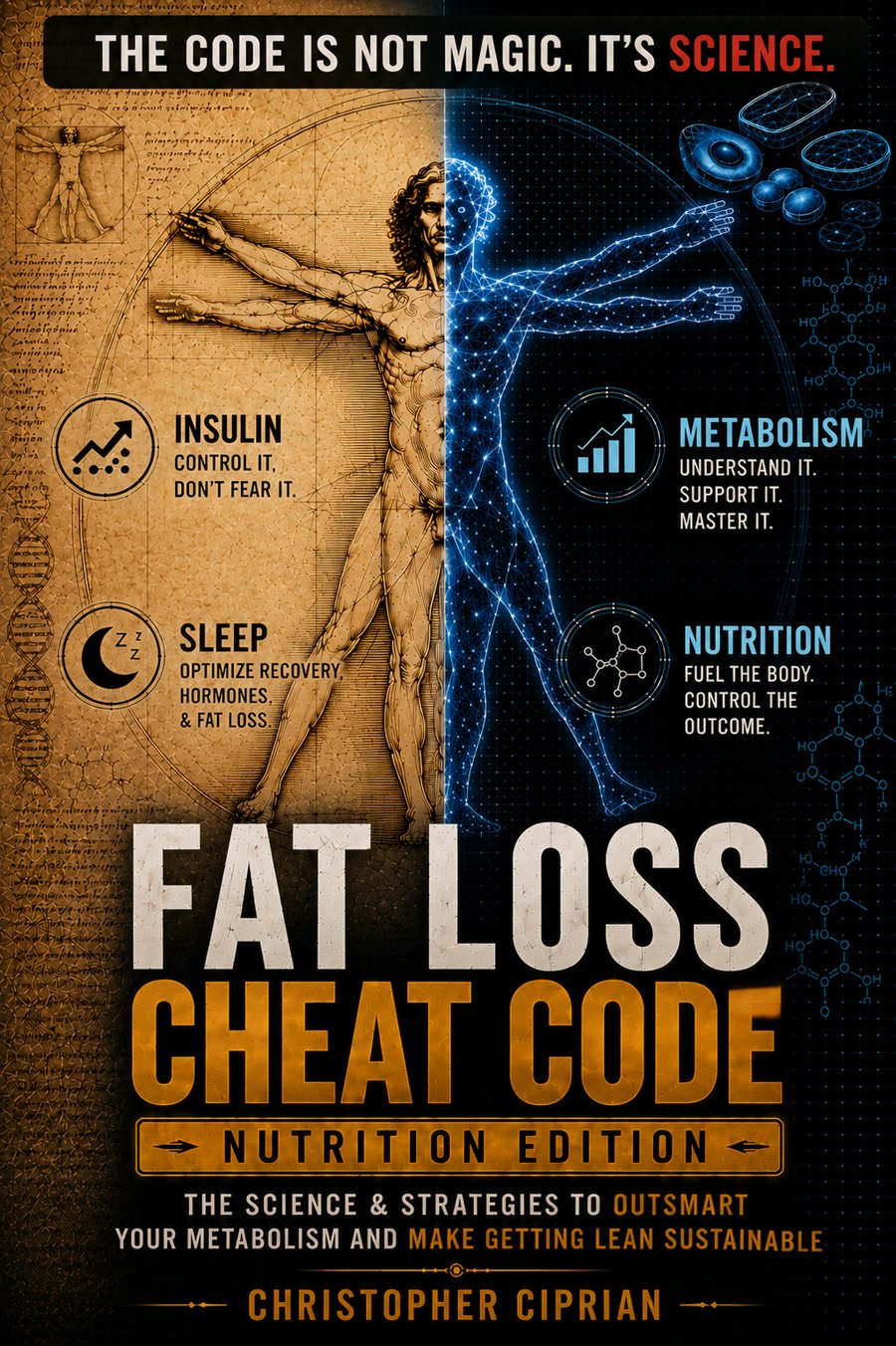
The whole system is in my book, Fat Loss Cheat Code: Nutrition Edition. It’s how you outsmart your metabolism, with every cheat code and the science behind it. The MATADOR cheat code is in chapter two, and early time-restricted feeding is in chapter eight.
Buy on AmazonAnd if you want someone to stack these in the right order for your life, and adjust them as you go, that’s what coaching is for.
Sources: Hall et al., Cell Metabolism, 2019 (20 adults, ultra-processed vs unprocessed diets). Gibson et al., Obesity Reviews, 2015 (ketogenic low-carb diets and appetite). Ravussin et al., Obesity, 2019 (11 adults, early time-restricted feeding). Sardeli et al., Nutrients, 2018 (6 trials, resistance training while dieting). Vieira et al., Journal of Bodywork and Movement Therapies, 2025 (fasted vs fed resistance training). Moro et al., Journal of Translational Medicine, 2016 (34 men, 16:8 and lifting). Romijn et al., American Journal of Physiology, 1993 (fuel use by exercise intensity). Peddie et al., American Journal of Clinical Nutrition, 2013 (70 adults, walking breaks vs one walk). Hursel et al., Obesity Reviews, 2011 (caffeine and green tea catechins). Kreider et al., Journal of the International Society of Sports Nutrition, 2017 (creatine position stand). Johnston et al., Diabetes Care, 2004 (vinegar before a high-carb meal). Cholewa et al., Journal of the International Society of Sports Nutrition, 2013 (TMG, 23 trained men). Byrne et al., International Journal of Obesity, 2018 (the MATADOR study). Longland et al., American Journal of Clinical Nutrition, 2016 (protein in a 40% deficit). Lim et al., Current Developments in Nutrition, 2024 (plant protein blend, leucine and whey).